The stencils
How a tile pattern becomes a laser-cut stencil, is bent into perspective, and is sprayed piece by piece into spaces that are not there.
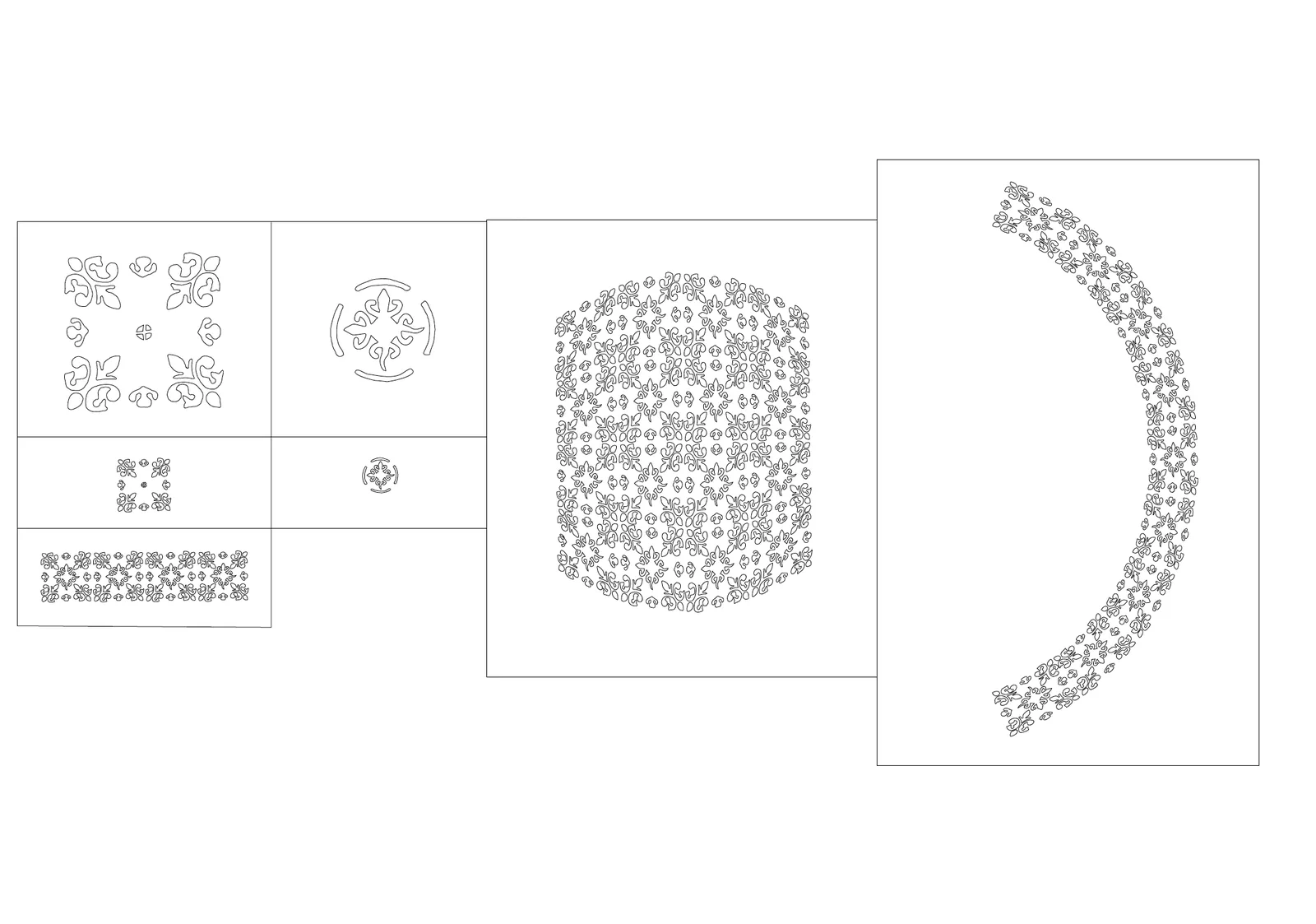
- 1 Pattern
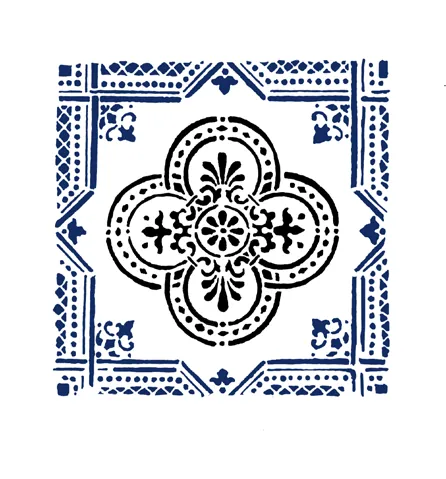
A pattern from a tile, a textile or a building, redrawn as lines.
- 2 Stencil
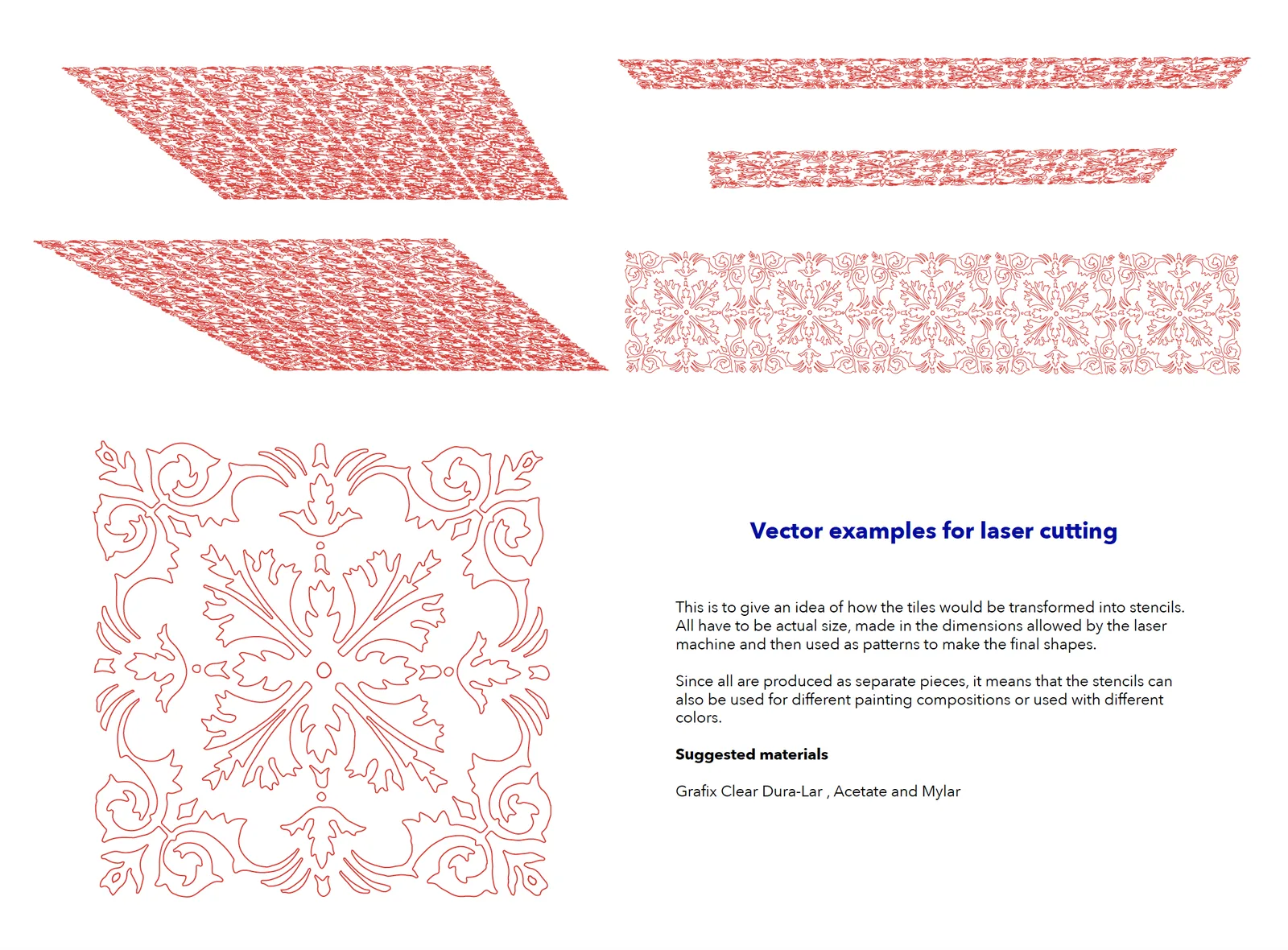
The shapes become holes for the laser to cut. Bridges, the strips left uncut, hold the islands in place.
- 3 Distorted, at several scales
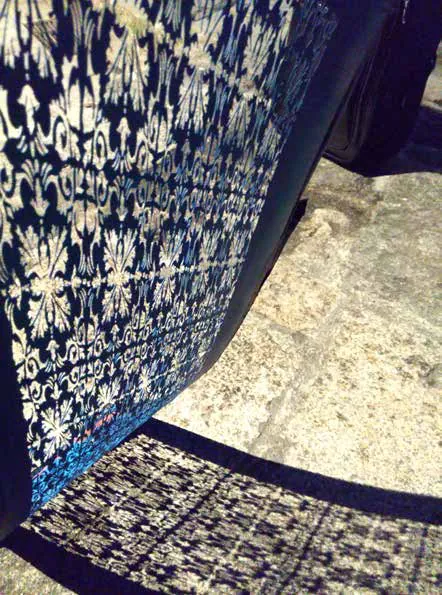
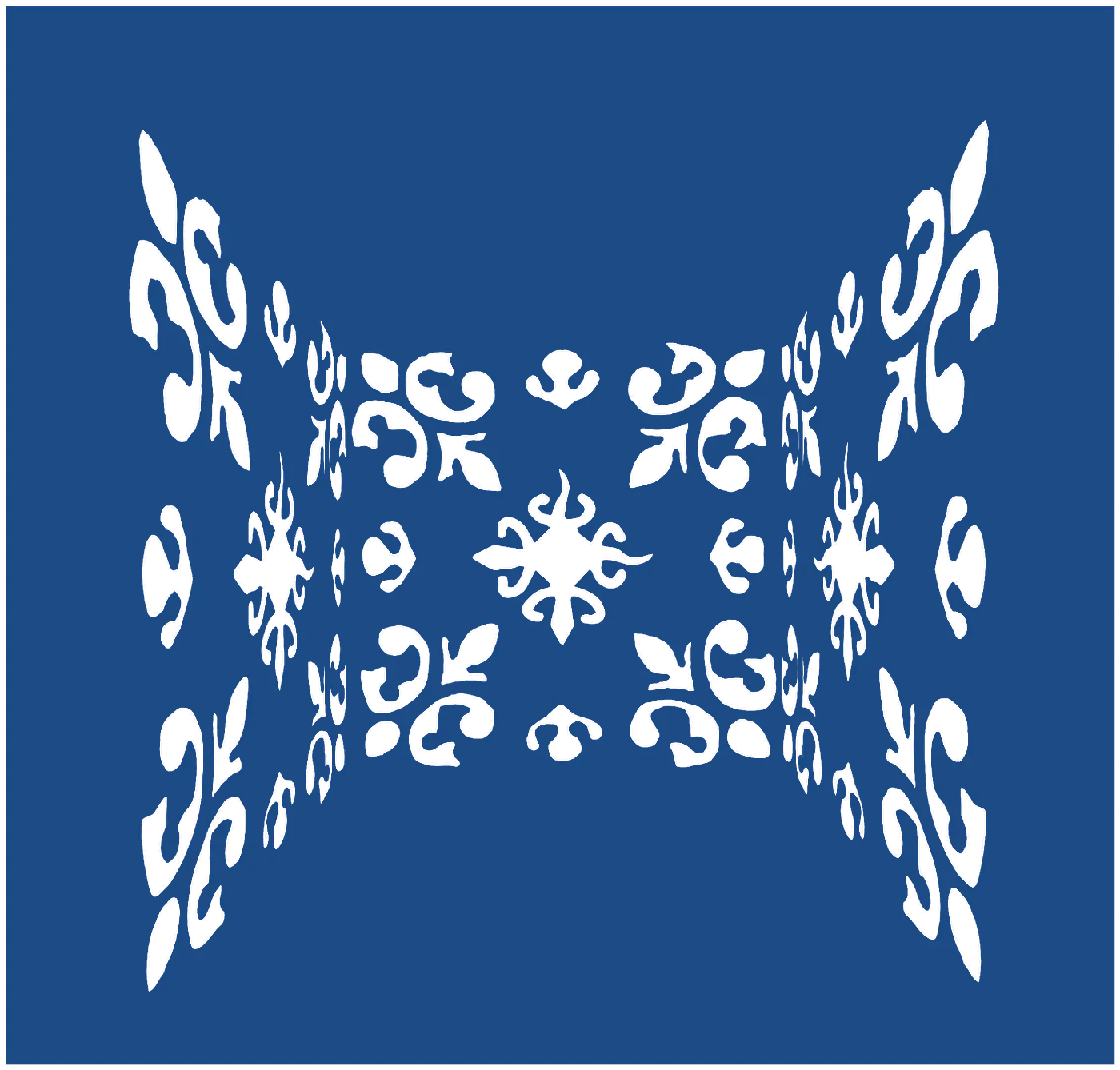
The same stencil is bent into the shapes a perspective needs, and cut in different sizes.
- 4 Modules
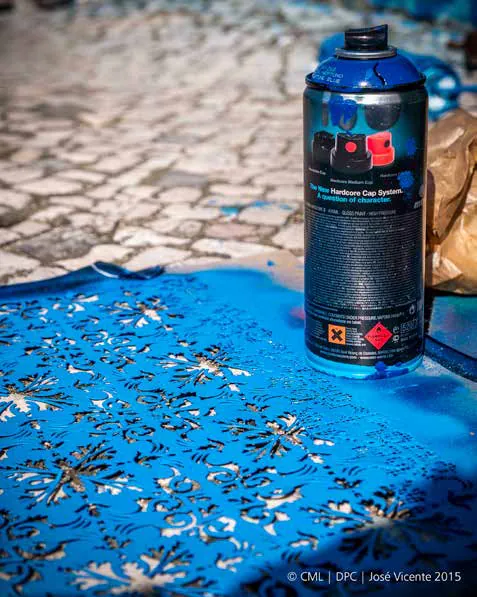
Sprayed one beside the other, the pieces build walls, floors and arches that meet in one point.
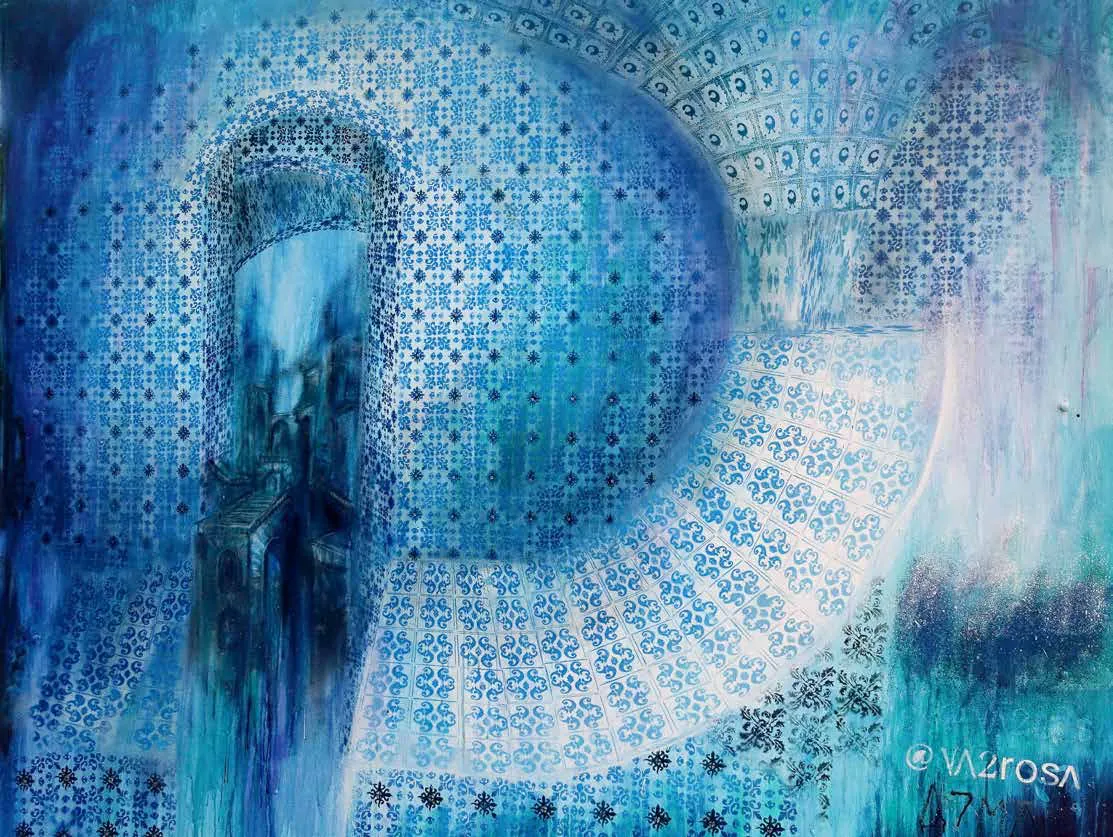
I imagined how interesting it could be to make optical illusions based on those old Portuguese tiles, giving the impression of volume and depth on flat, blank walls. One might have the impression of an entrance where there is none, or see a painting that extends to the floor, as if there were an entire structure on a different plane than the flat wall.
Portugal
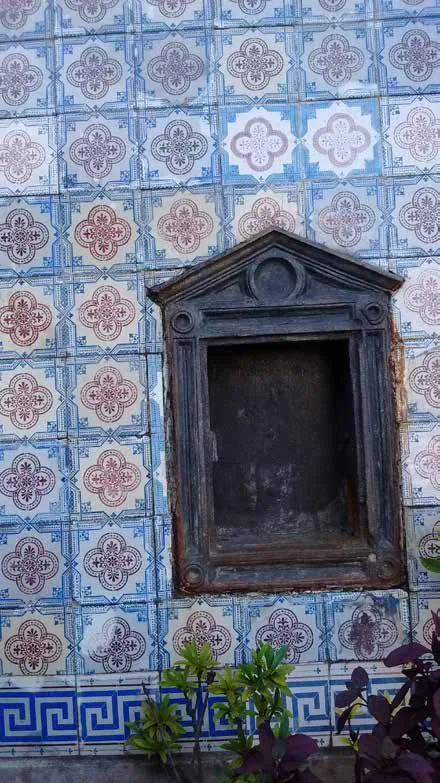
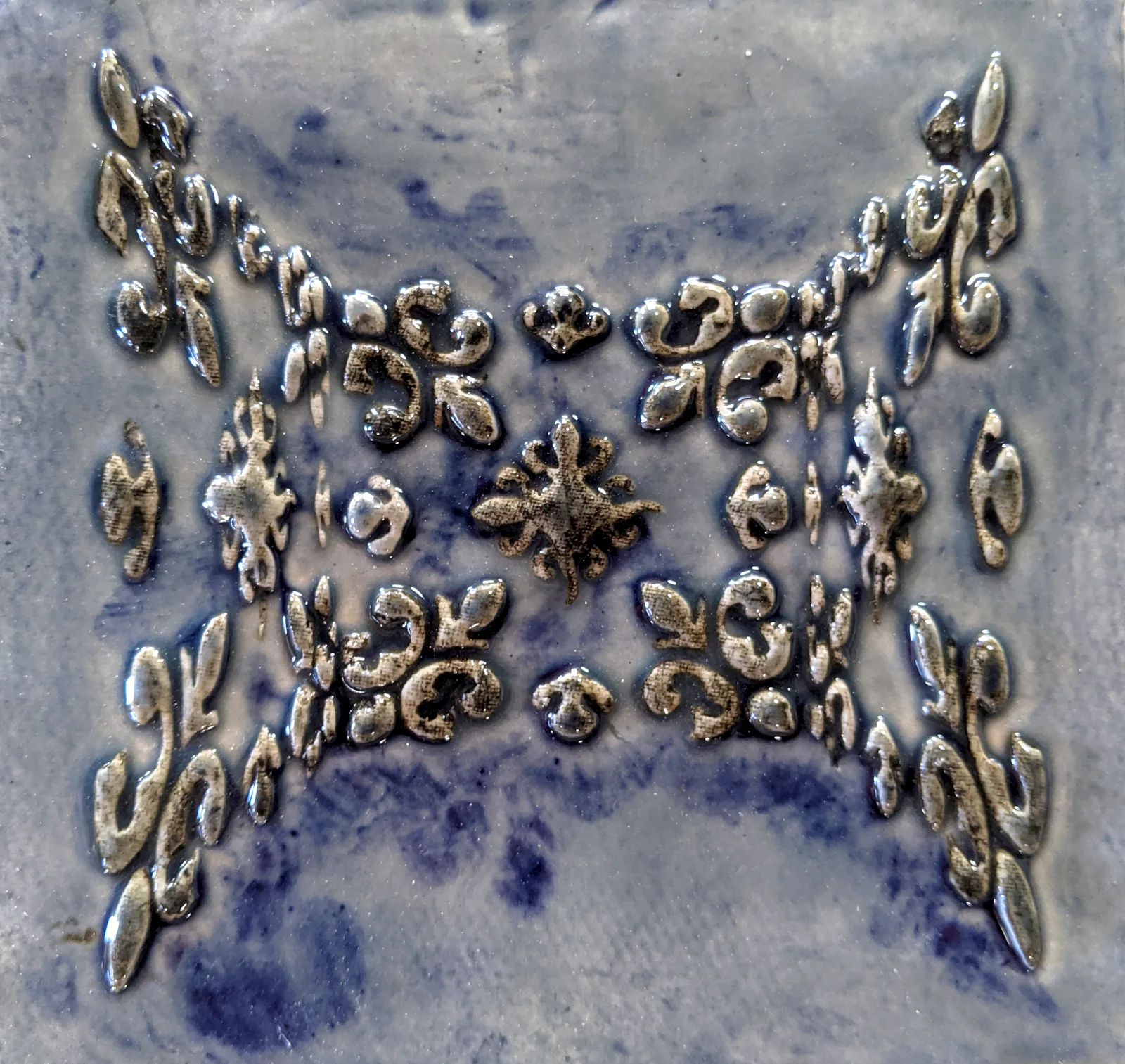
Azulejos, the blue and white tiles over the old buildings of Rio, Lisbon and Porto. Where it started.


The Islamic world
The geometry of the Alhambra in Granada and the Blue Mosque in Istanbul, the source of so much of what Portugal made its own.




China
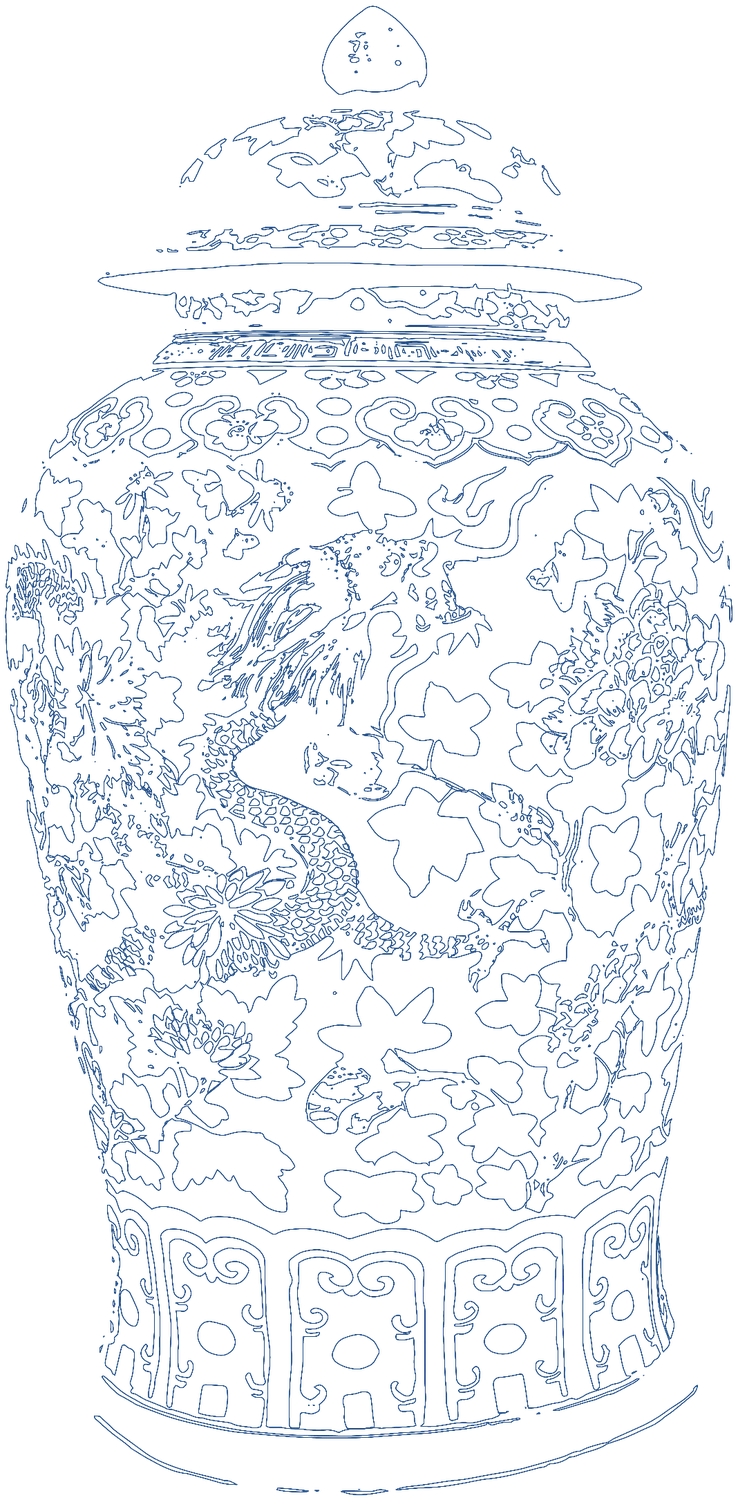
Blue and white porcelain, where the blue began: Qing dynasty vases, clouds and flowers.


South Asia
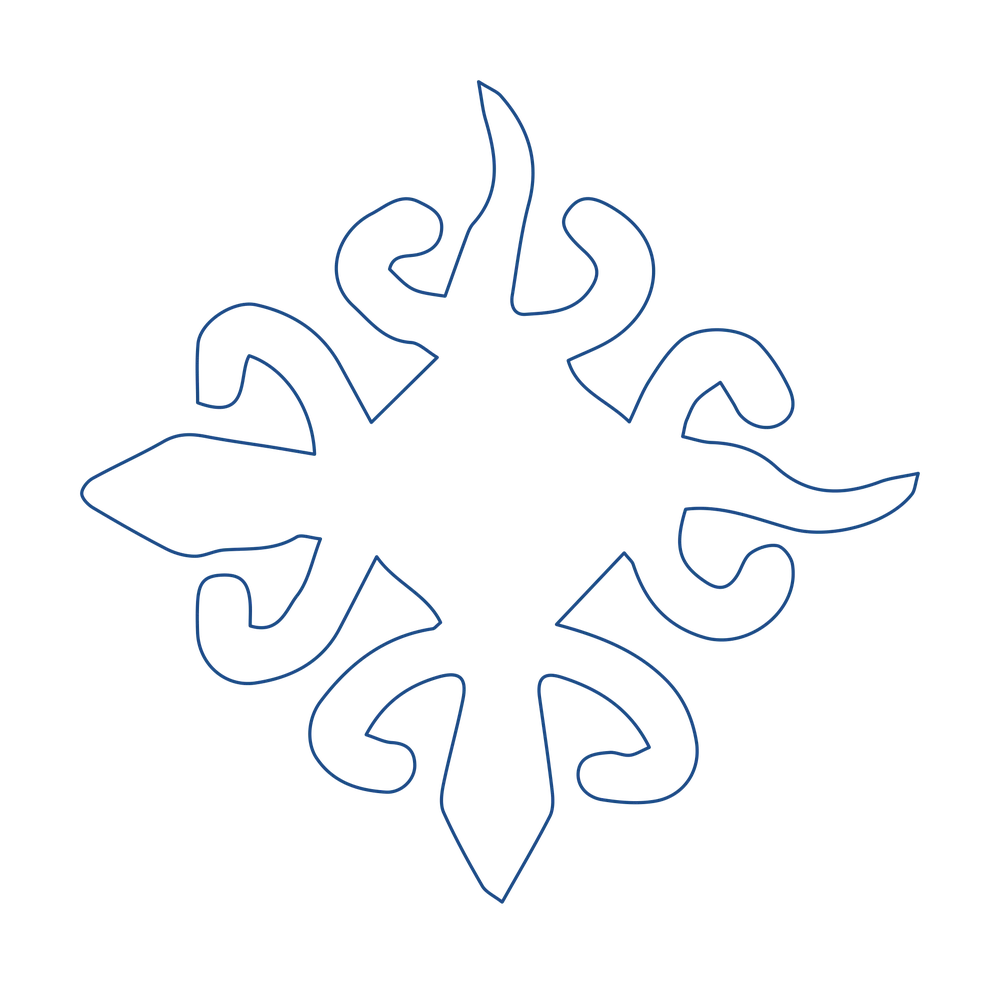
Patterns from India and Pakistan, distorted into strips for floors and walls.


Africa
Patterns from Ethiopia, Adinkra symbols from Ghana, and sona, the sand drawings of the Chokwe in Angola. The African patterns also run through the mixed tiles below, and later led to the ethnomathematics research.

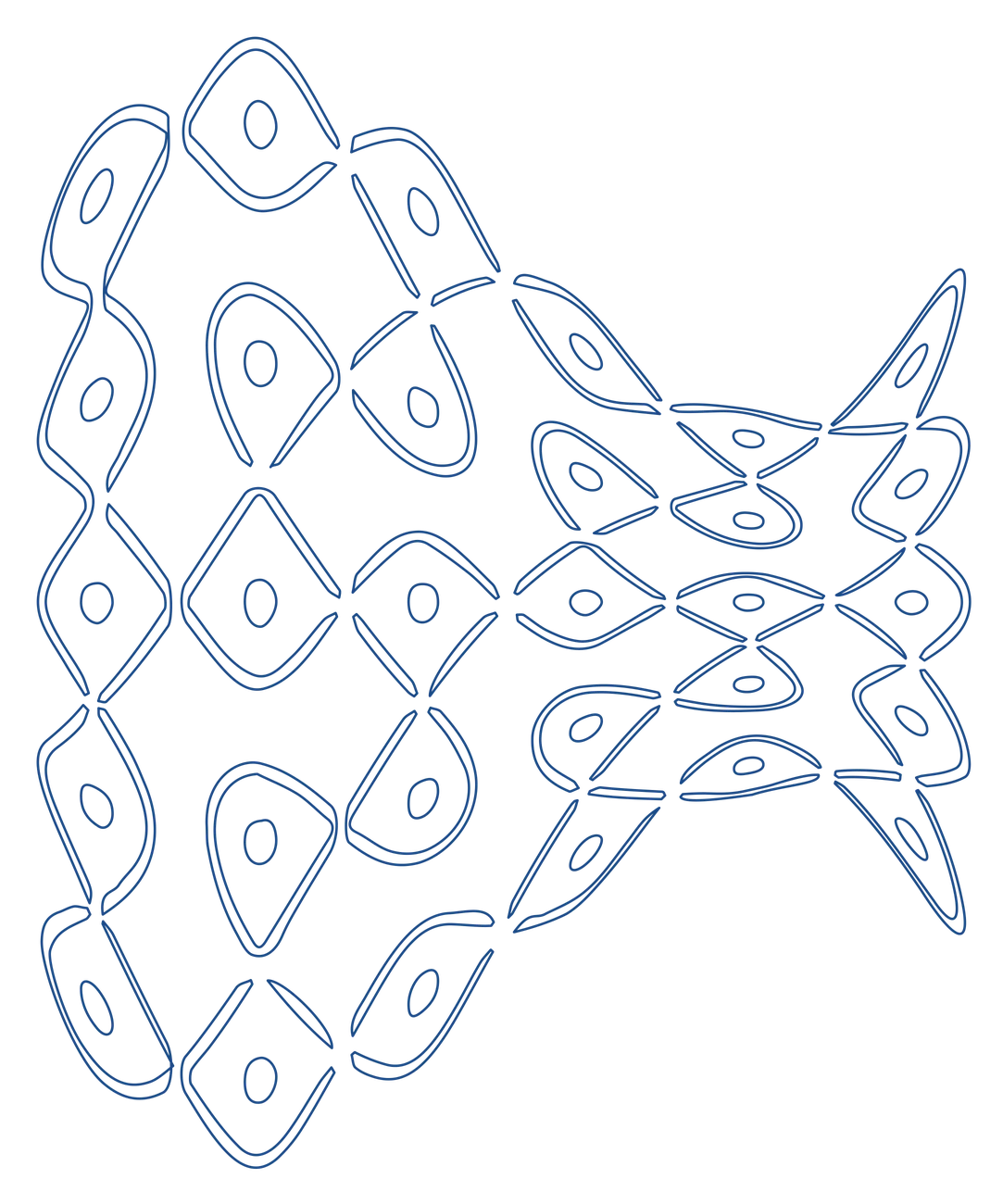
Mixed
The point of the series: the routes the patterns travelled, made into one surface.
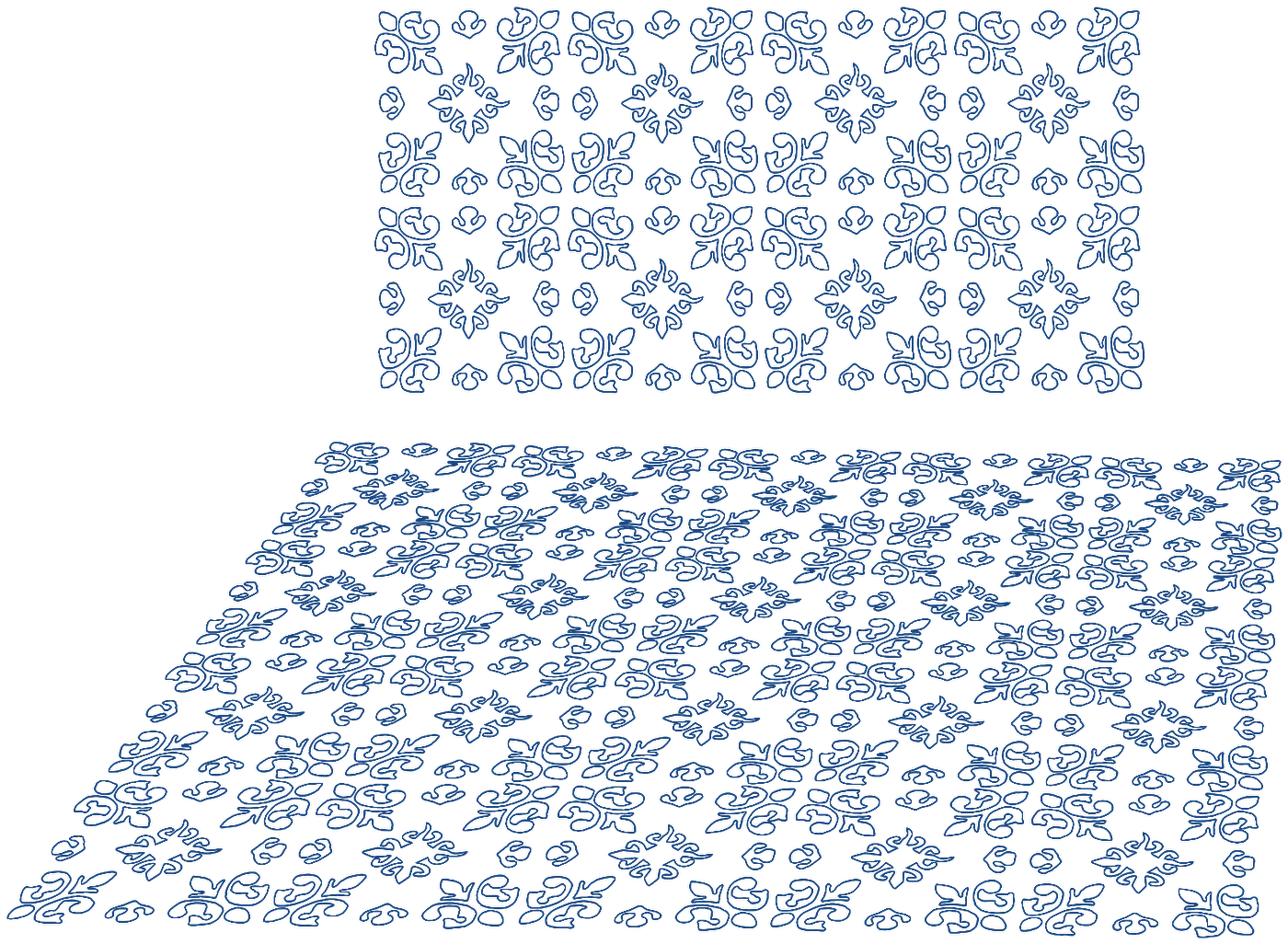

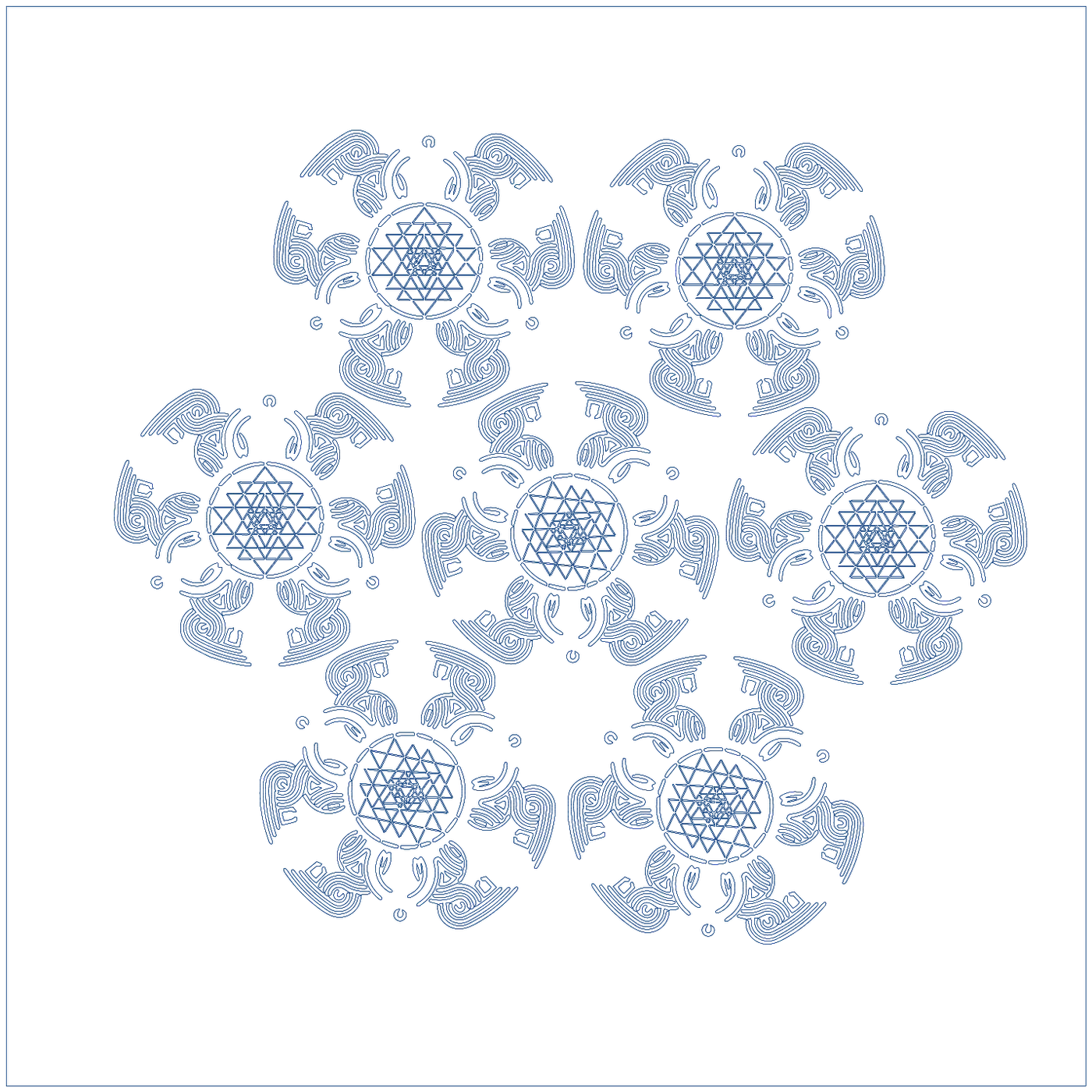

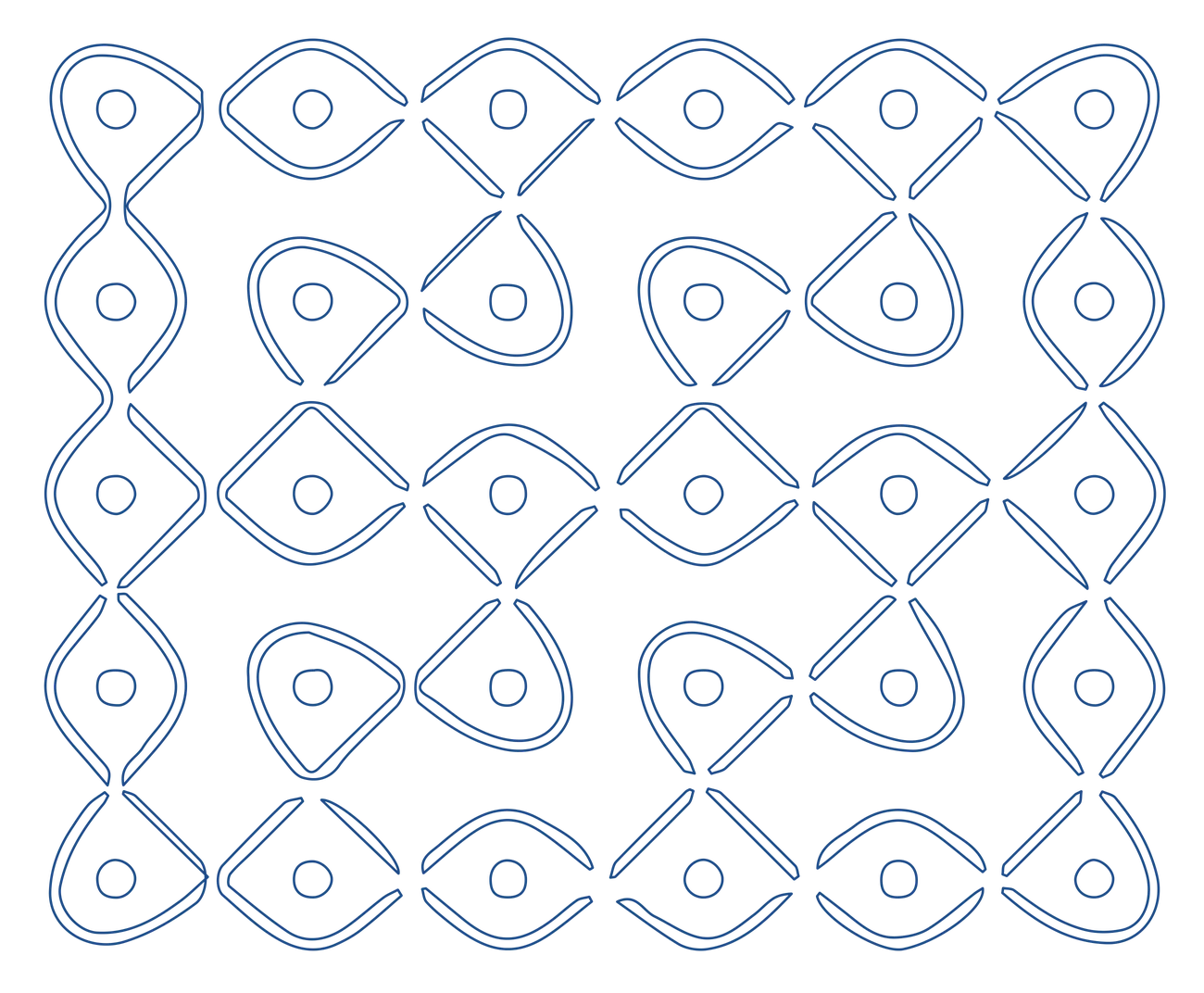
Planning how to turn an image into a stencil: how many layers will it have, what should be kept in the image, and where to put the bridges, which make it stronger and link the disconnected parts. Bridges avoid the islands effect: a shape with nothing holding it falls out of the stencil.
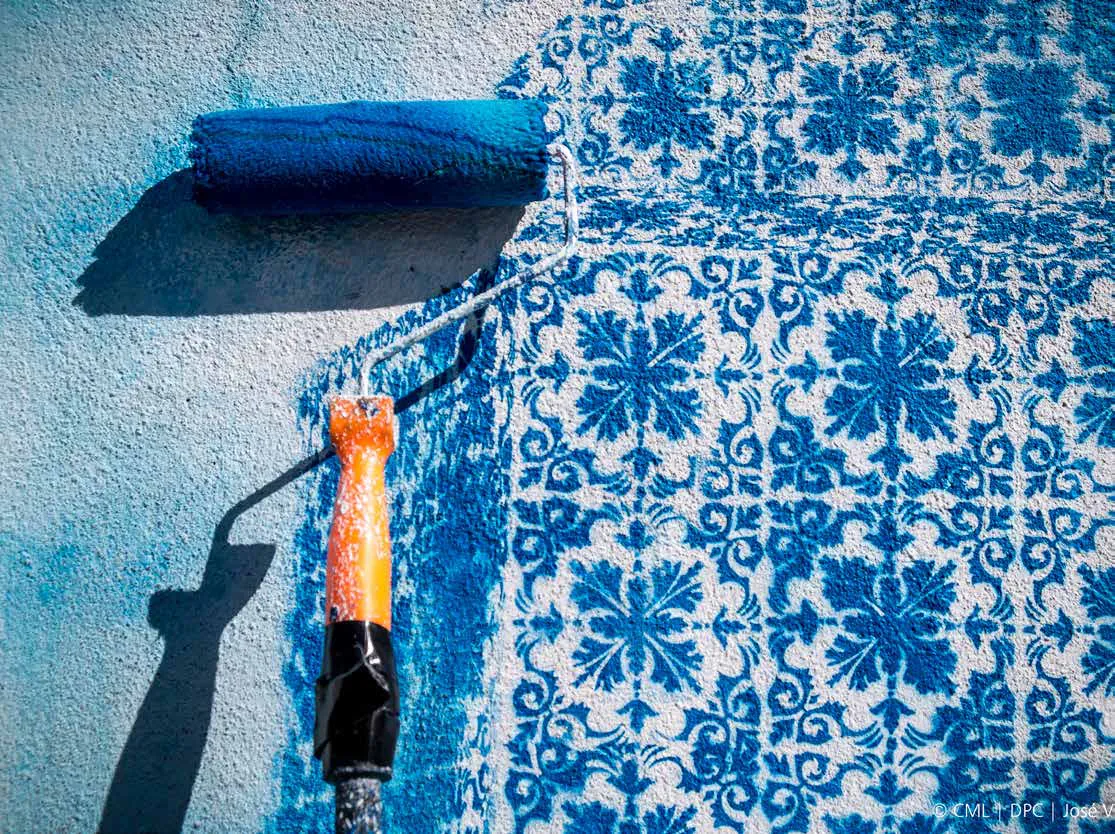
Original image, colours separated in Photoshop, outlines turned into stencil files in Illustrator. Every file has to be made at actual size, in the dimensions the laser machine allows. Since all are produced as separate pieces, the stencils can also be used in different compositions, or with different colours.
From my notes on the first stencils, on how the shape of a pattern decides whether its stencil survives the cutting.
- Portuguese tilesEven with thin lines, the pattern is well distributed across the material, so the stencils are strong, even when distorted.
- The AlhambraEven when the pattern is made much smaller, the stencils stay strong, because the cut-outs are well distributed.
- Mirror curvesPatterns of the mirror-curve kind need many bridges to hold together. The stencil comes out very fragile.
- Islamic geometryCould use a few more bridges: a long cut that also folds leaves the material weak.
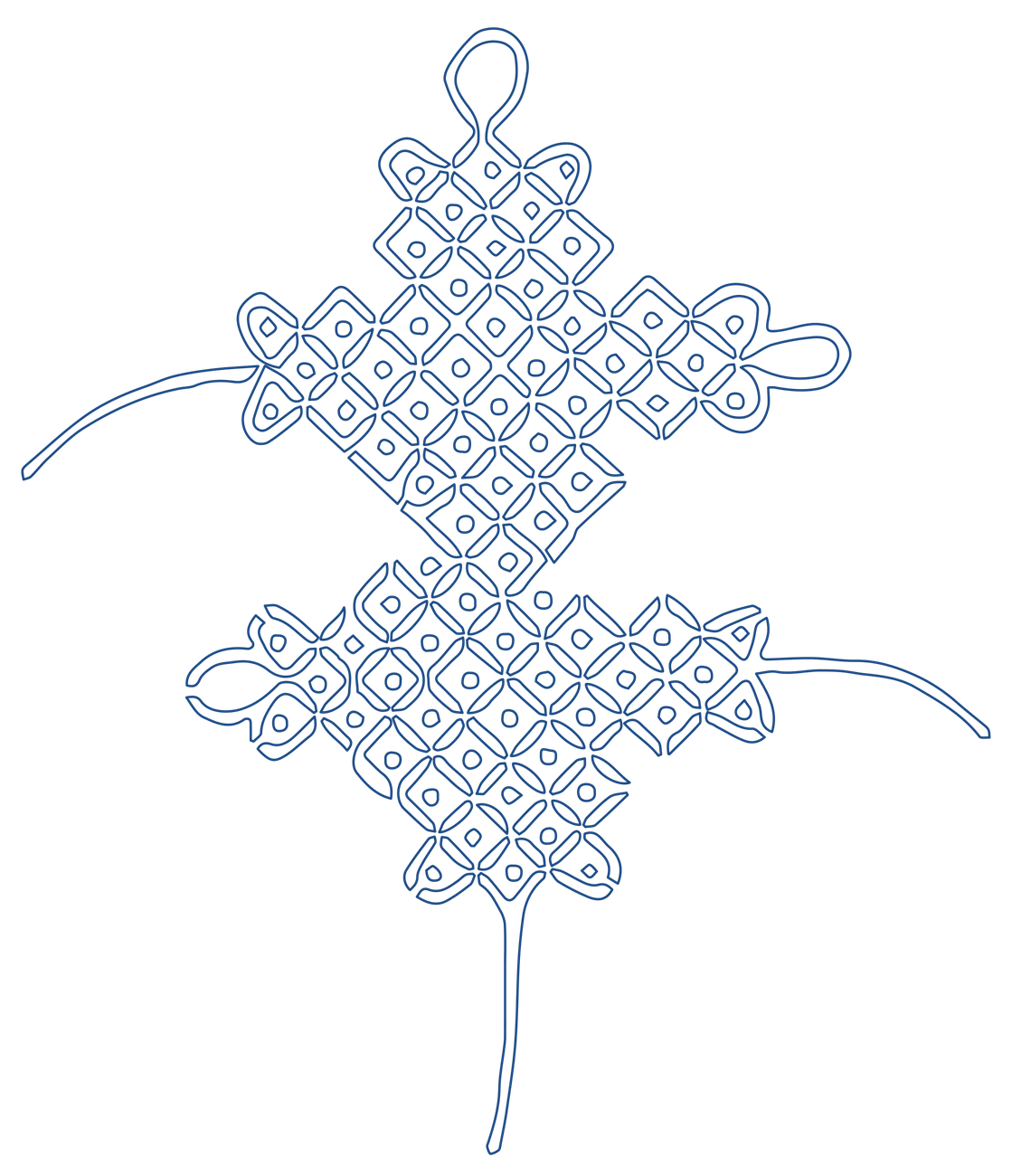
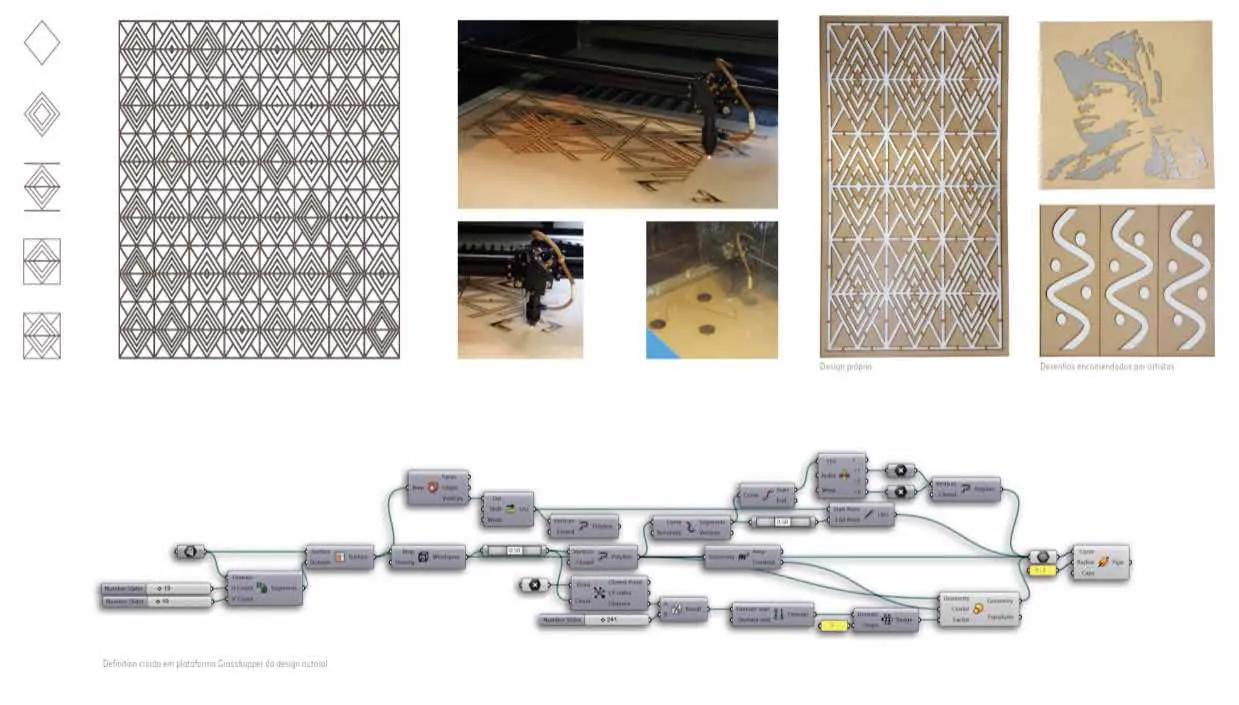
- Drawn in GrasshopperDesigned with an algorithm, in Grasshopper. Here too the stencil came out fragile, because of where the bridges fell: a cut running through the middle of the diamonds makes it break easily.
Each pattern is cut flat, and then distorted: upwards, diagonally, sideways, curved into an arch. The diagonal and lateral pieces can be flipped to make the other side. A piece too big for the machine is cut in several parts. And everything painted on the floor needs anamorphosis, so that a person standing at one point sees the whole structure as if it were on another plane.
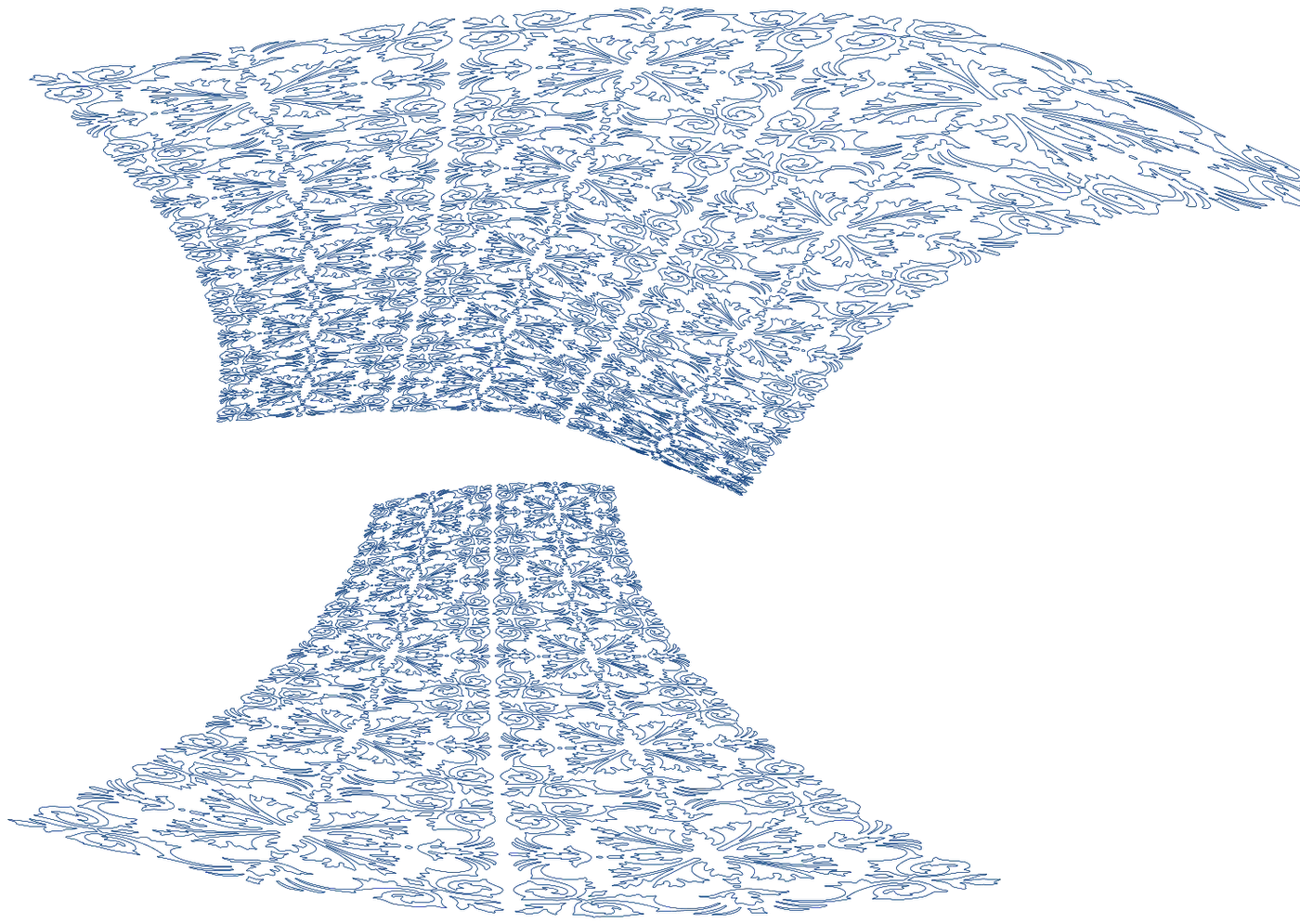

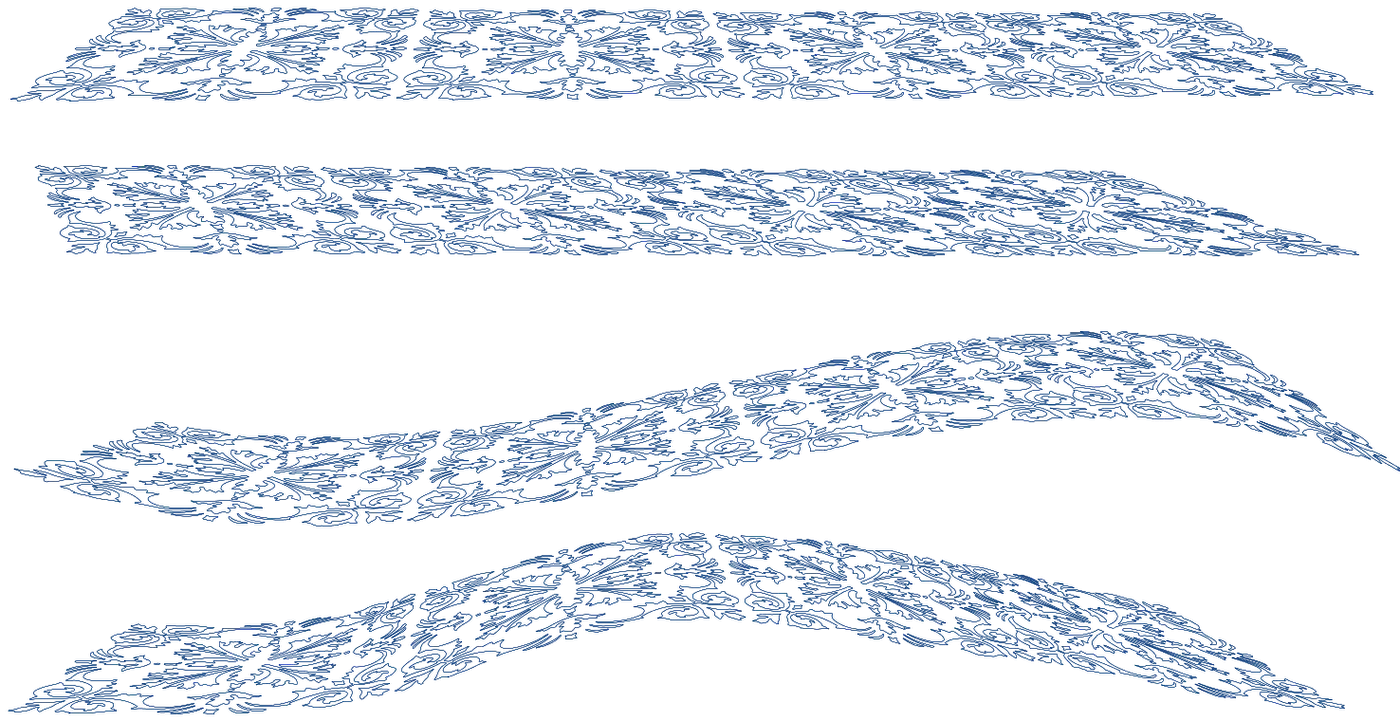


Each layout can be painted in several places with variations: changing the colours or the door shape, opening windows onto other places, making completely different compositions with the same pieces, or answering an architectural element that is already there.
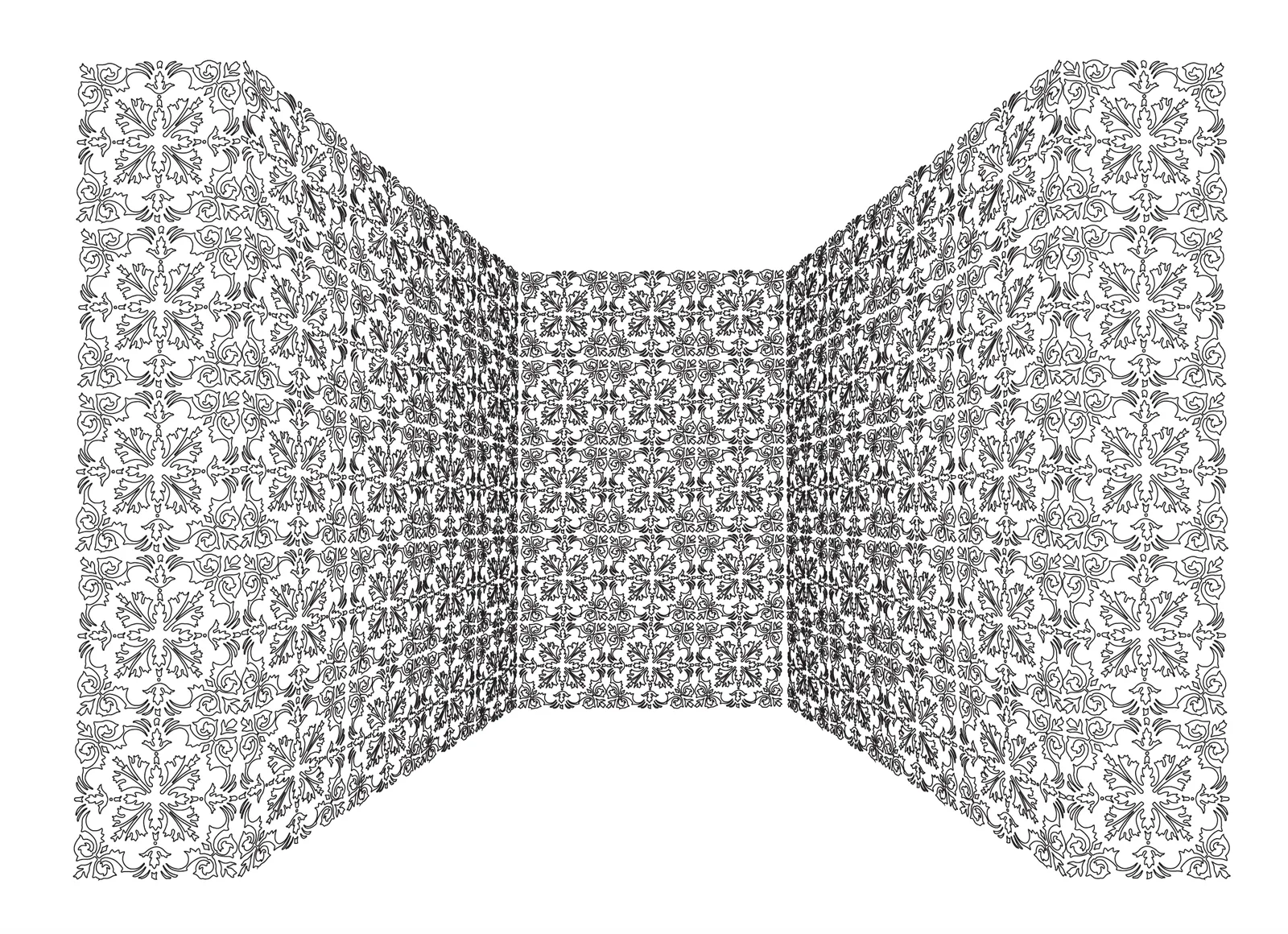
Then the layouts began to be written as algorithms: with Verônica Natividade, patterns described as code in Grasshopper, the plugin for Rhinoceros, and cut as stencils. This is where the stencils met the ethnomathematics research.
- Laser-cut stencil workshop, CML, Lisbon, 2016, with José Vicente and Bruno Cunha
- Laser-cut stencil workshop, Pioneer Works, Brooklyn, 2017
- Art, Parametric Design and Public Spaces, with Verônica Natividade, Pennsylvania State University, 2017
Silk Roads ⇢The Pioneer Works fence ⇢Imaginary Tiles, the solo show ⇢Ethnomathematics & Ethnocomputing ⇢