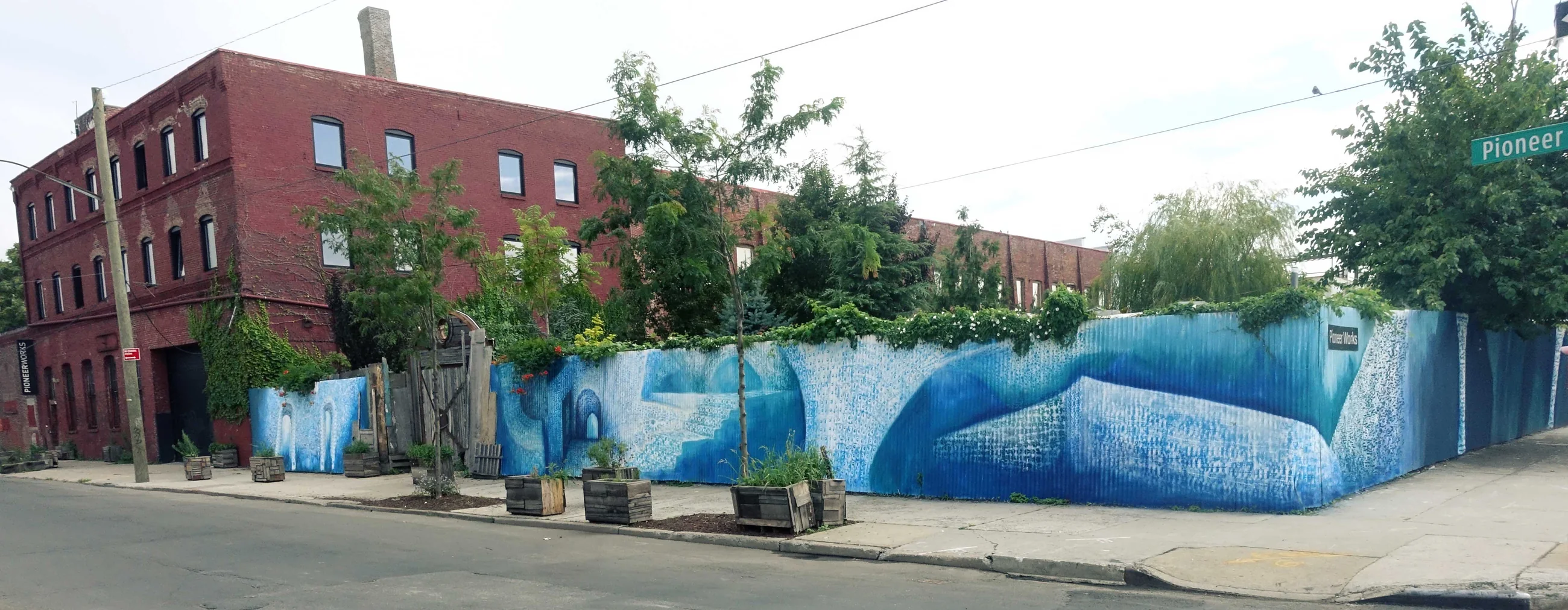
The Pioneer Works fence
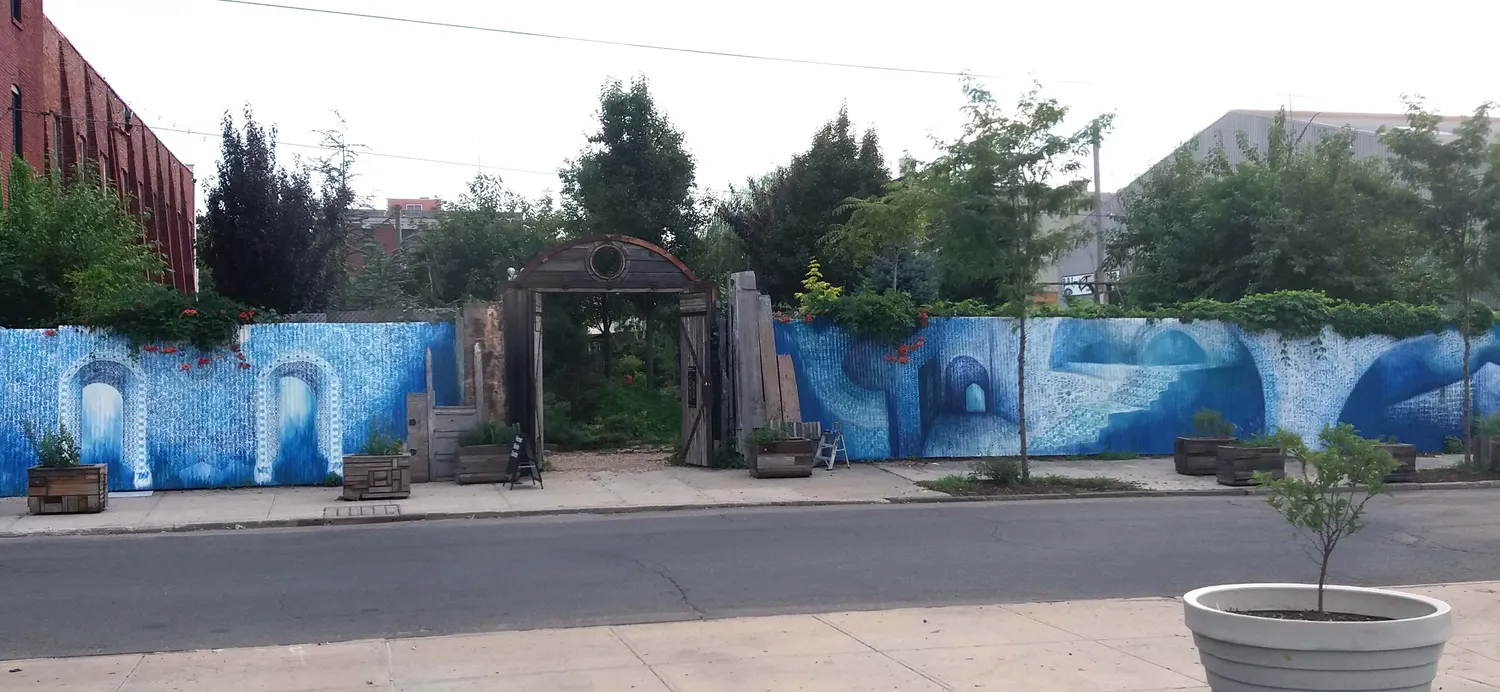
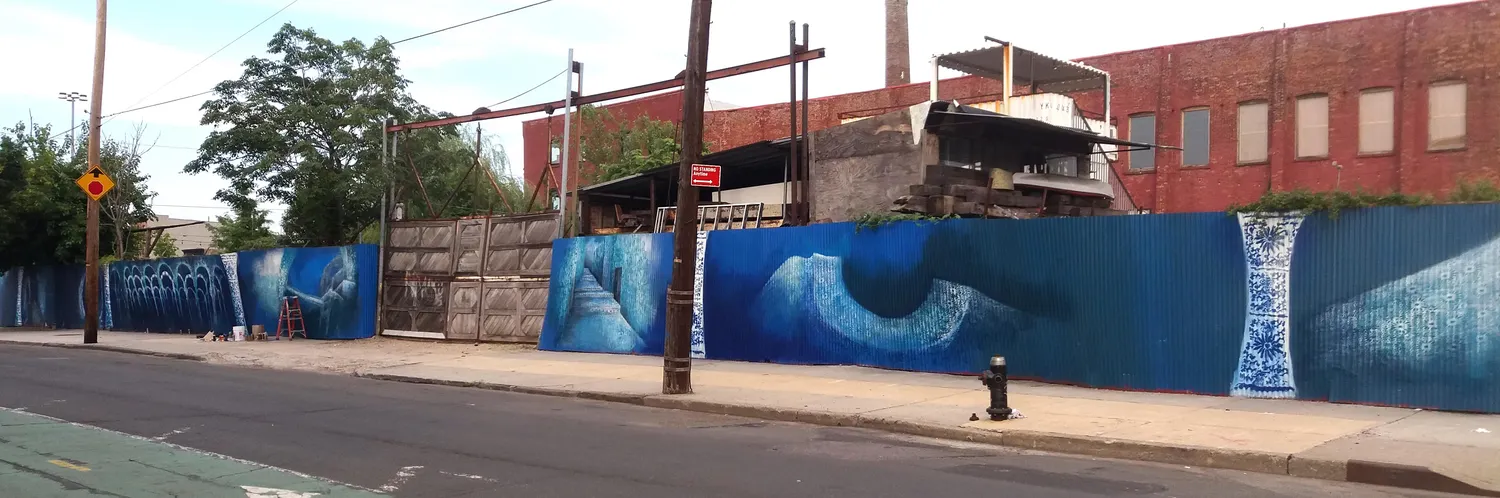
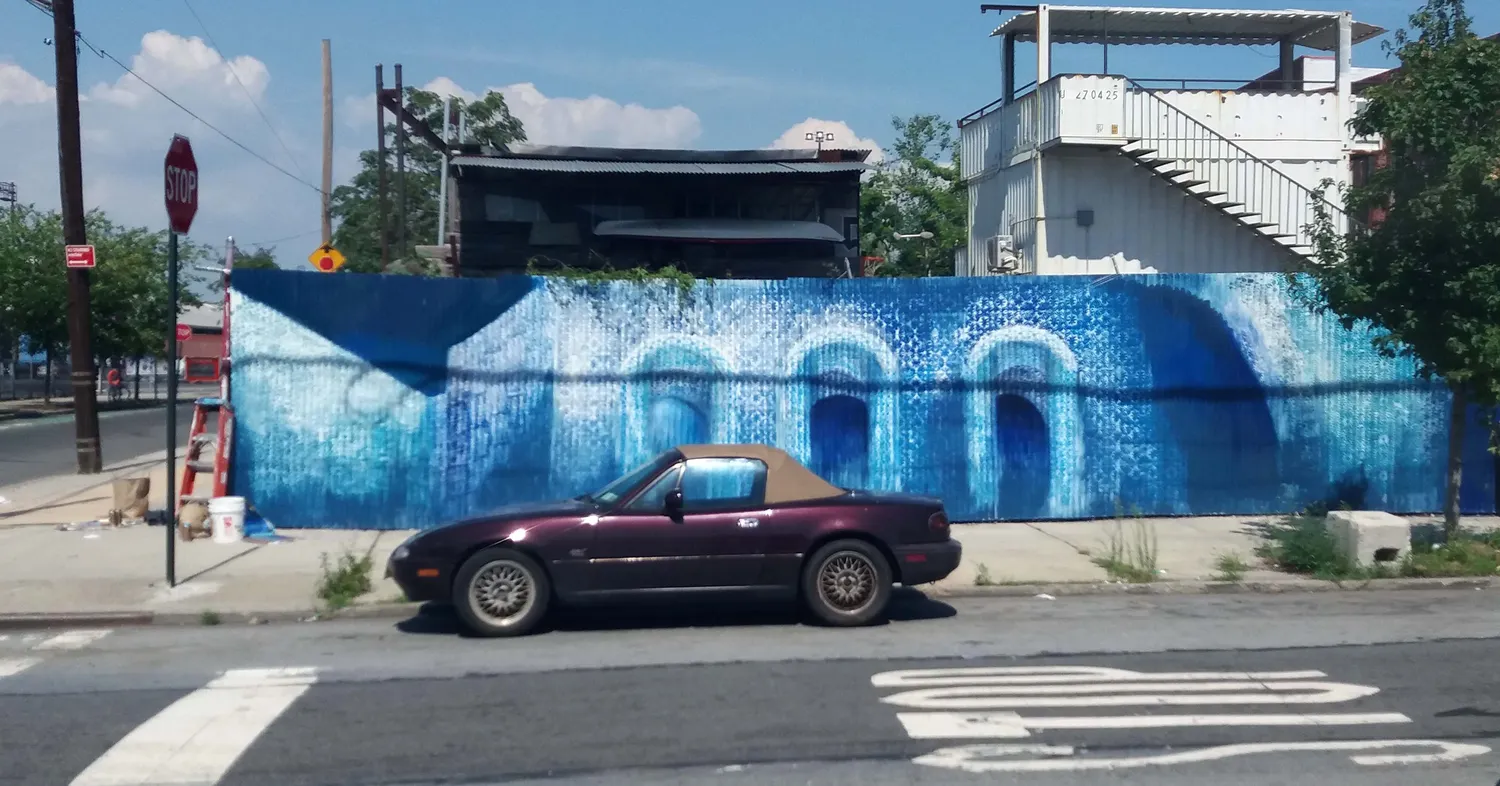
Two hundred and fifty square metres of painting wrapped around the Center for Art and Innovation in Red Hook, Brooklyn. It stood for four years, and then it did what a painted fence does.
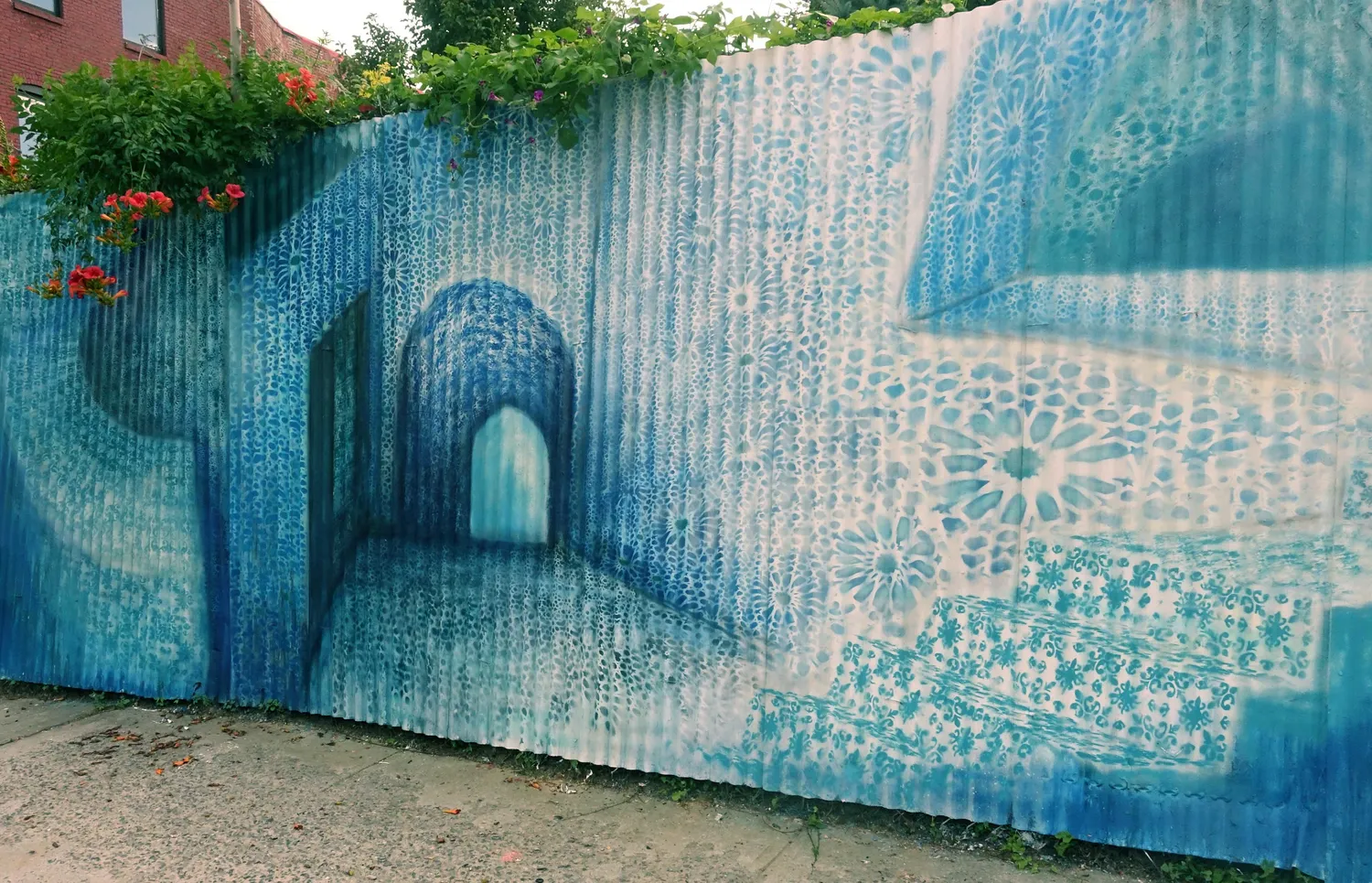
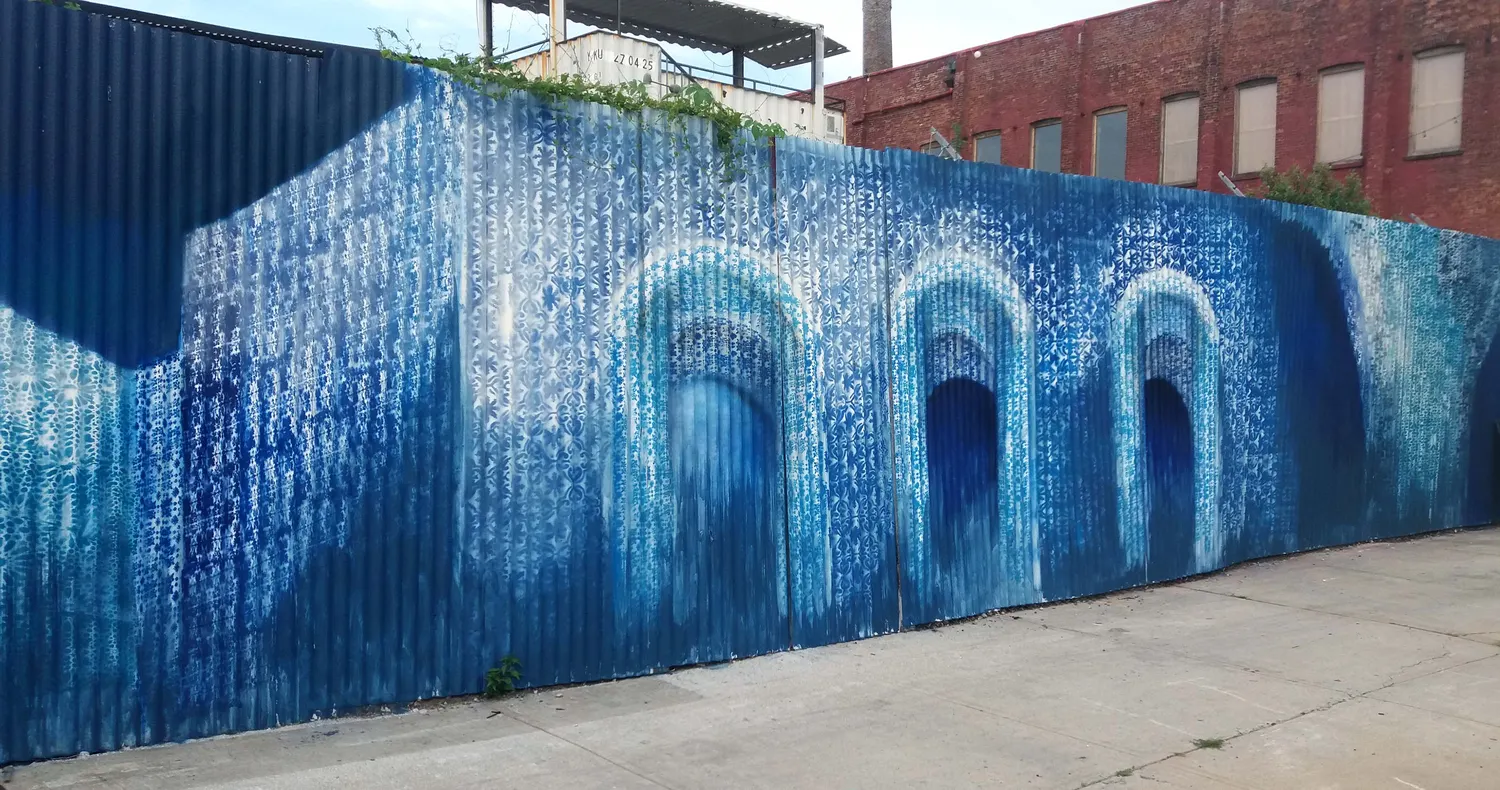
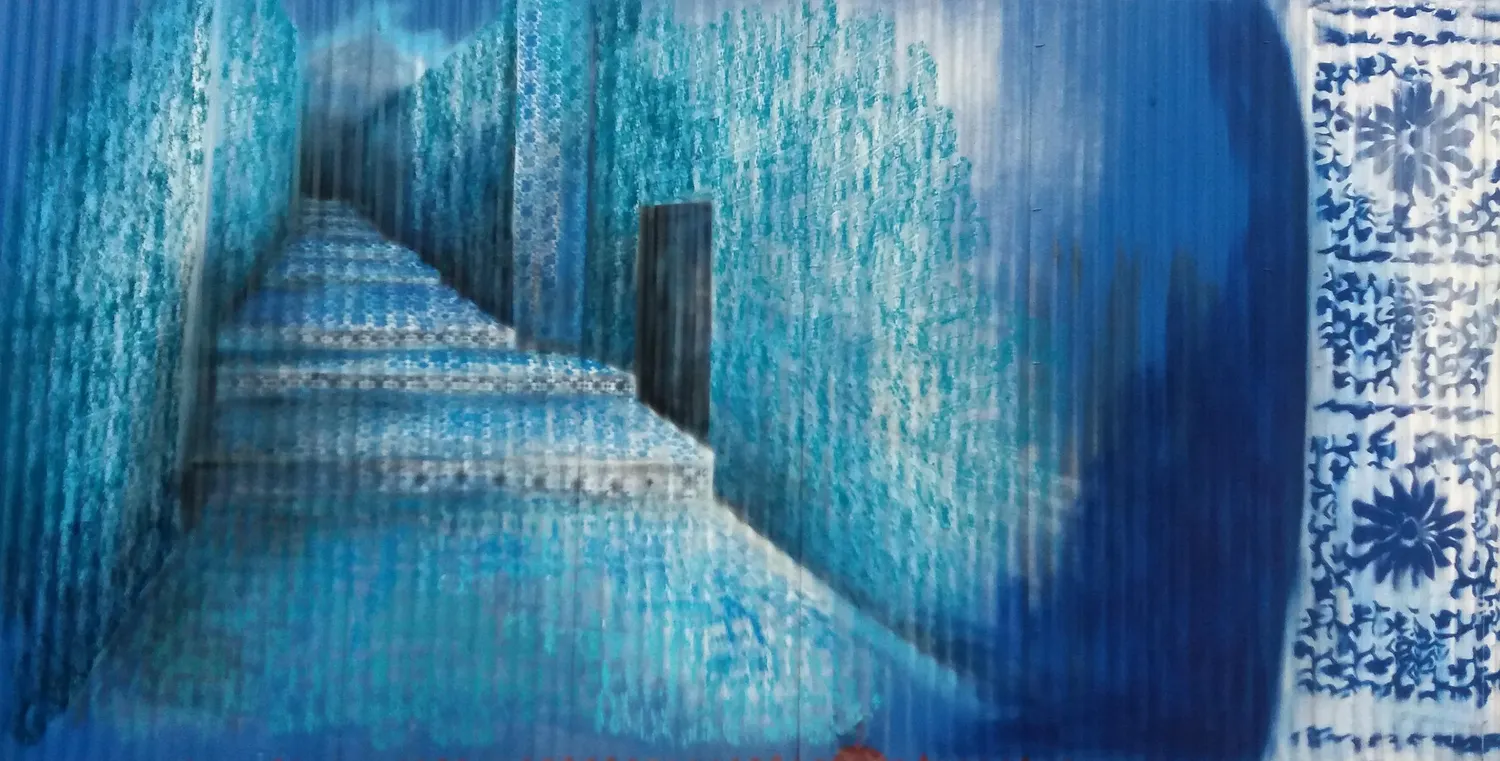
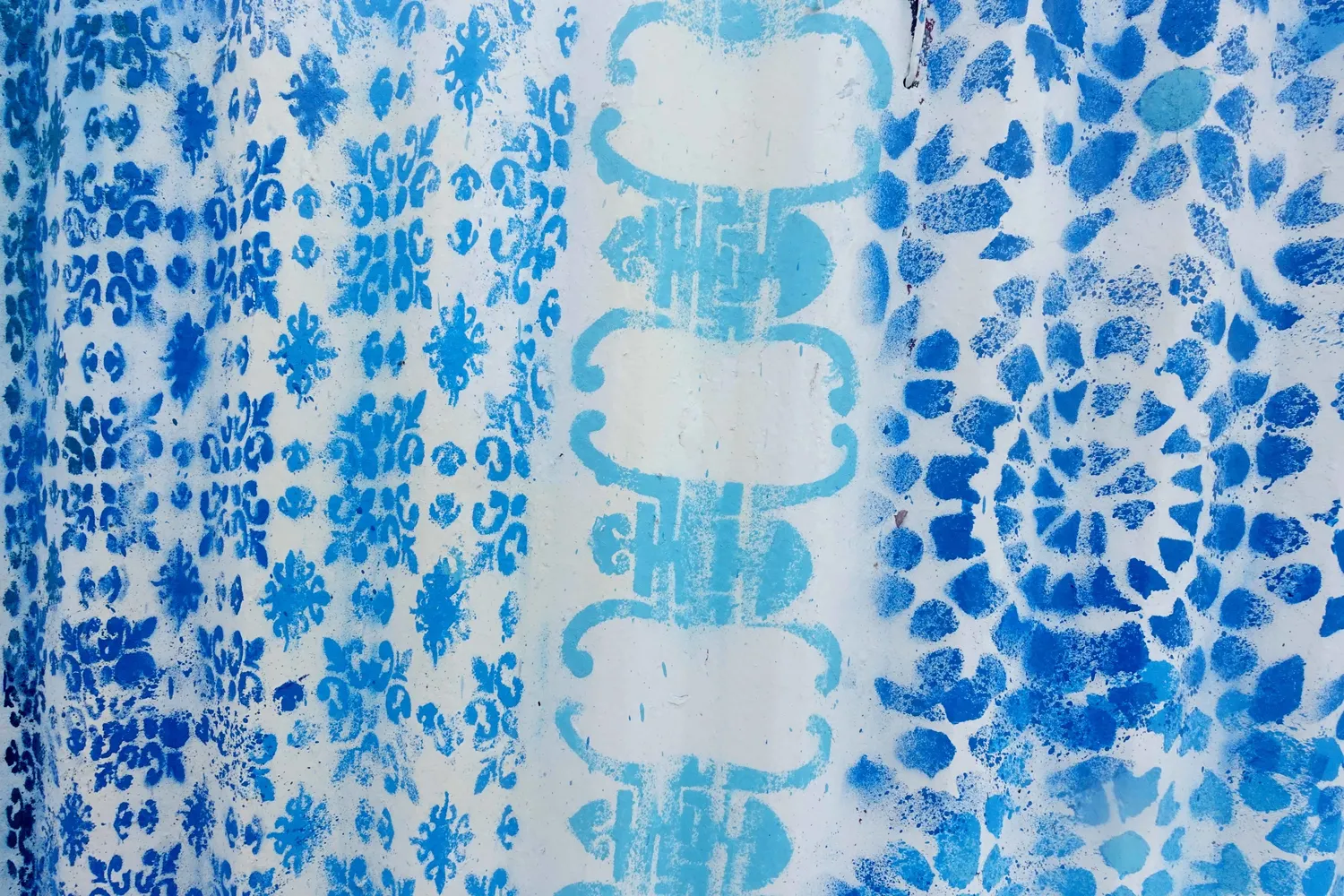
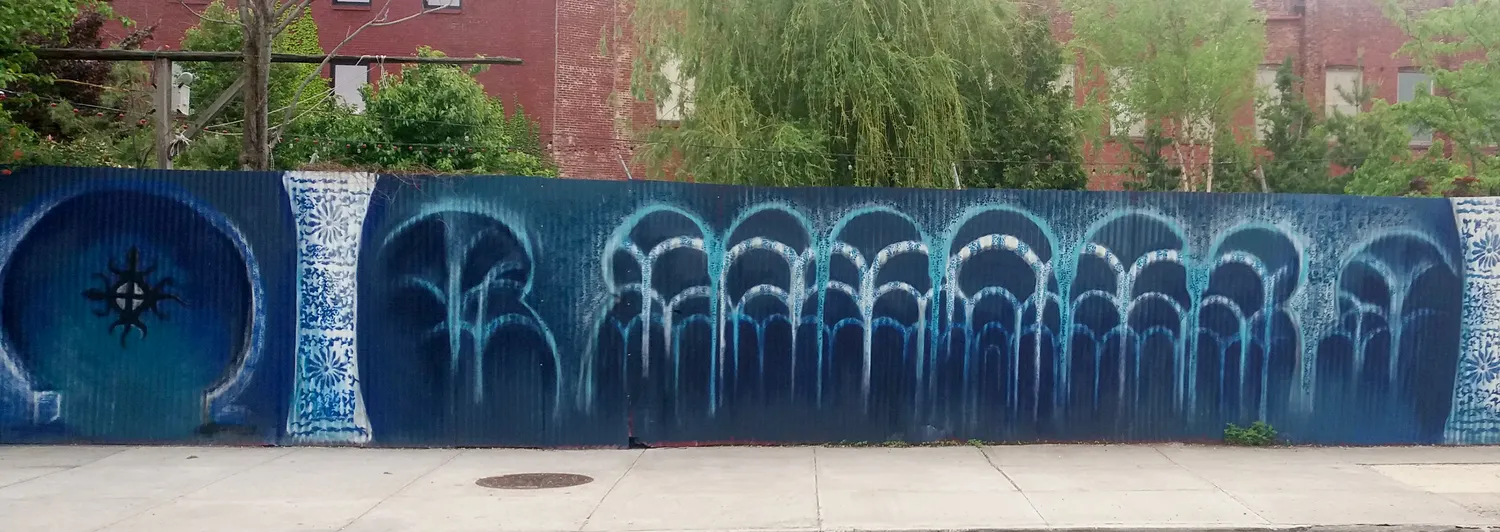
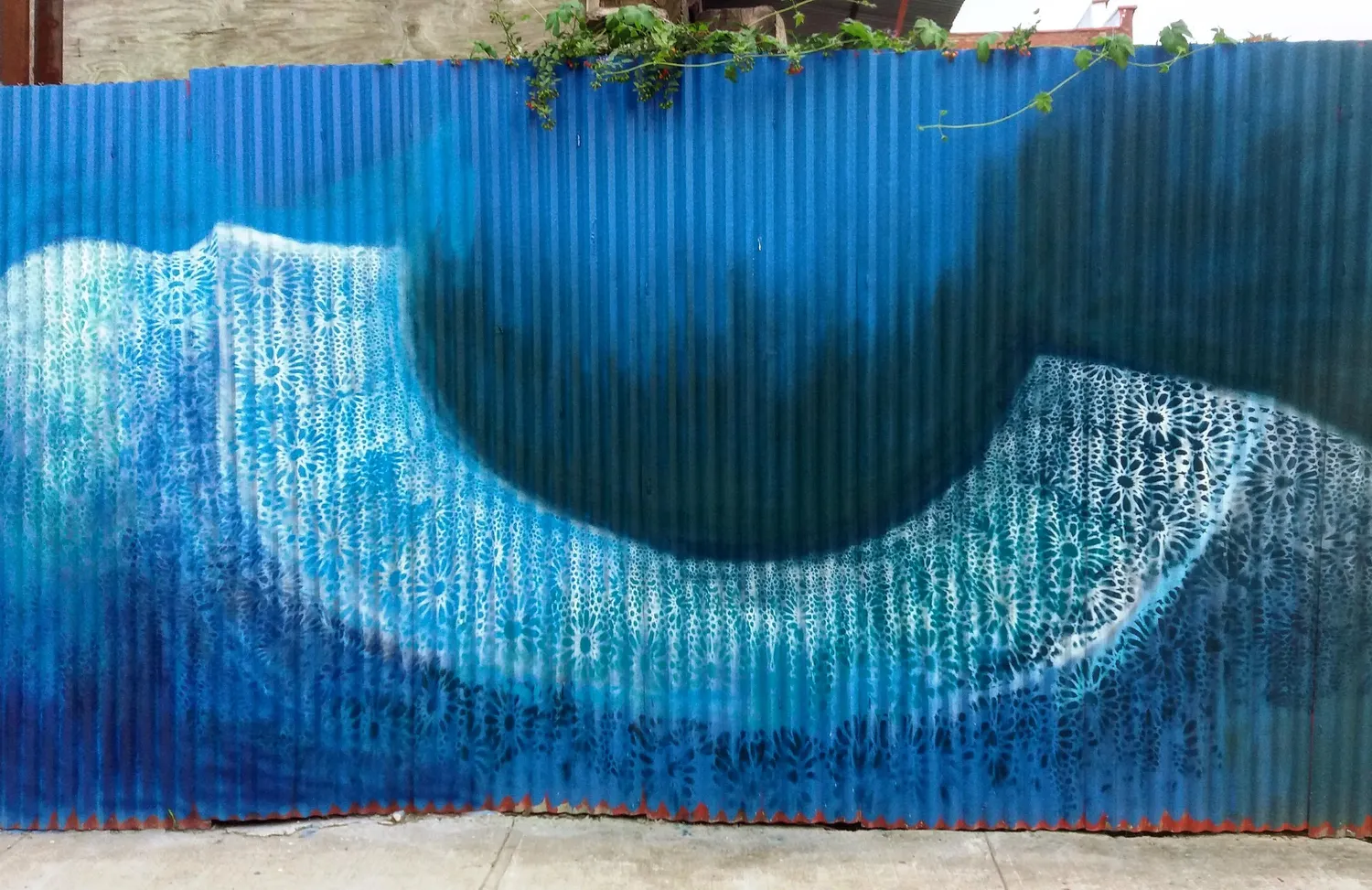
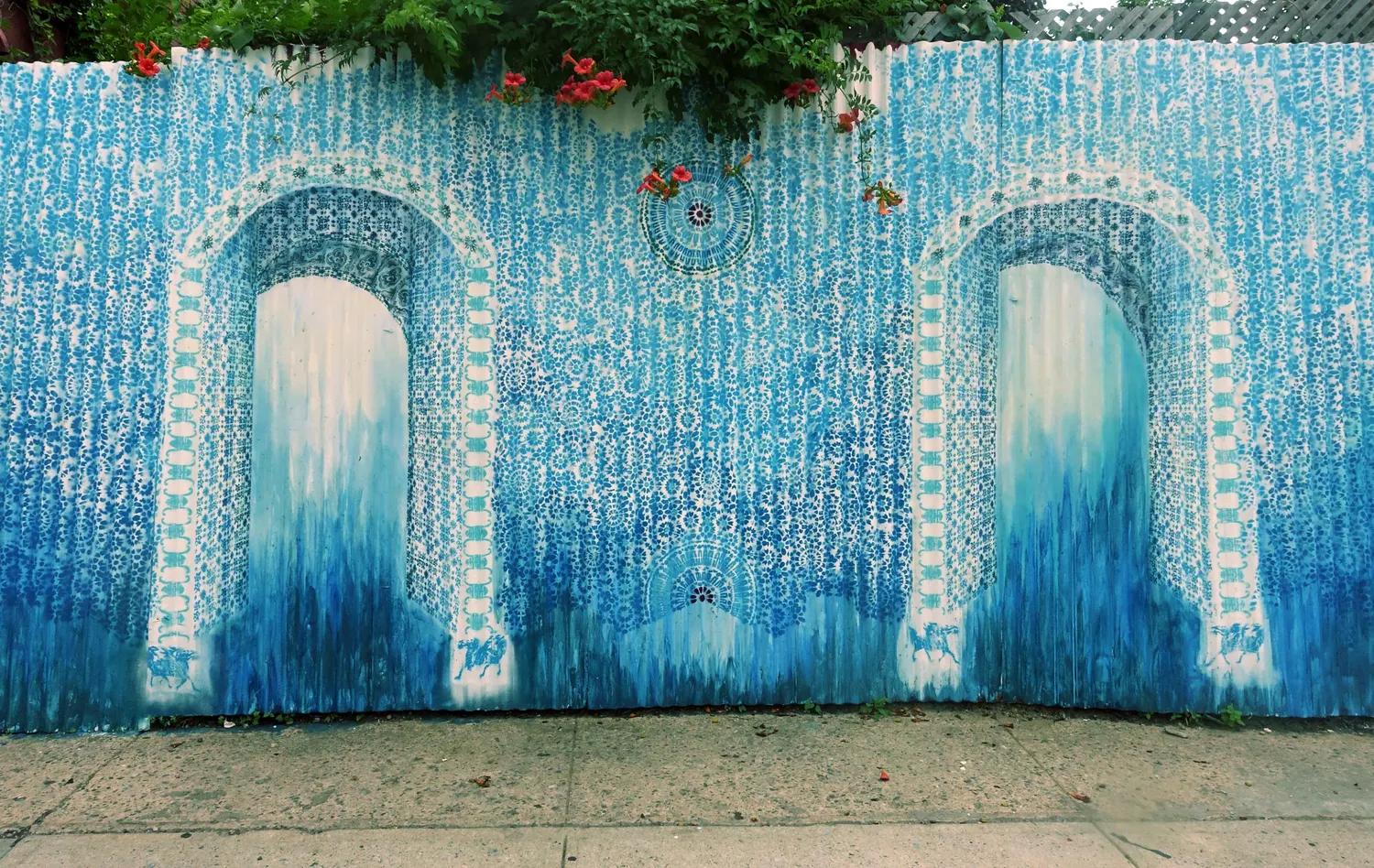
Pioneer Works sits behind a long perimeter fence, and in 2017 the fence was mine to paint. I filled it with the vocabulary I had been building for years: arches, azulejo blues, Adinkra and arabesque forms pushed into a one-point perspective so the flat boards open into rooms that are not there.
A wall like this is not a canvas that happens to be outside. People lean on it, walk past it every morning, photograph themselves against it, park in front of it. The work is finished by the street, not by me.
Front, side, back and the stairway. The blue is the constant, and the perspective does the rest.
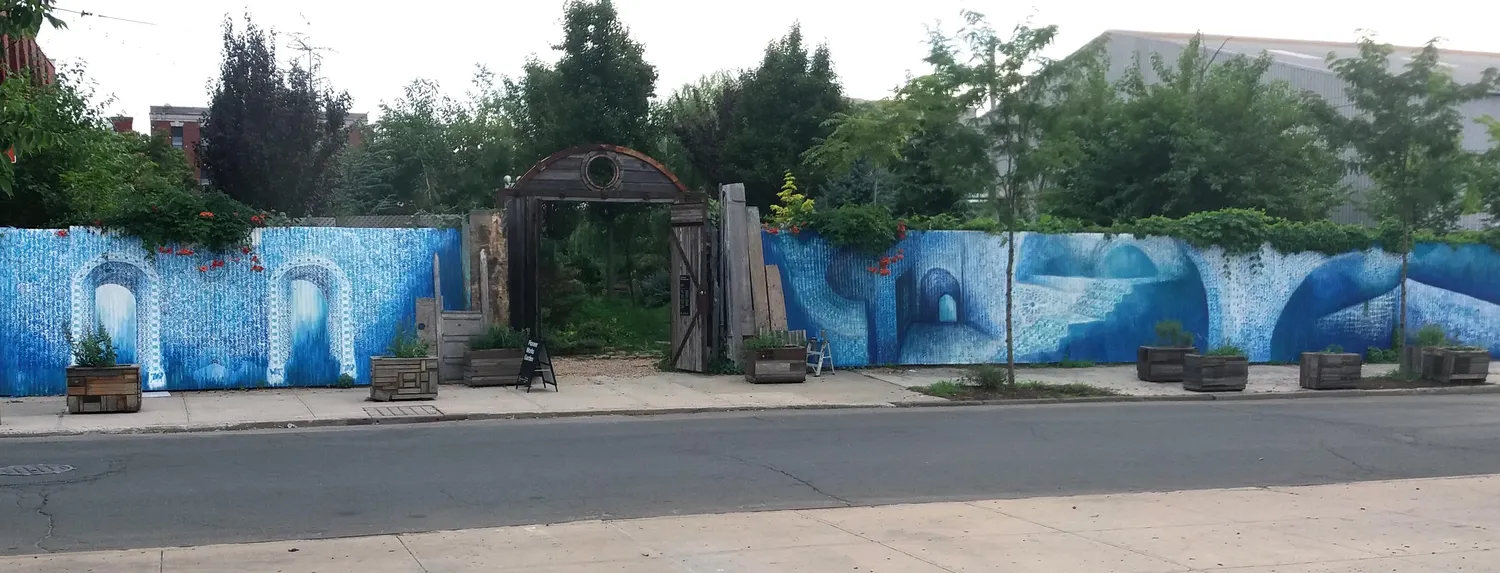
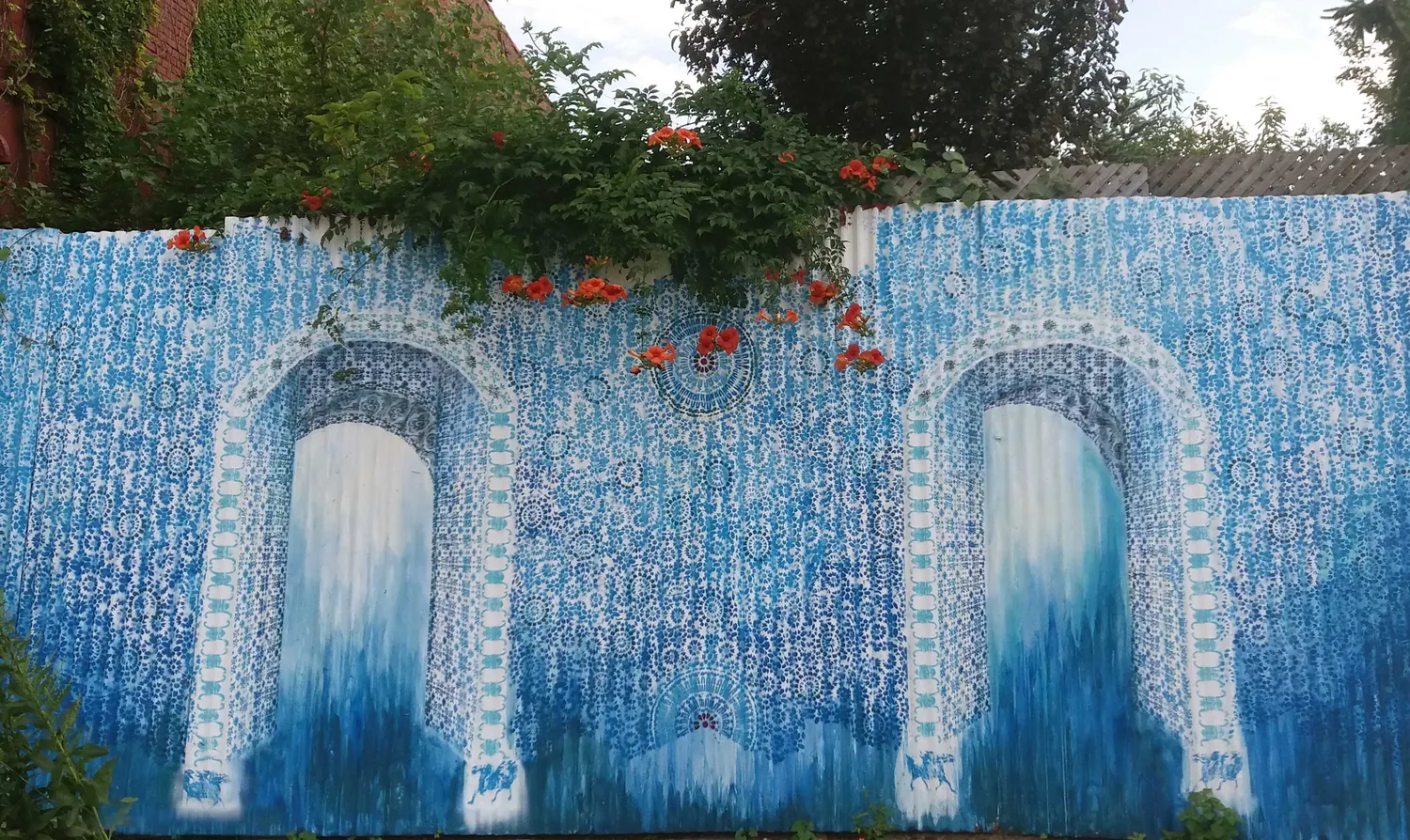
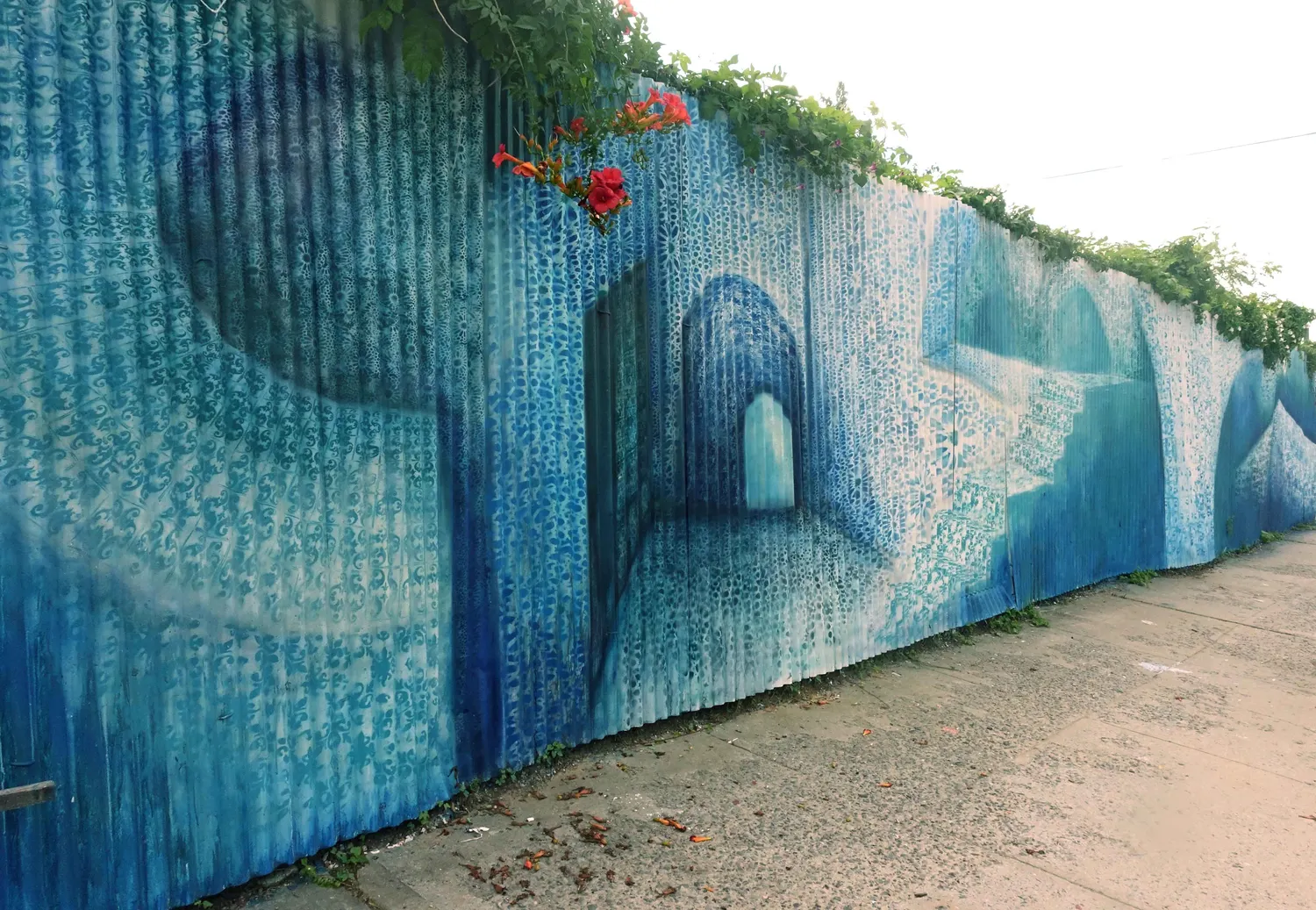

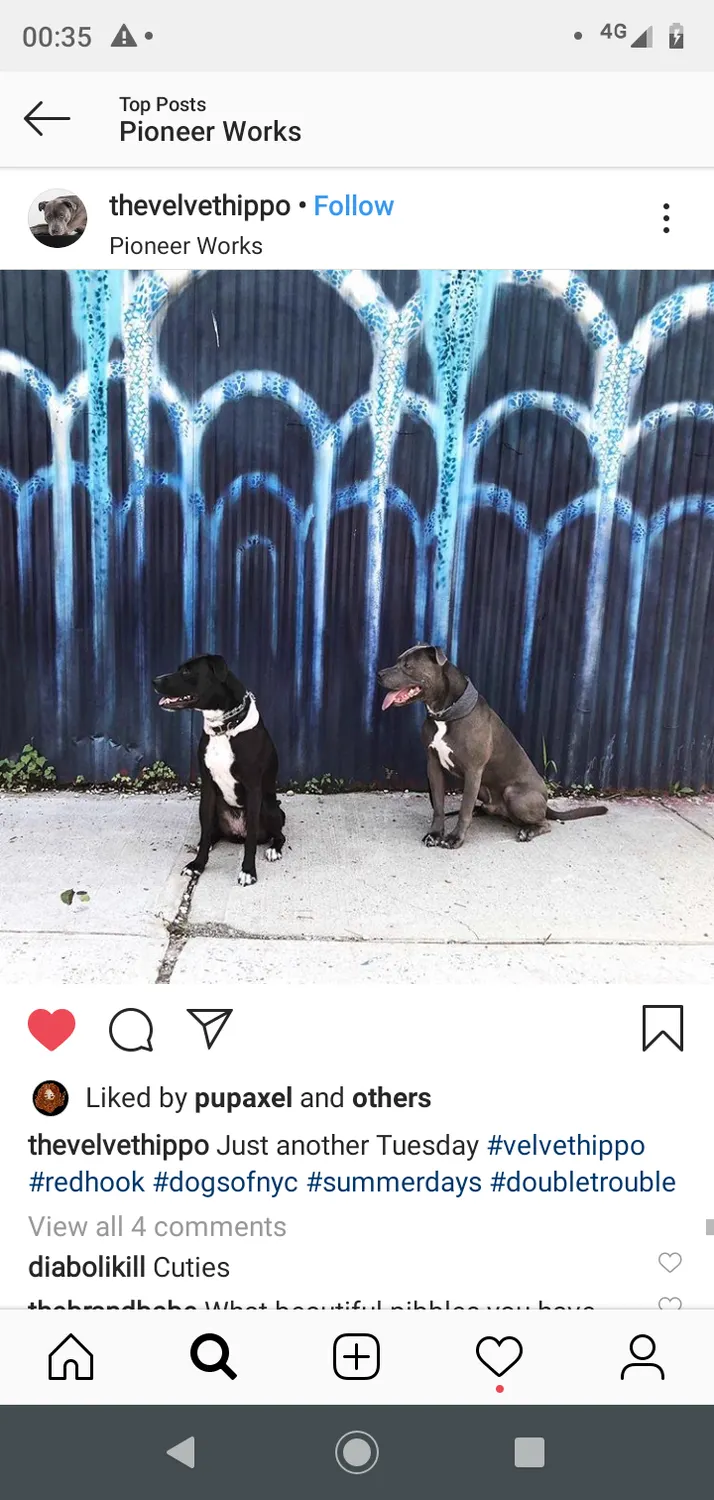
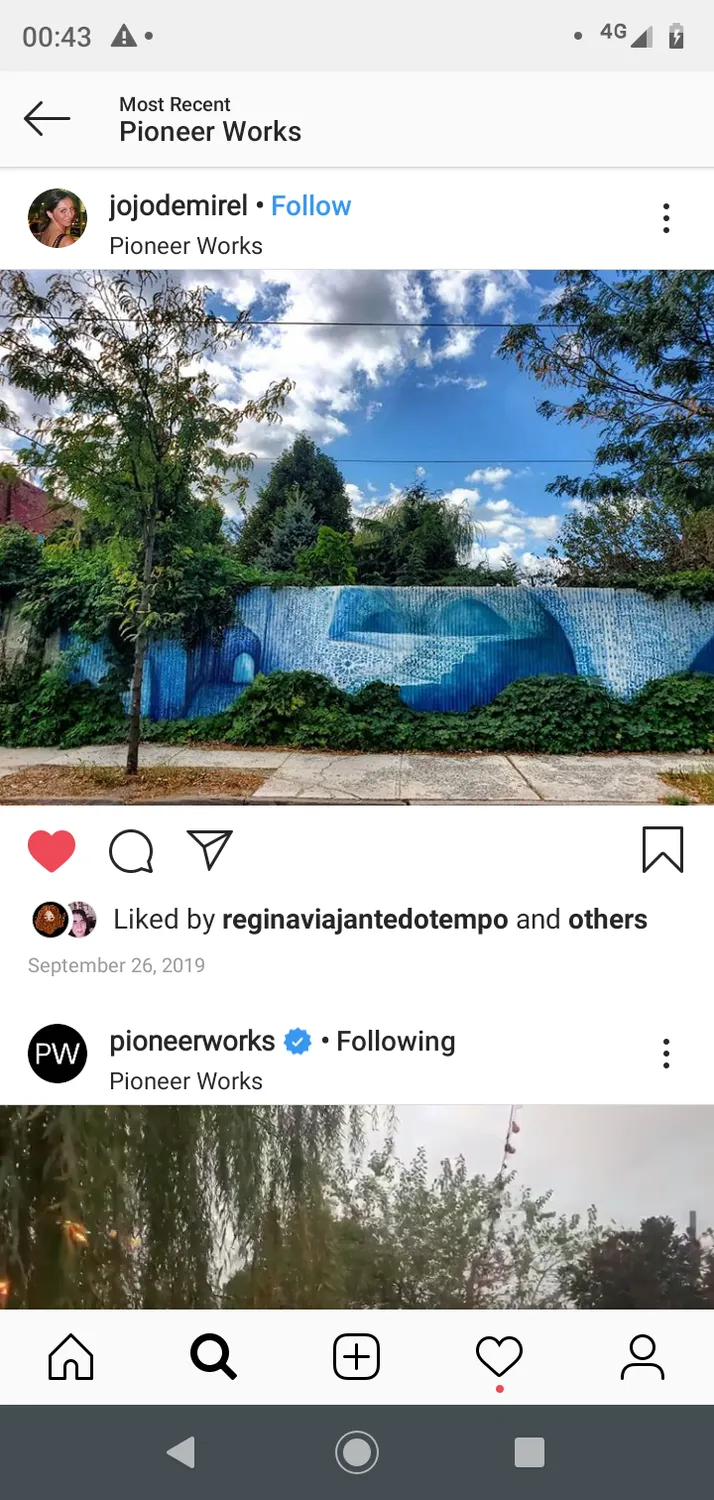
For four years the fence was a backdrop for other people’s pictures. These are some of the posts that came back: portraits, dogs, weddings, skateboards, first days of school. This is the part of a public work you cannot design.



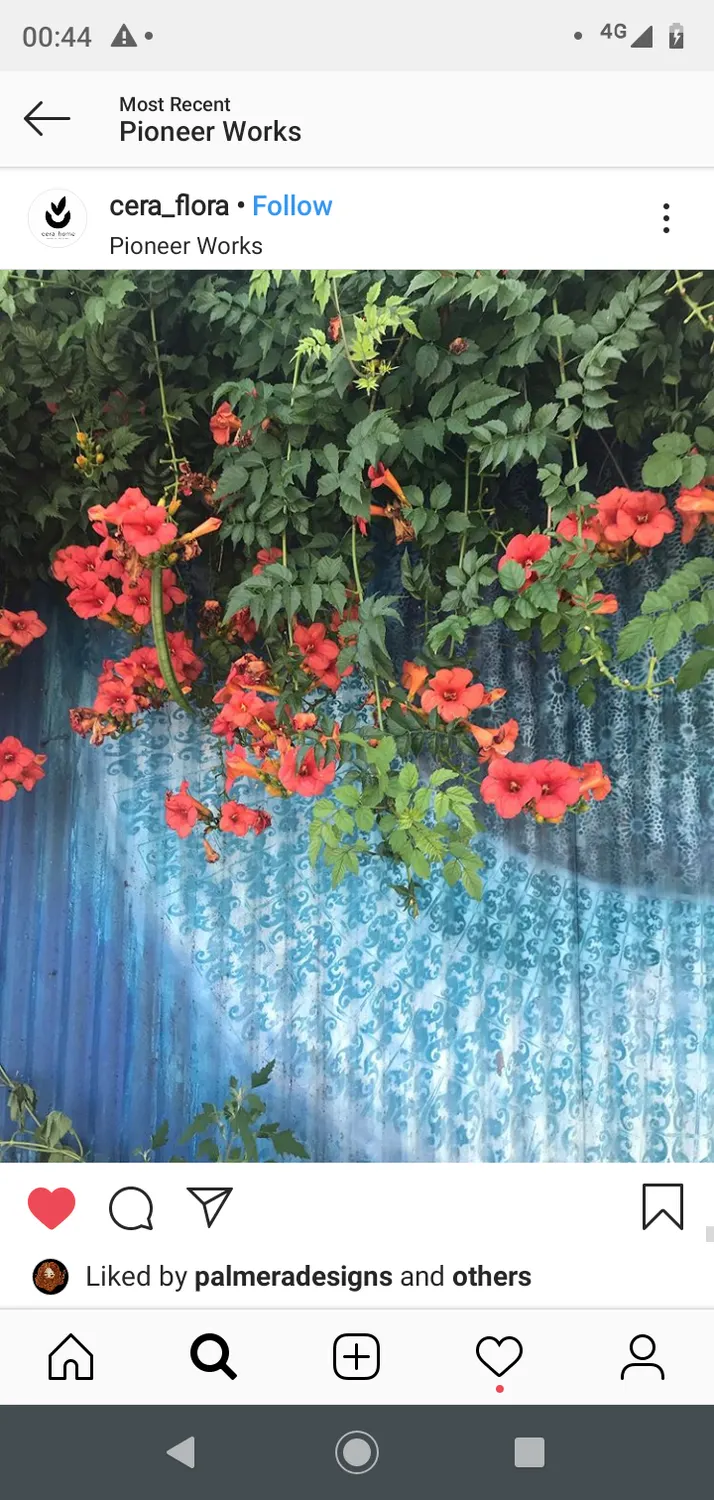

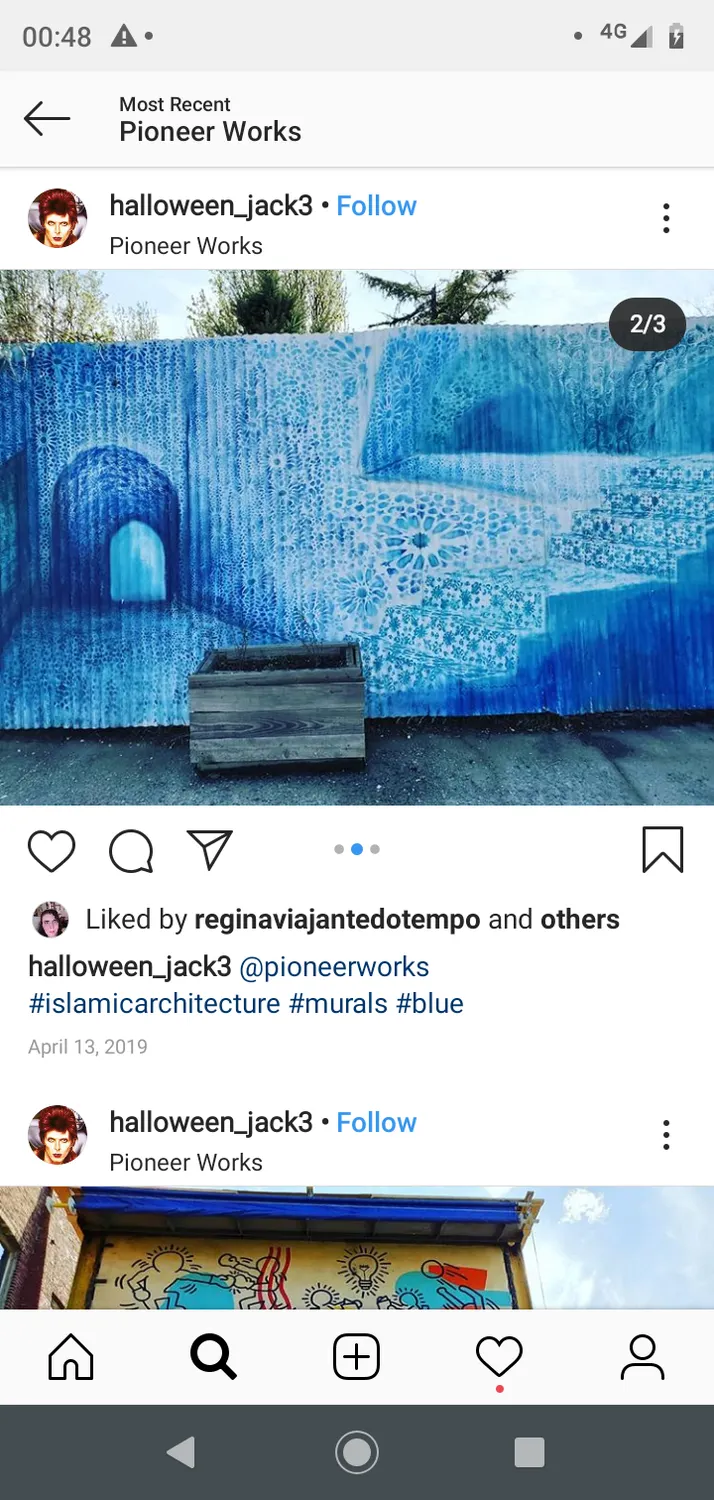


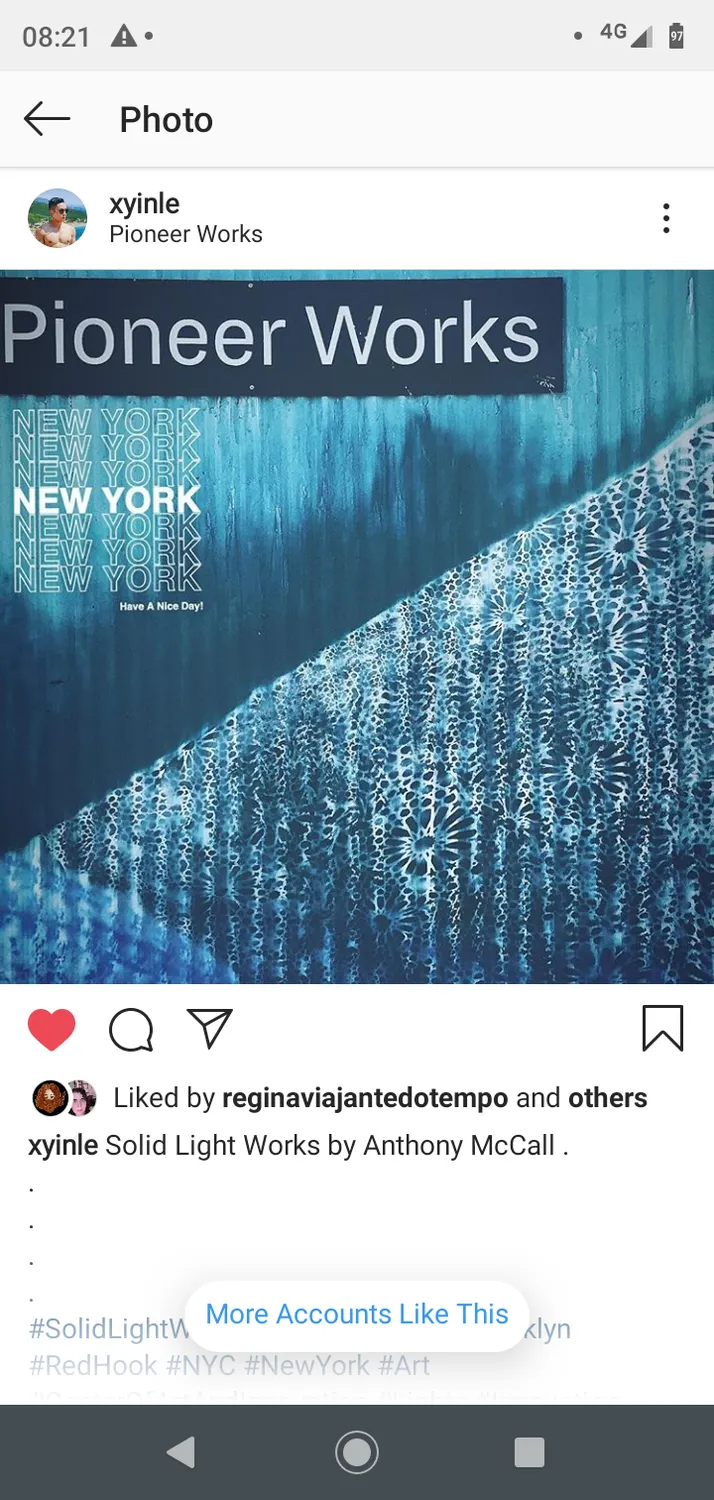


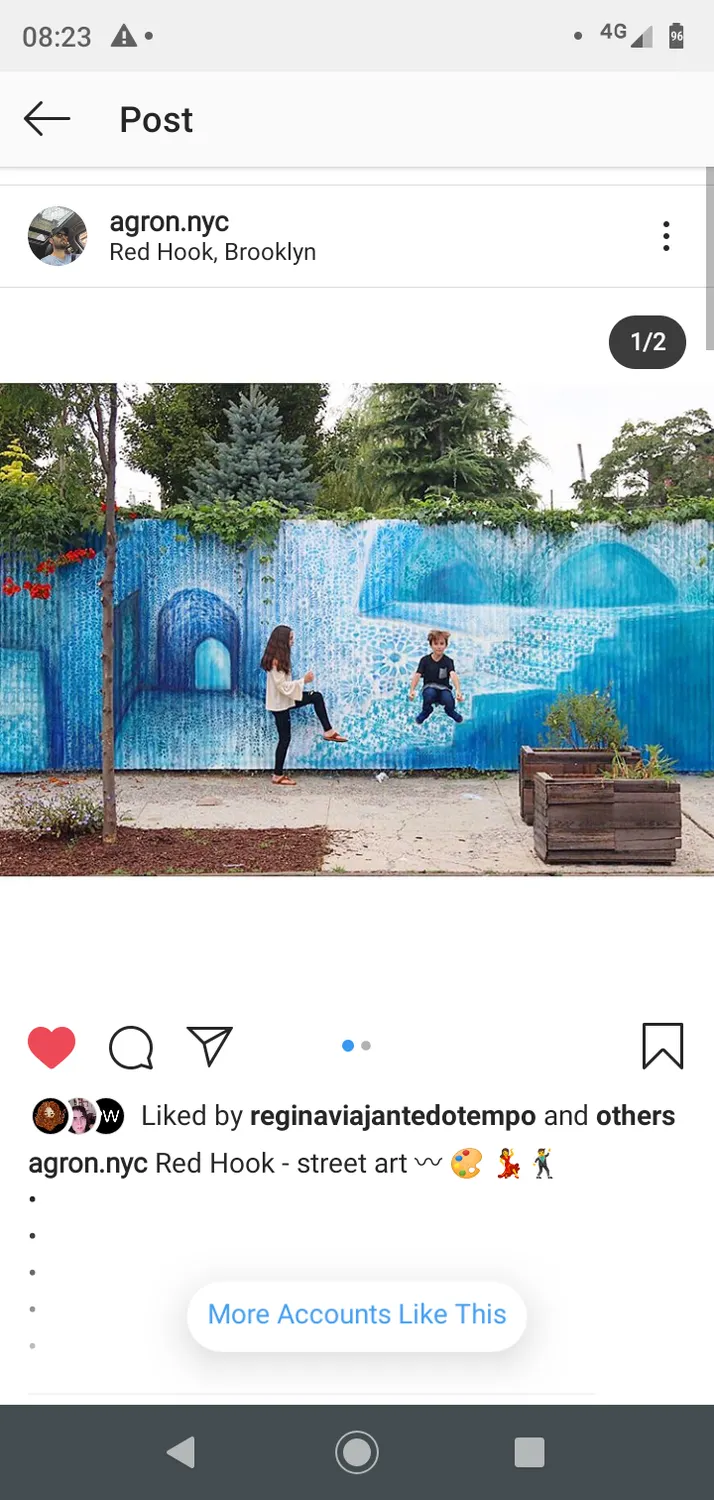
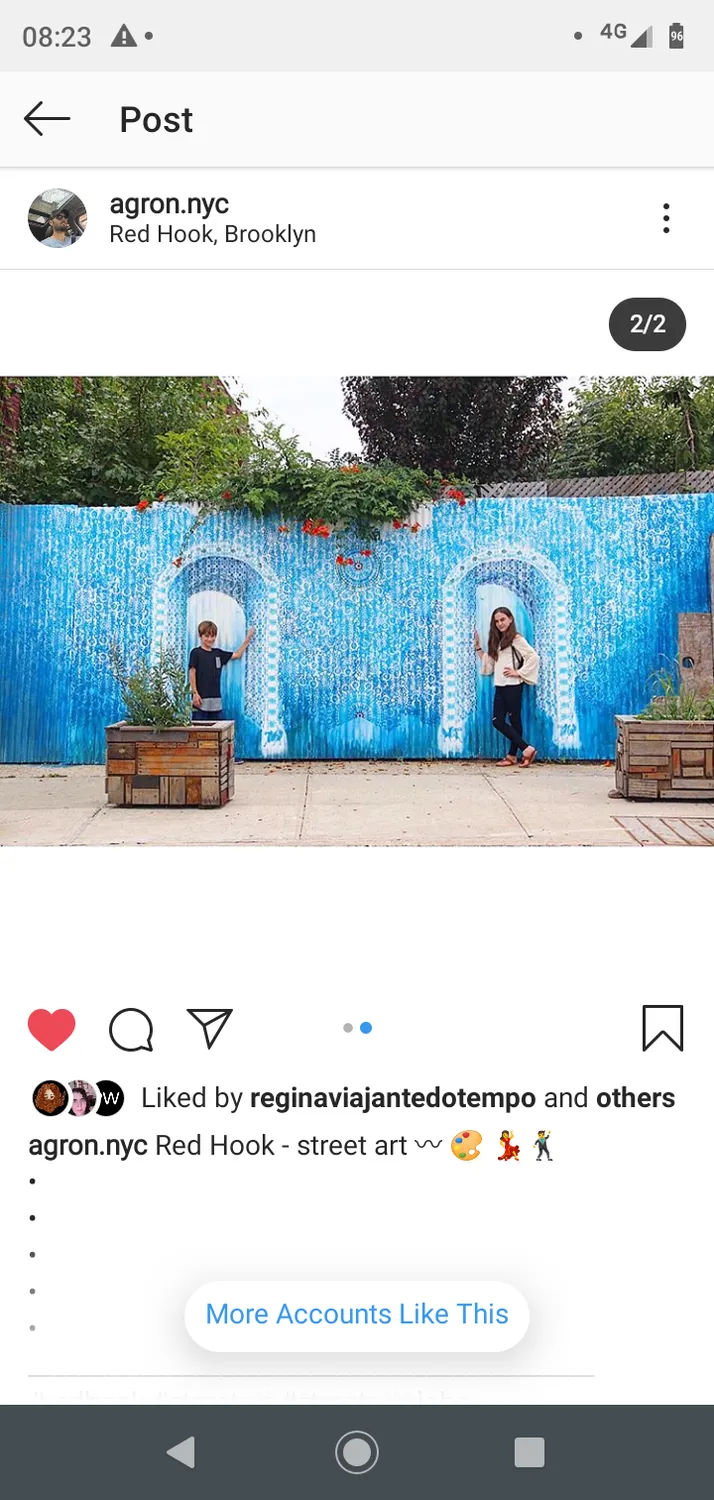
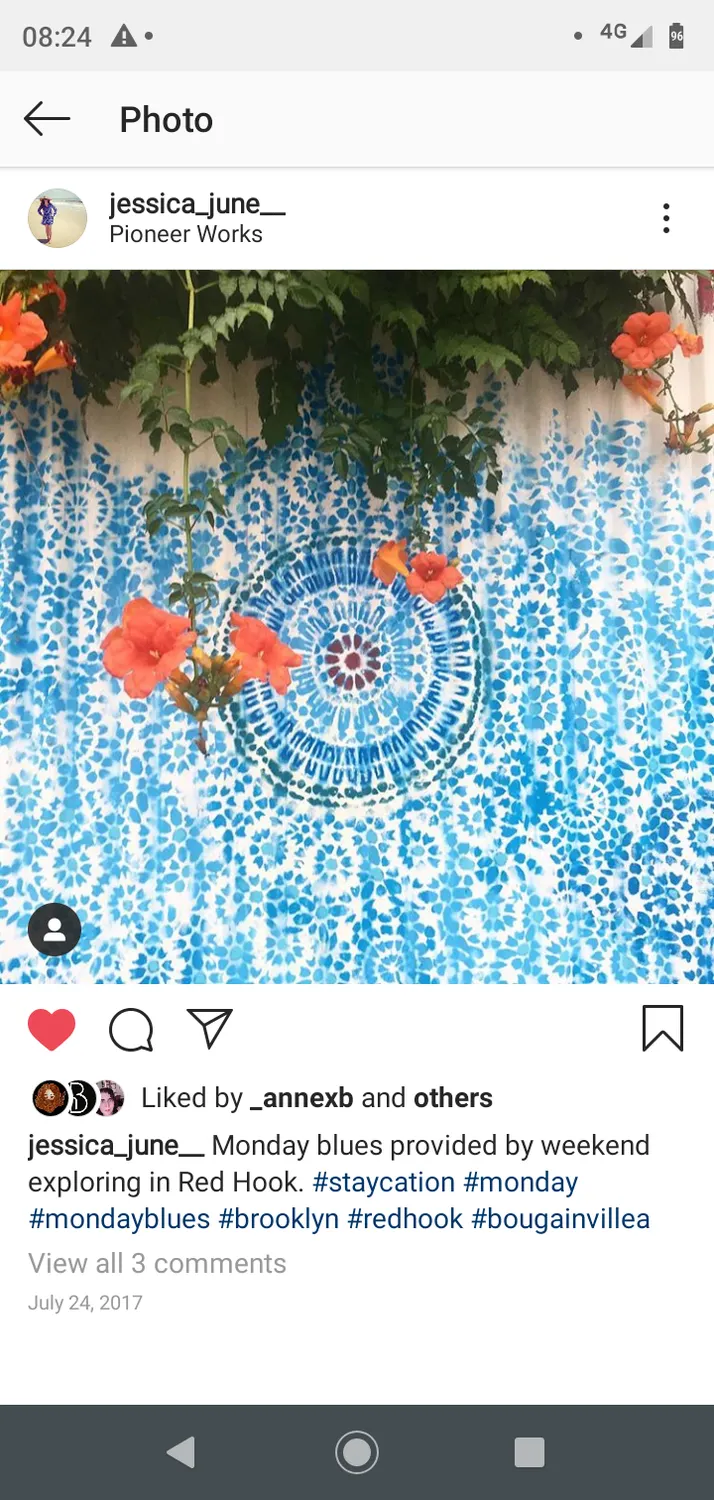

By September 2021 the sun, the salt air and four Red Hook winters had done their work. I went back and photographed the fence panel by panel: the blue gone chalky, the stencils half eaten, rust coming up through the pattern, paint lifting off in sheets, and a surveillance notice bolted straight through the painting.
A mural outdoors is a slow performance and this is its last act. It is not a failure. It is the thing behaving exactly as a painted fence in Red Hook behaves.
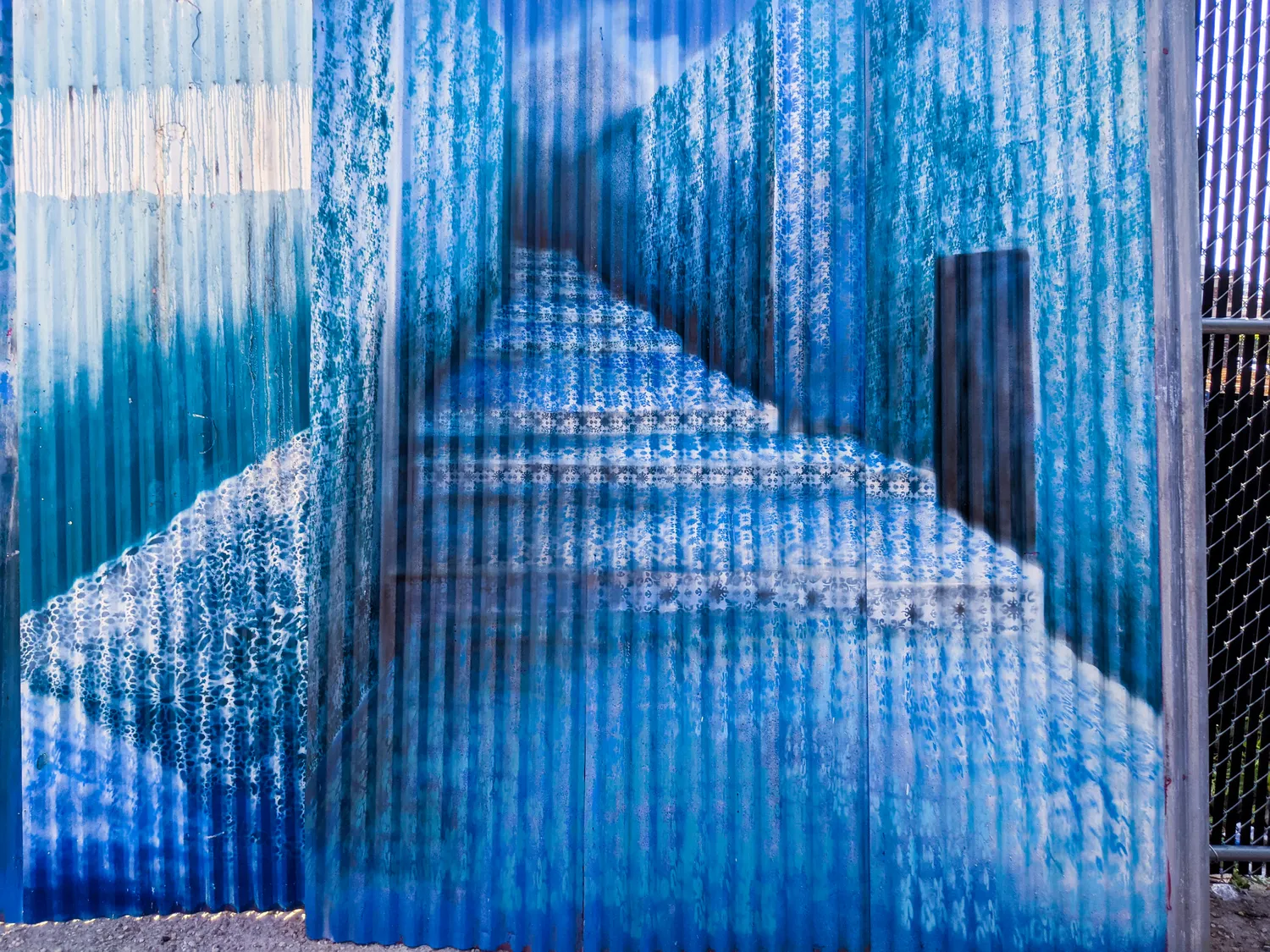

















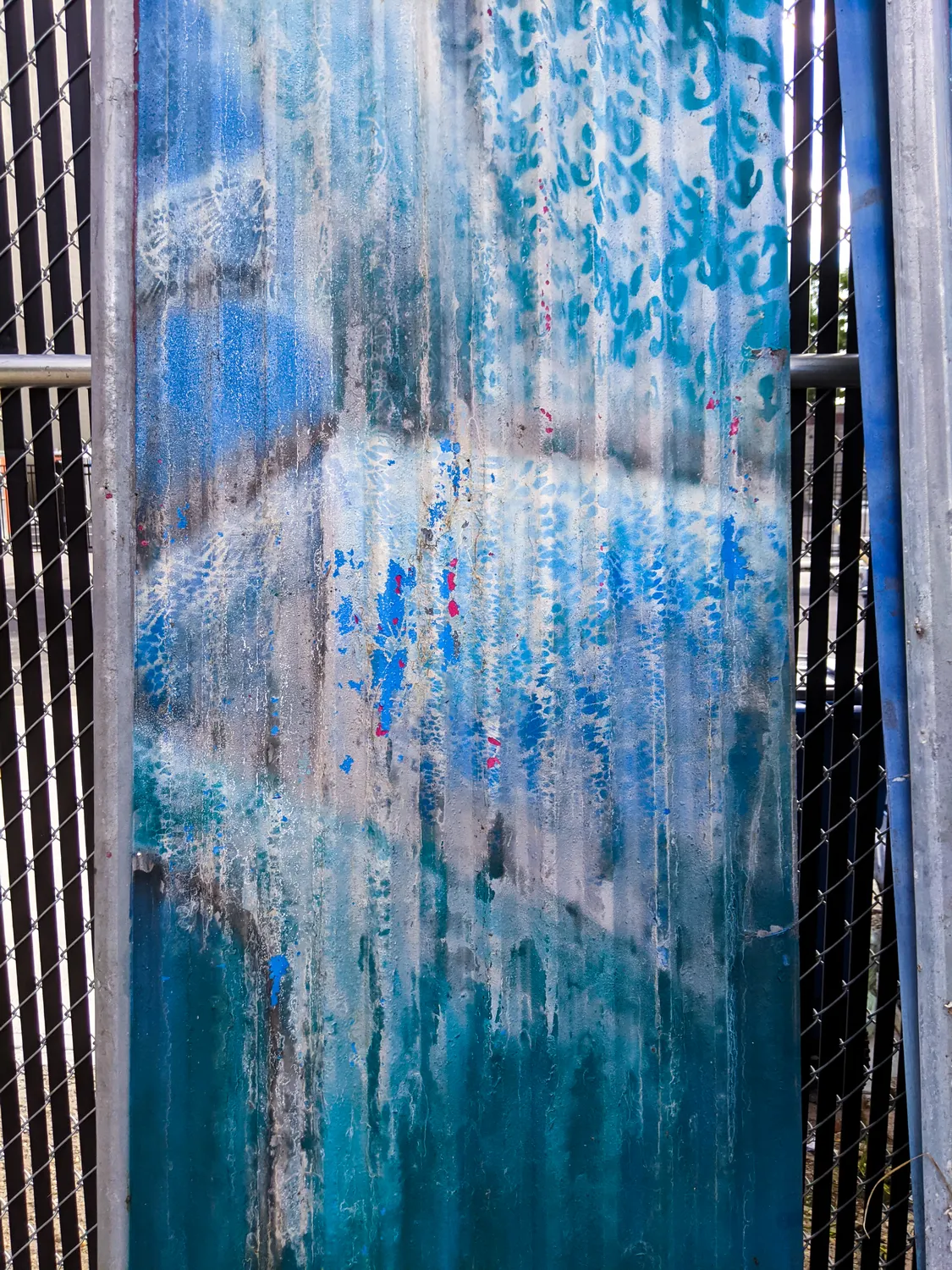










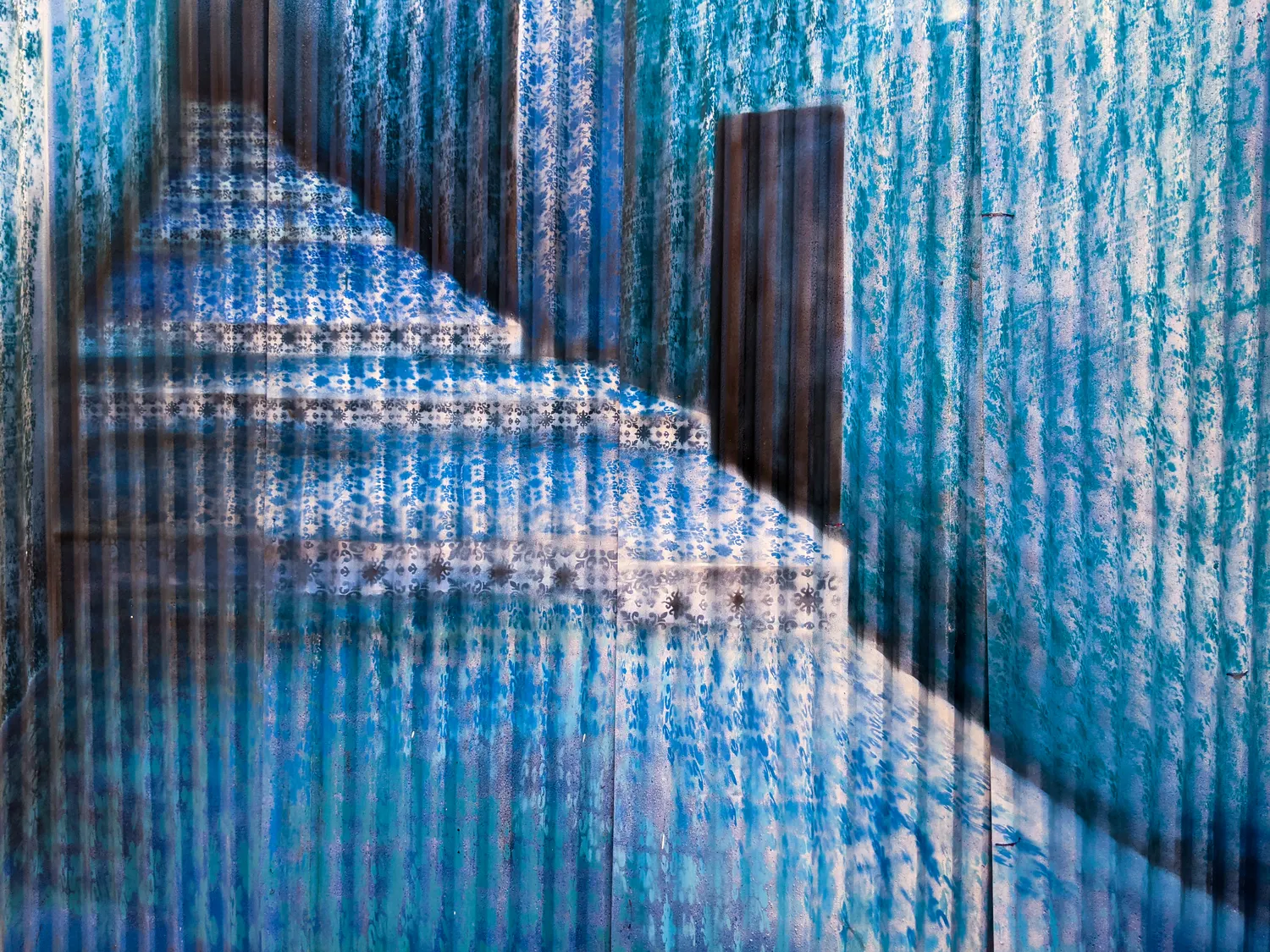
The fence exists now as photographs, and as several thousand pictures on other people’s phones.
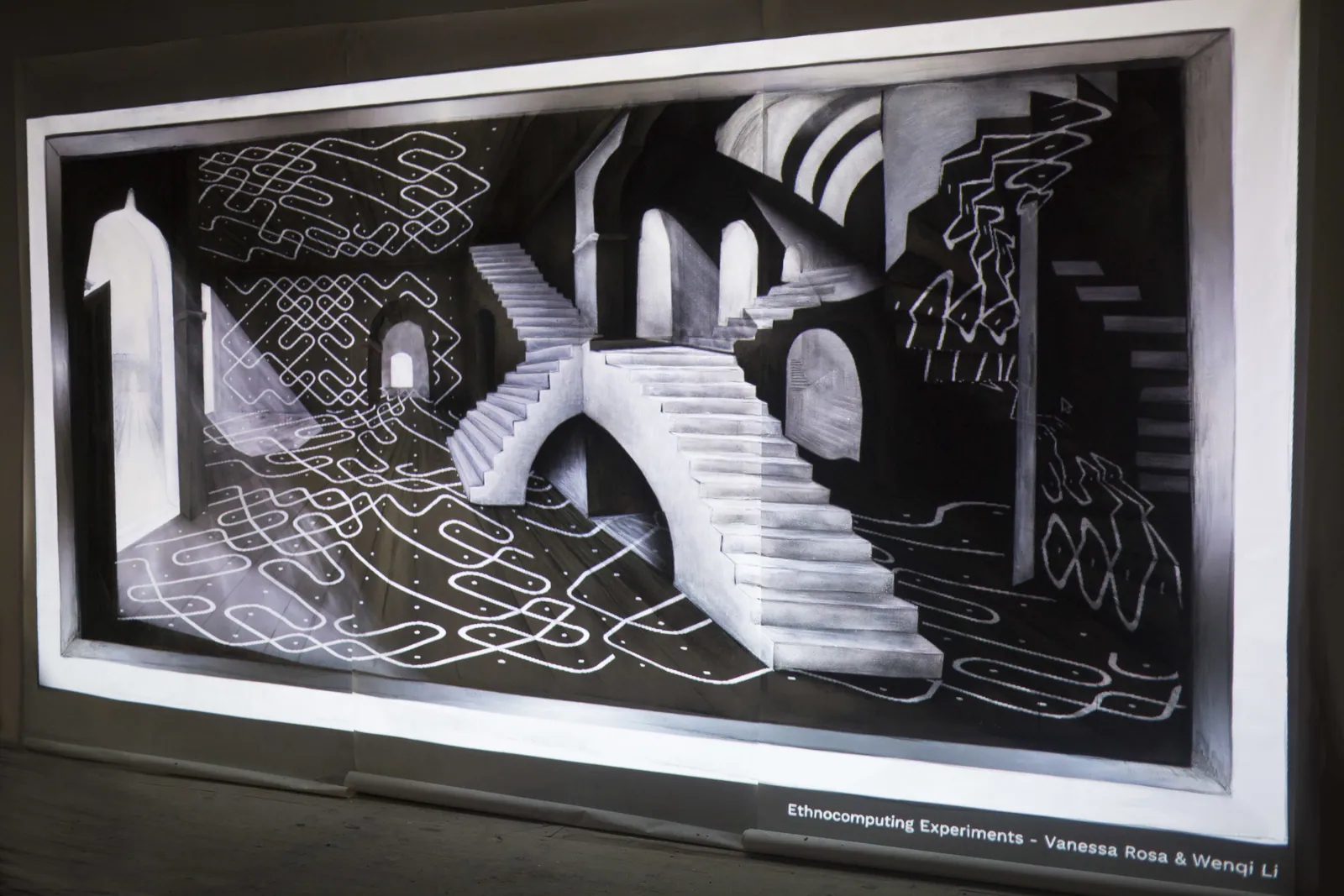
Ethnocomputing Experiments
The fence was not the only thing I made there. In April 2018, back inside the building, Wenqi Li and I showed Ethnocomputing Experiments: Chokwe Sona patterns from Angola redrawn in Processing along the heritage algorithm that produced them, projected over a painting built from Vredeman de Vries’ seventeenth-century treatise on linear perspective.
It is the same argument as the fence, made indoors and with code: two mathematical ways of handling a line, put in one room.