The first immersion
A month living among the Huni Kuin of the upper Envira, invited by Same Putumi, to understand the region first and design anything only after that.
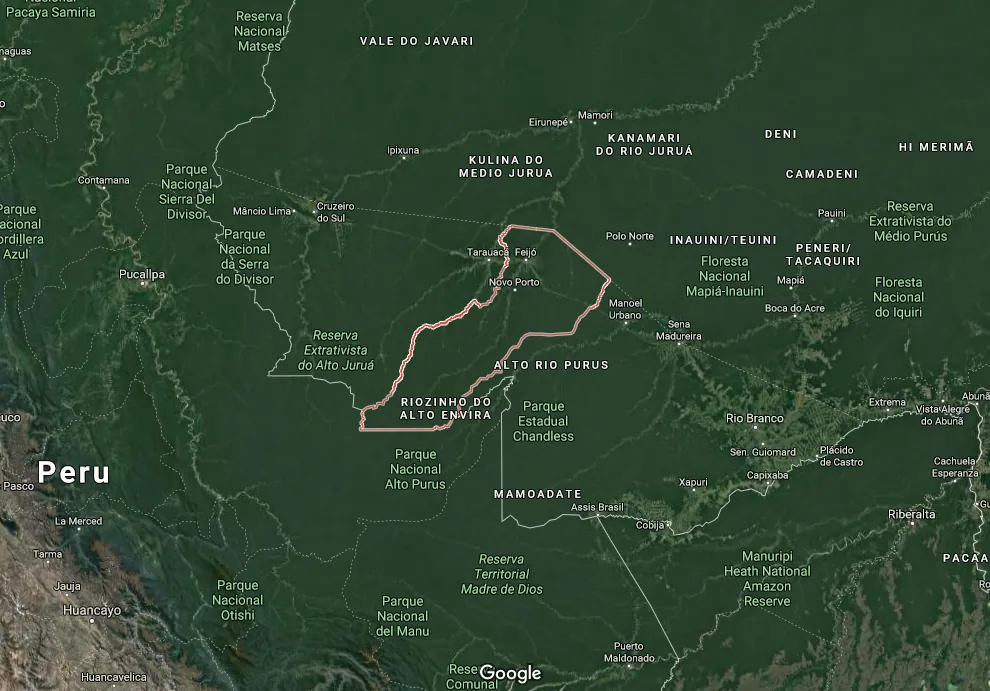
In September 2018 I lived for a month with an indigenous group of Huni Kuin, also known as Kashinawa, based on the upper part of the Envira river in Acre, in the western Amazon. I was invited by Same Putumi, a healer and religious woman leader who often travels to São Paulo for cultural events.
The purpose of the trip was to understand Same’s region well enough to build projects with her rather than for her. I spent the month living with Same and twenty other people from her village, and together we travelled to other villages along the river. I also visited the institutional spaces of indigenous organisations in Rio Branco, the state capital.
The Envira runs between Peru and Brazil and is remarkable for the ethnic diversity along it: at least seven ethnicities, in dozens of villages of twenty to six hundred people, at very different degrees of contact with non-indigenous society. The closer to the source, the more self-sufficient the community; near the source live groups with no contact at all.
The first immersion, filmed on the upper Envira.
Photographs with laser-cut stencils and sunlight
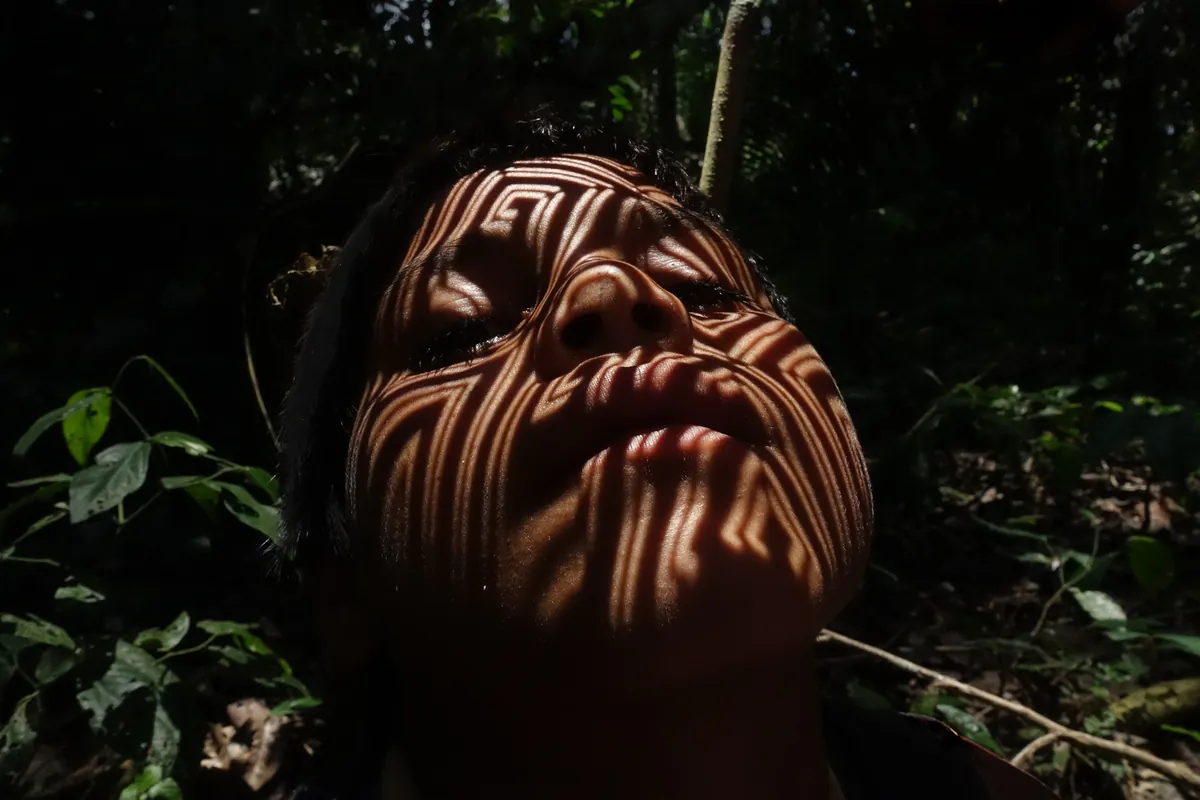
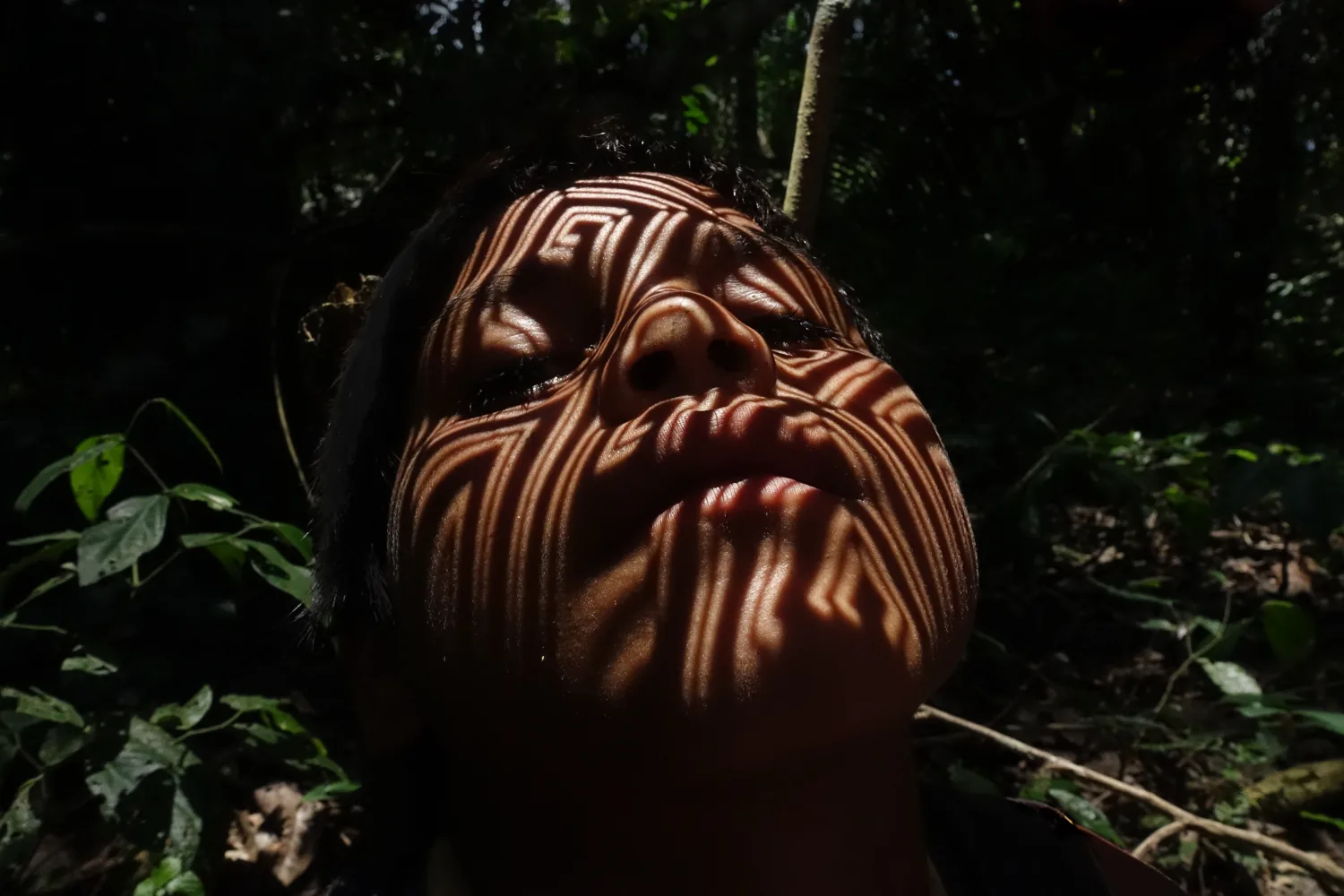
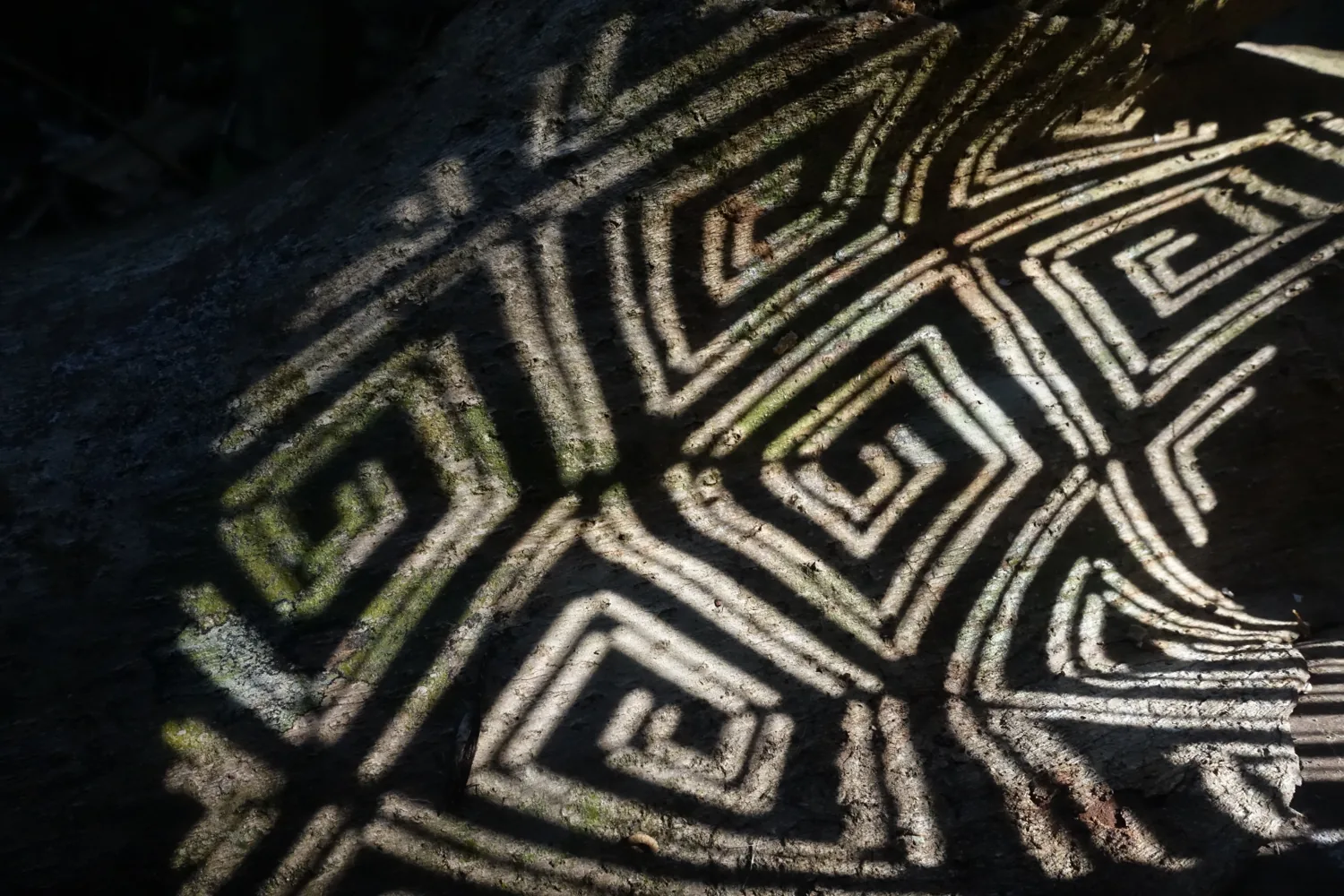
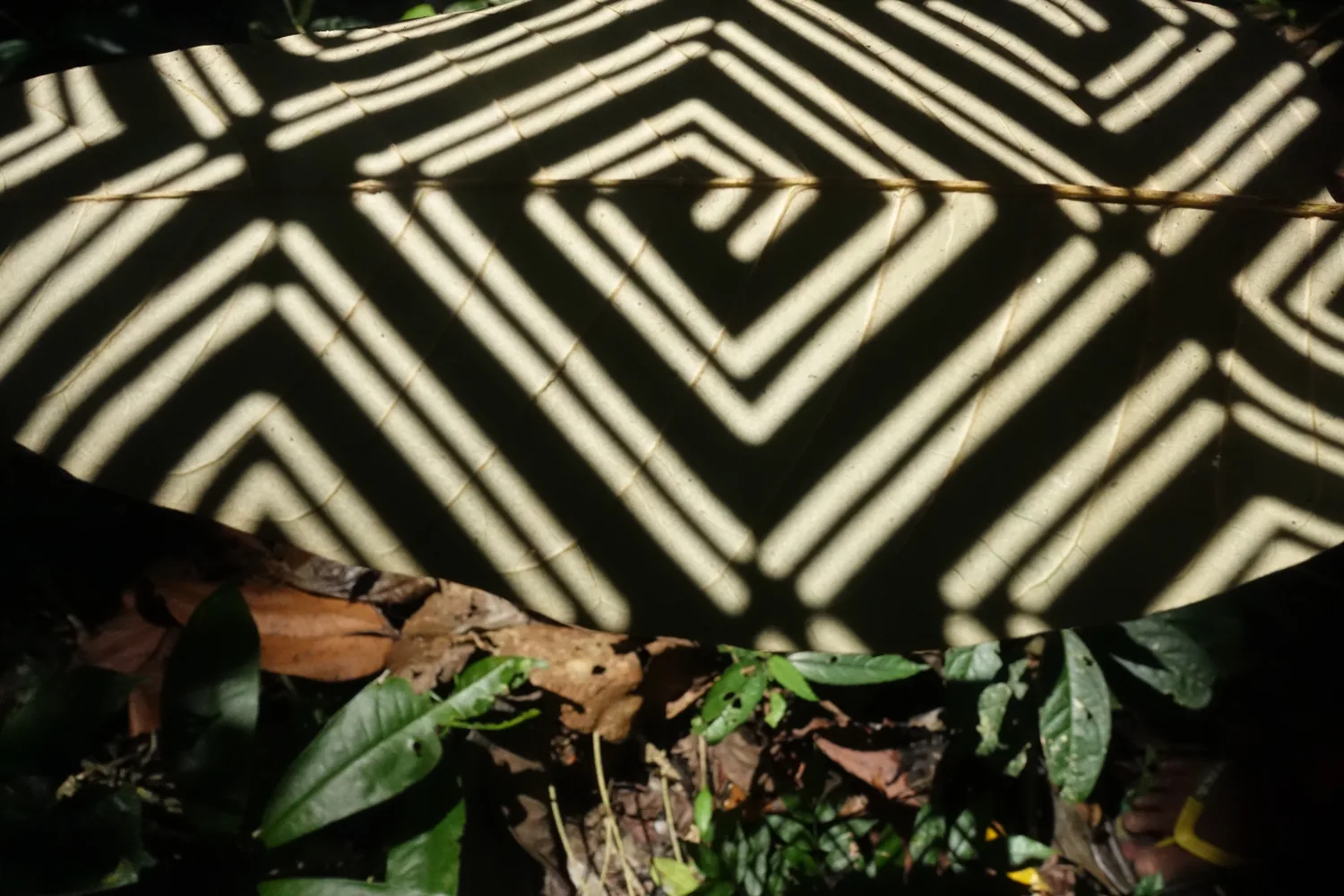
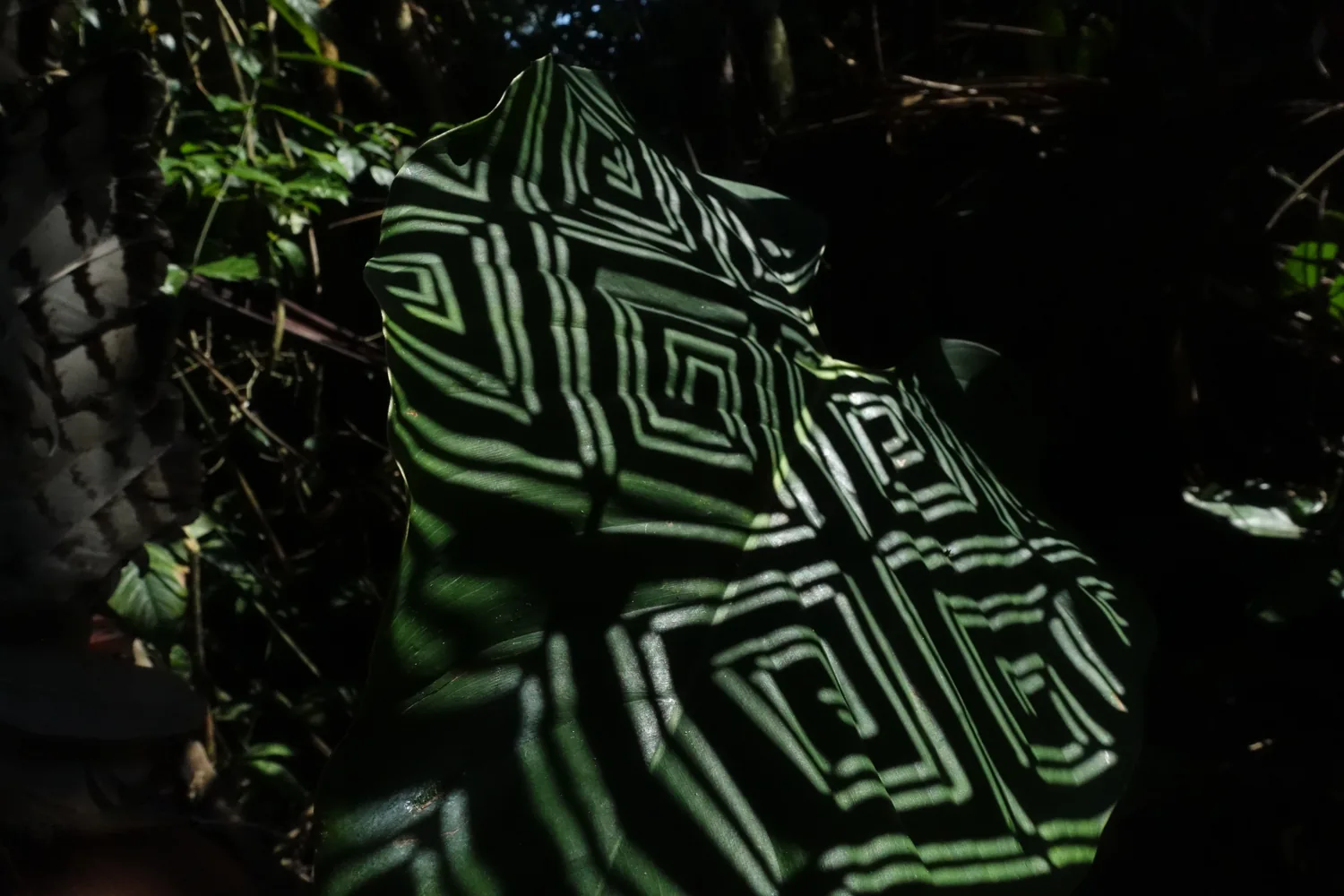
I brought stencils cut from patterns Same had chosen. Laid against skin in direct sun, the stencil stops being a tool for painting and becomes a way of letting the place itself expose the image. The pattern is not applied. It is cast.
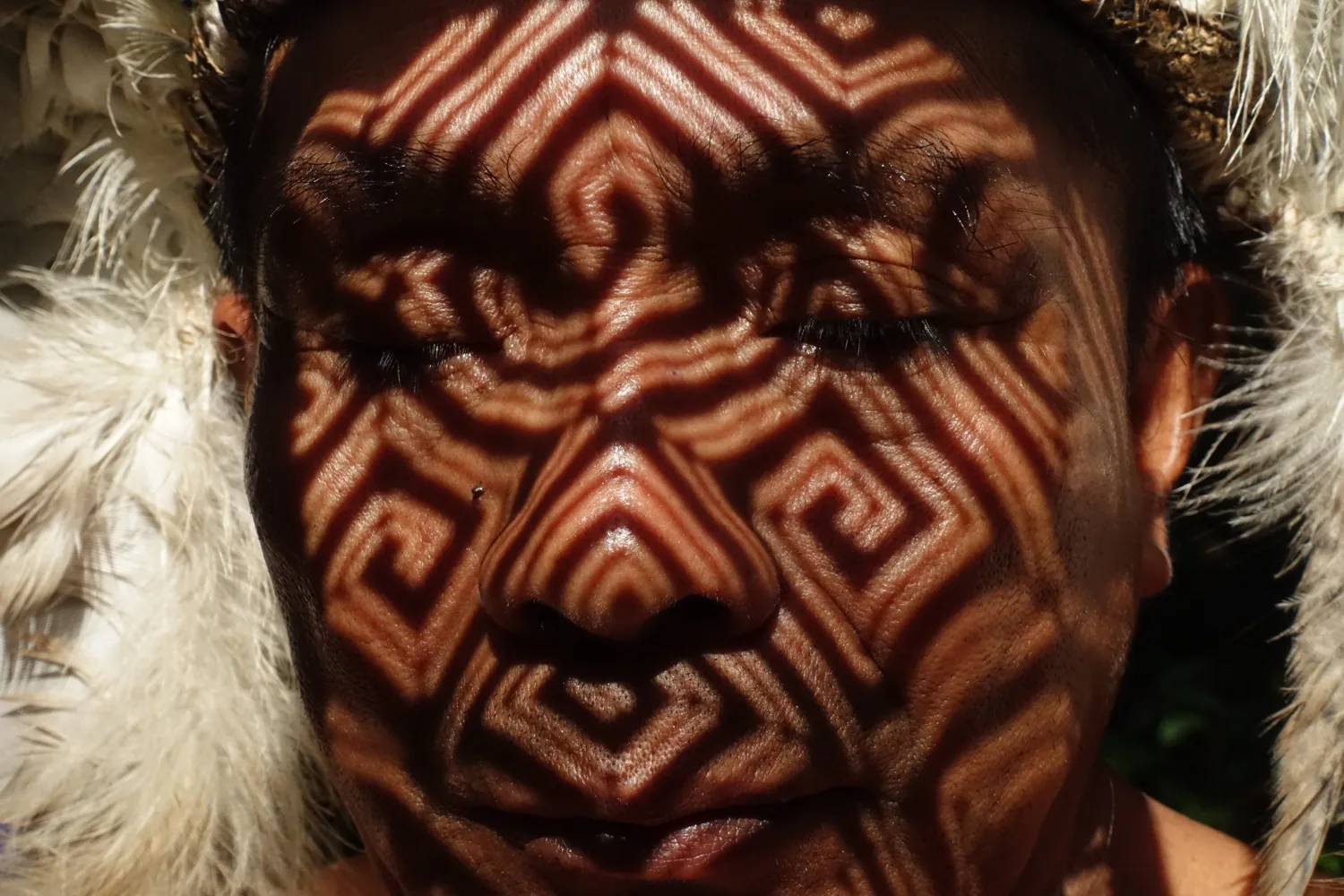
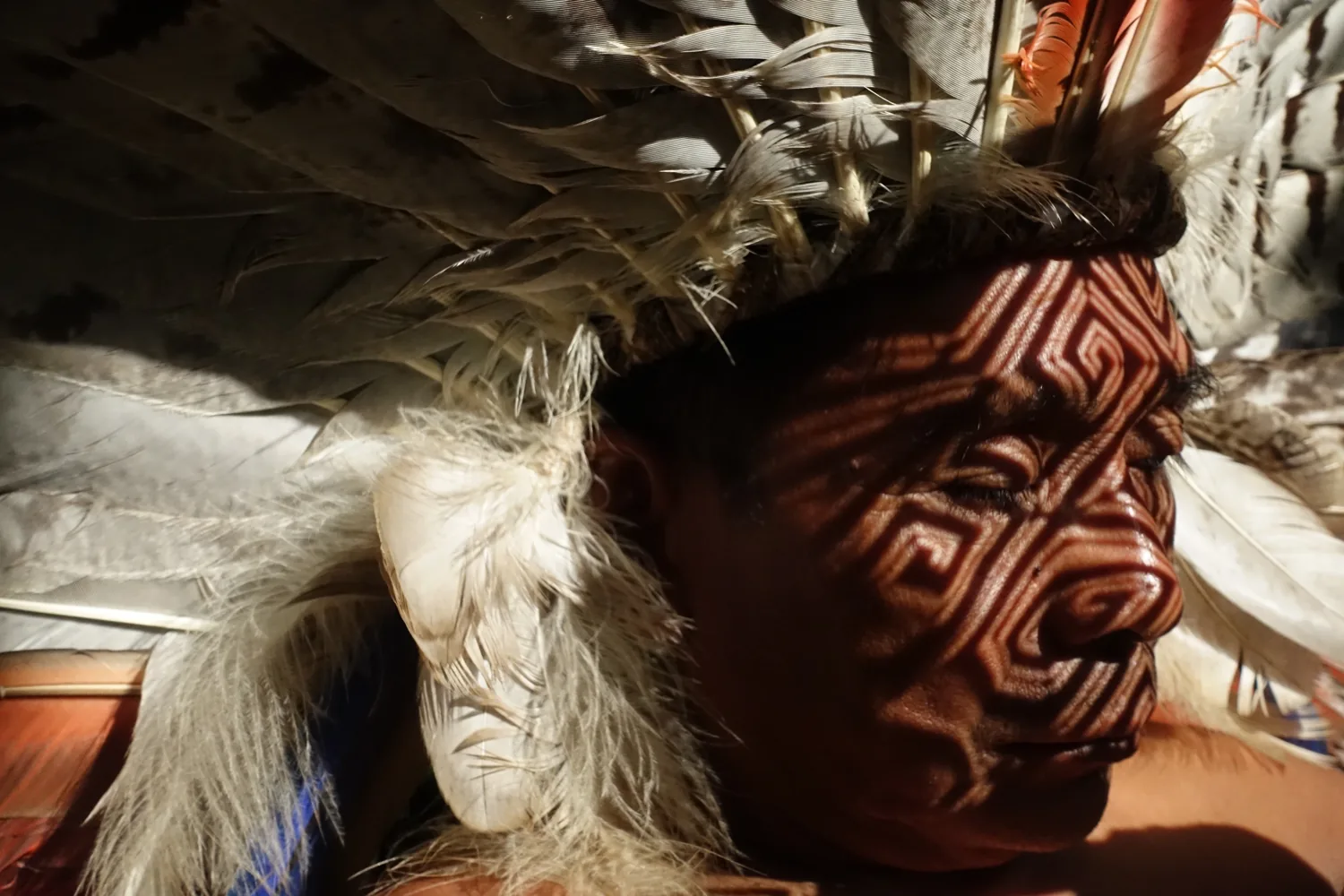
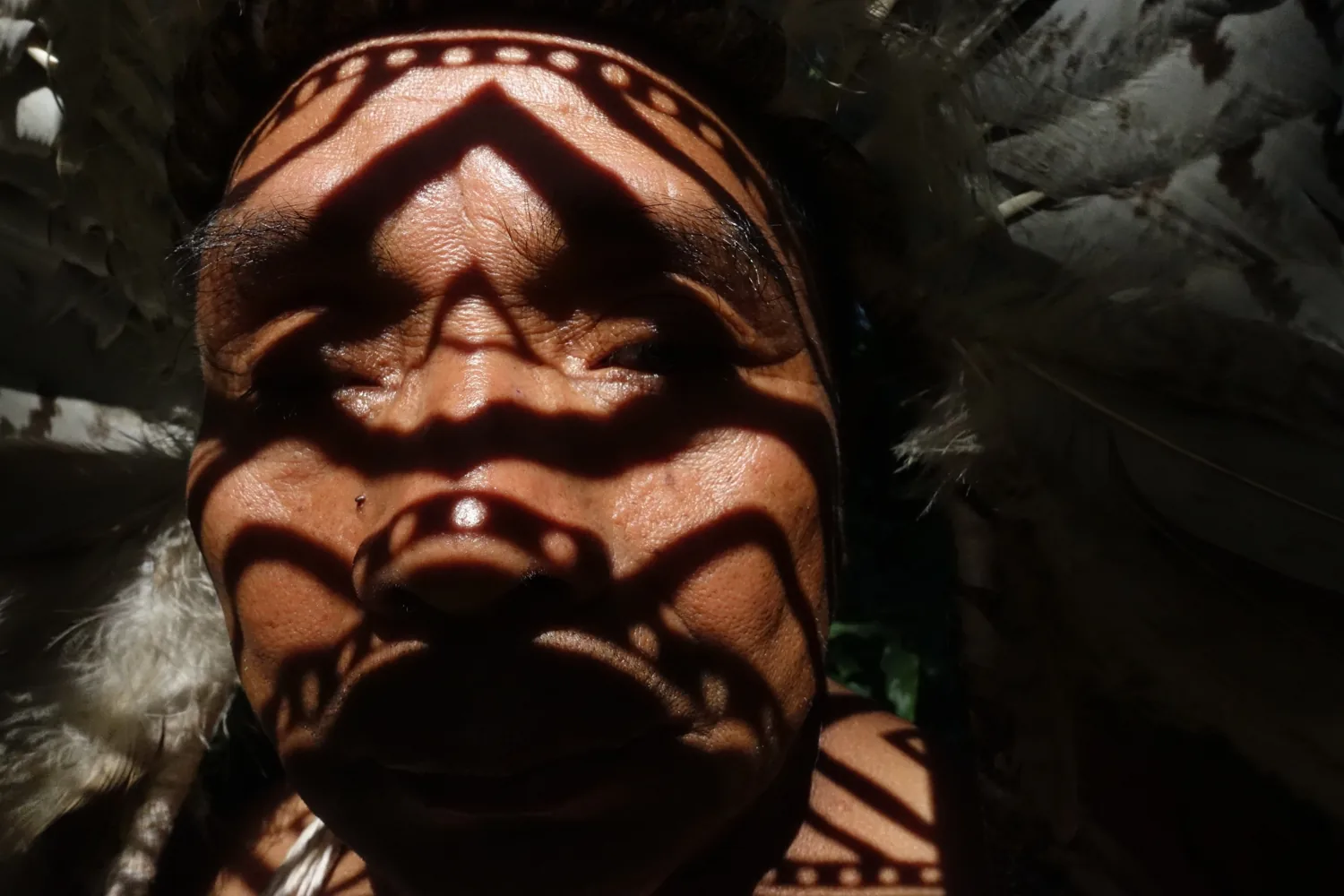
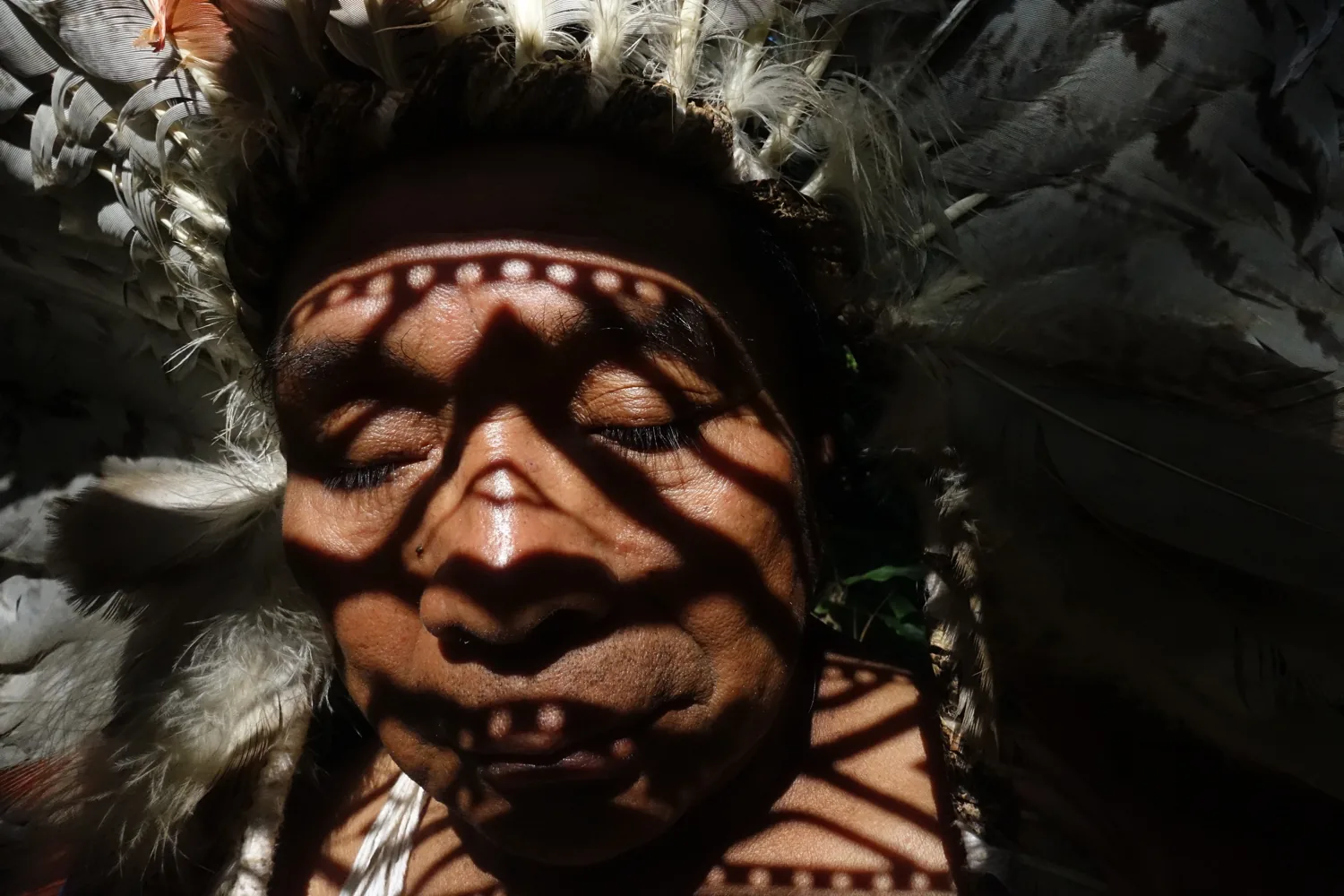
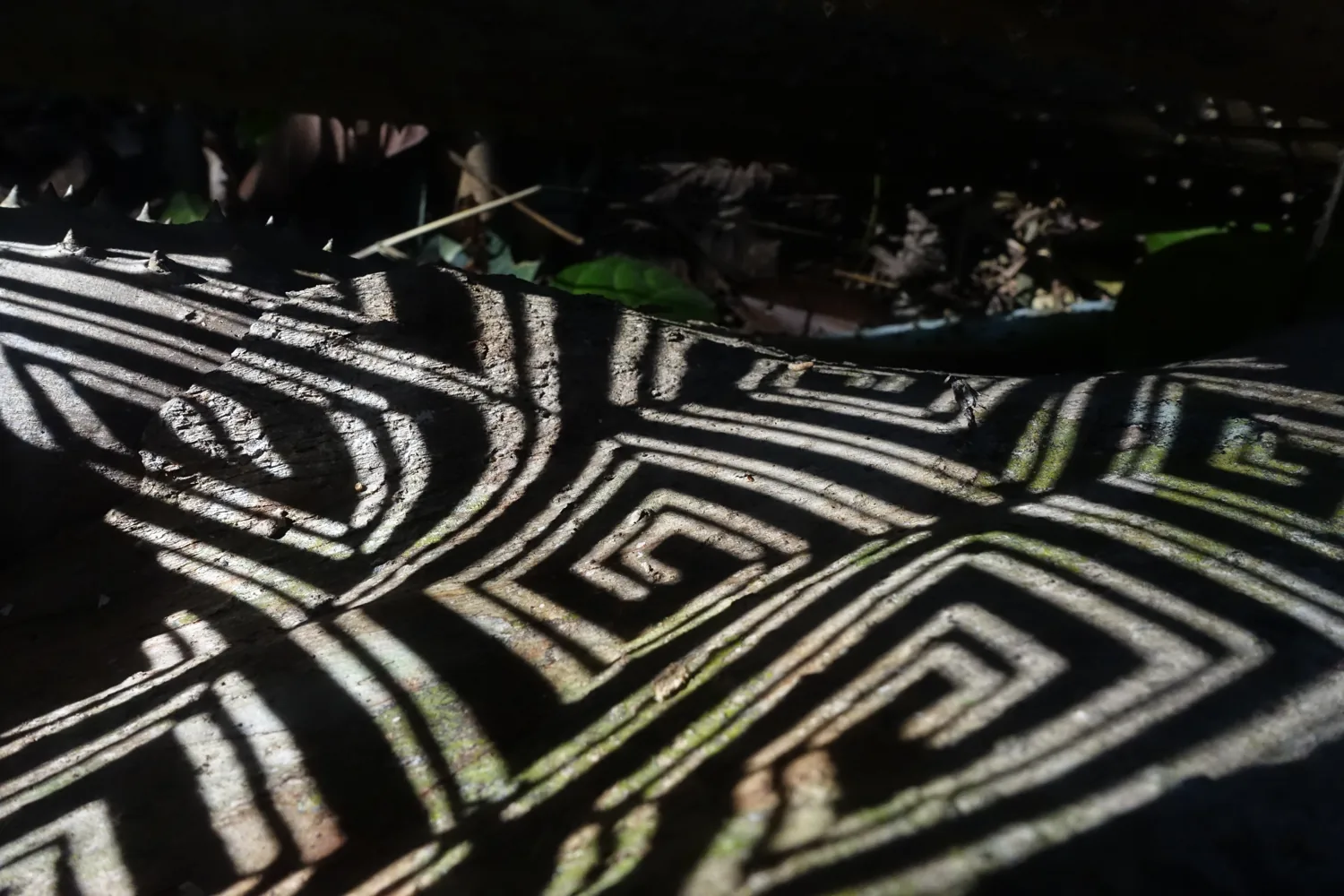
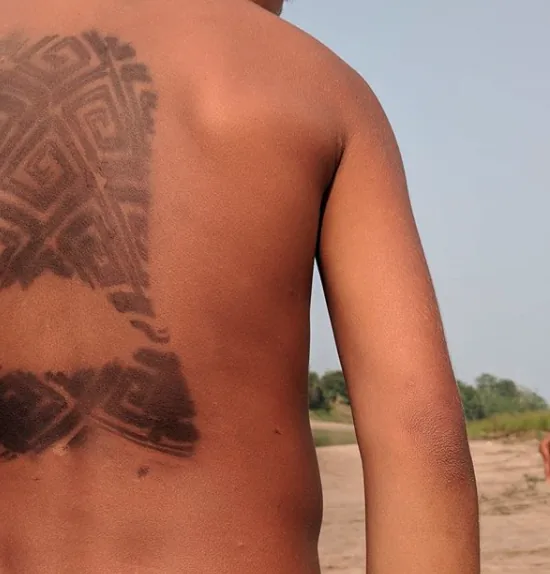
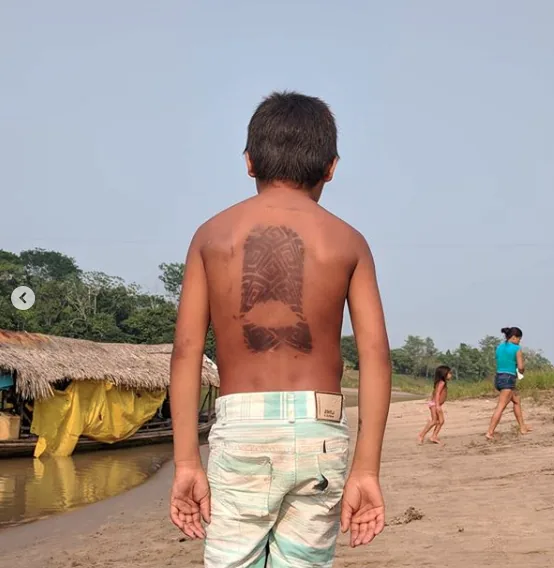
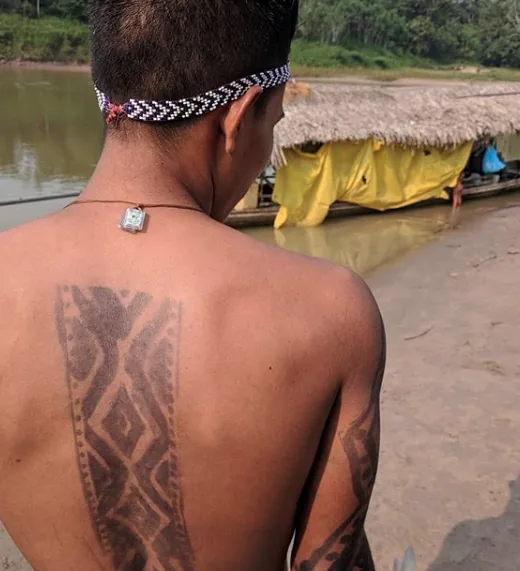
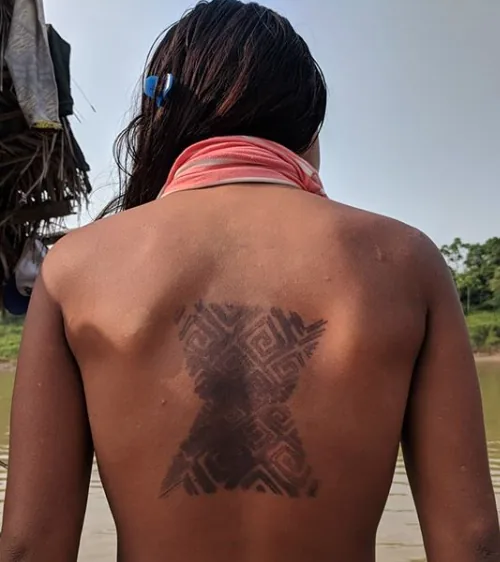
Body painting with jenipapo, stencils and airbrush
Jenipapo is the traditional fruit pigment; the airbrush and the laser-cut stencil are not. Put together they paint the same patterns faster and at a scale the hand would take days to reach, which is exactly the kind of exchange both of us were interested in.
The river and the region
Most of the Envira population speaks Portuguese, is organised through legal associations, and many are Christianised, often as a syncretism that values traditional practice rather than replacing it. A more recent wave of evangelisation is different, and according to the indigenous leaders I spoke with it tracks directly with political persecution of the people working to preserve native practice.