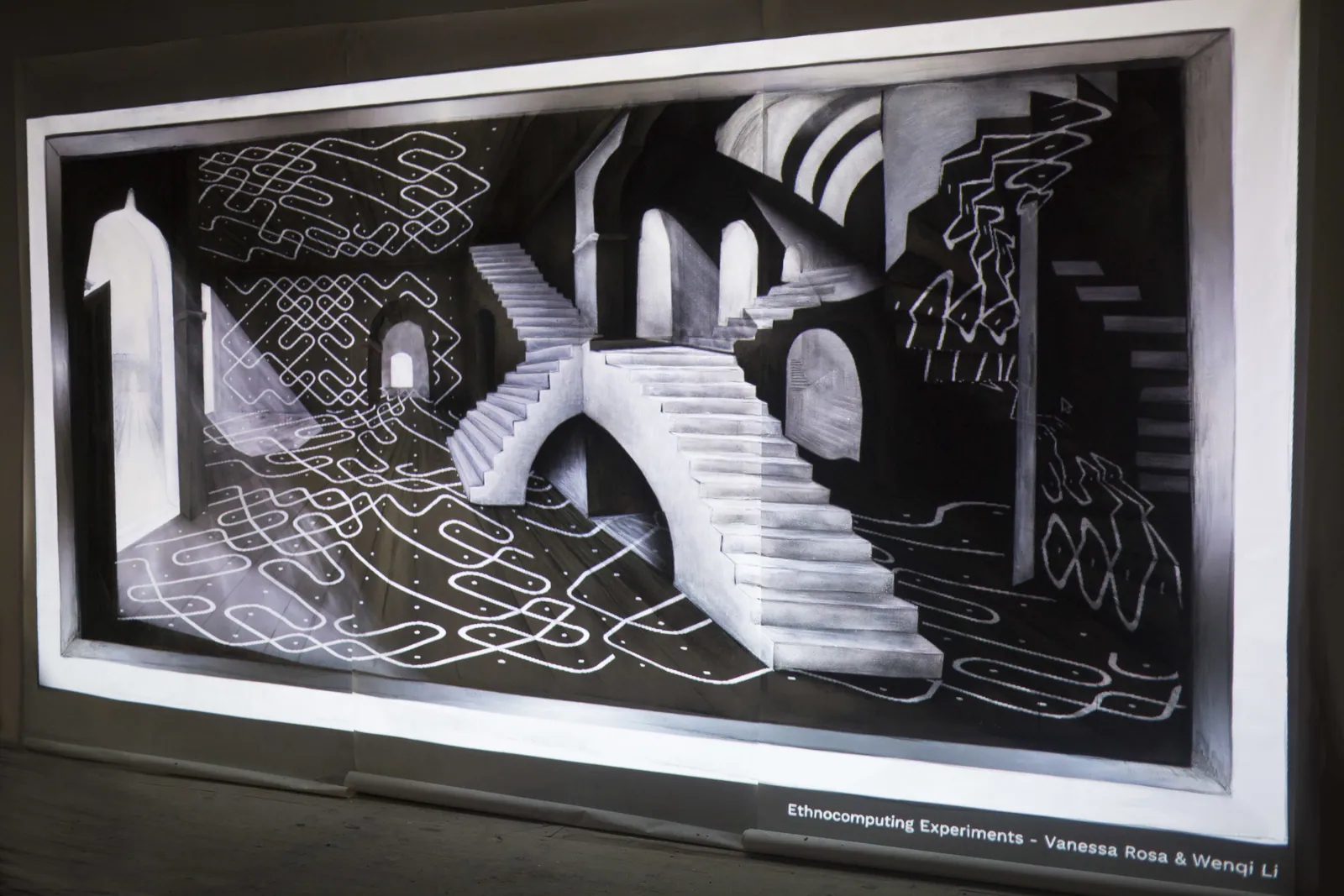
Ethnocomputing Experiments
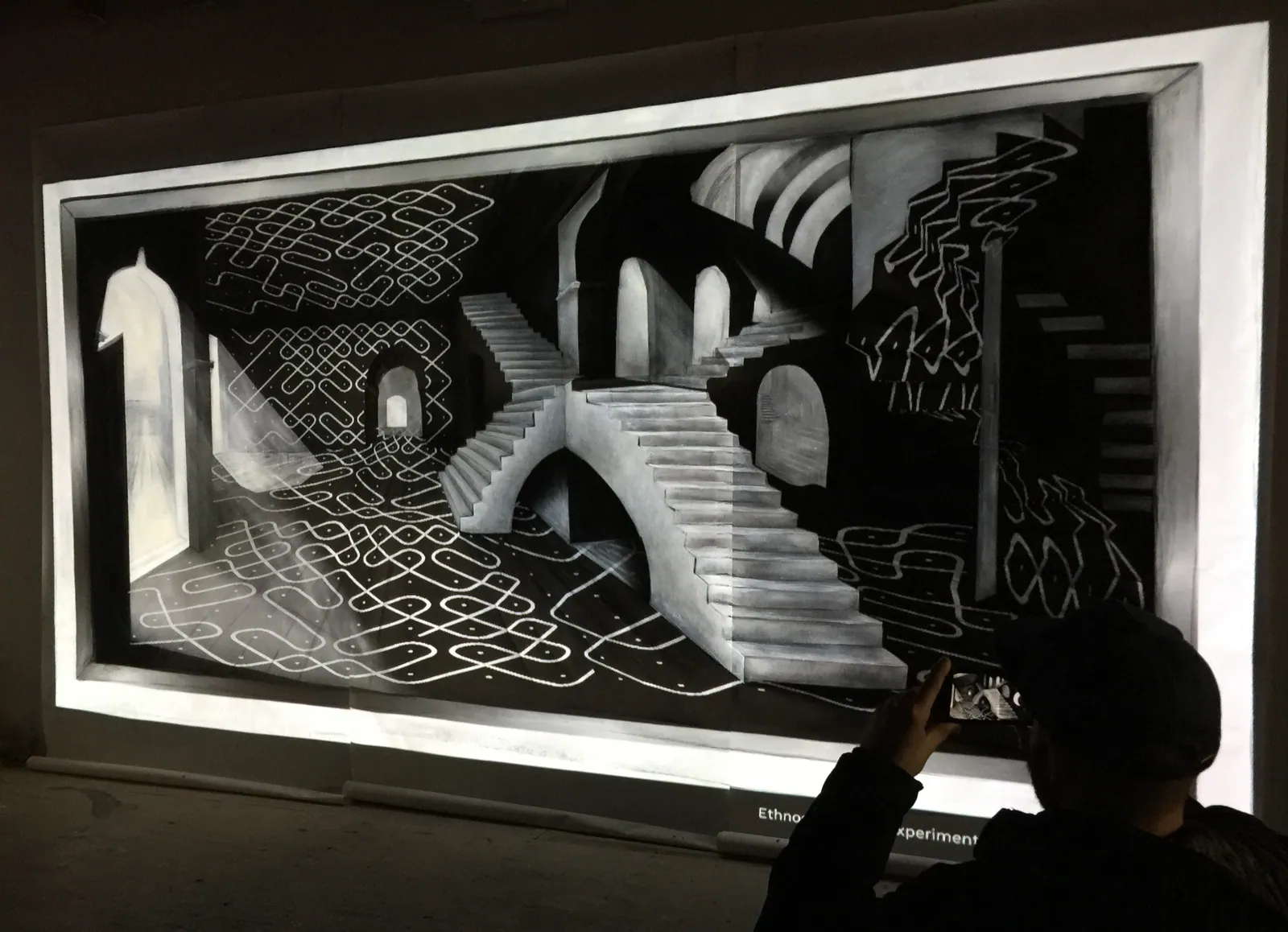
A work about the mix of two extremely different representational systems, though both are highly mathematical in their approach to line.
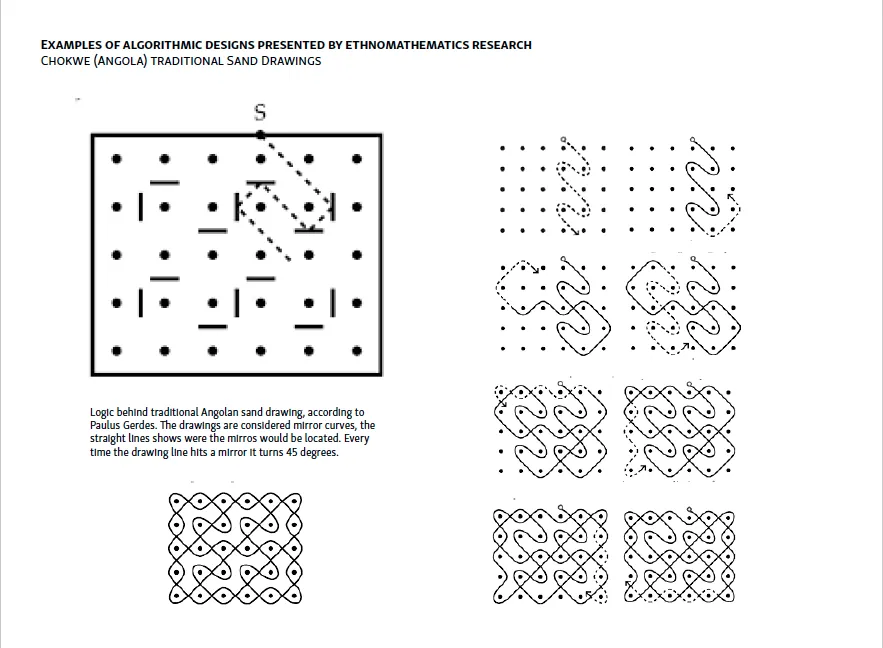
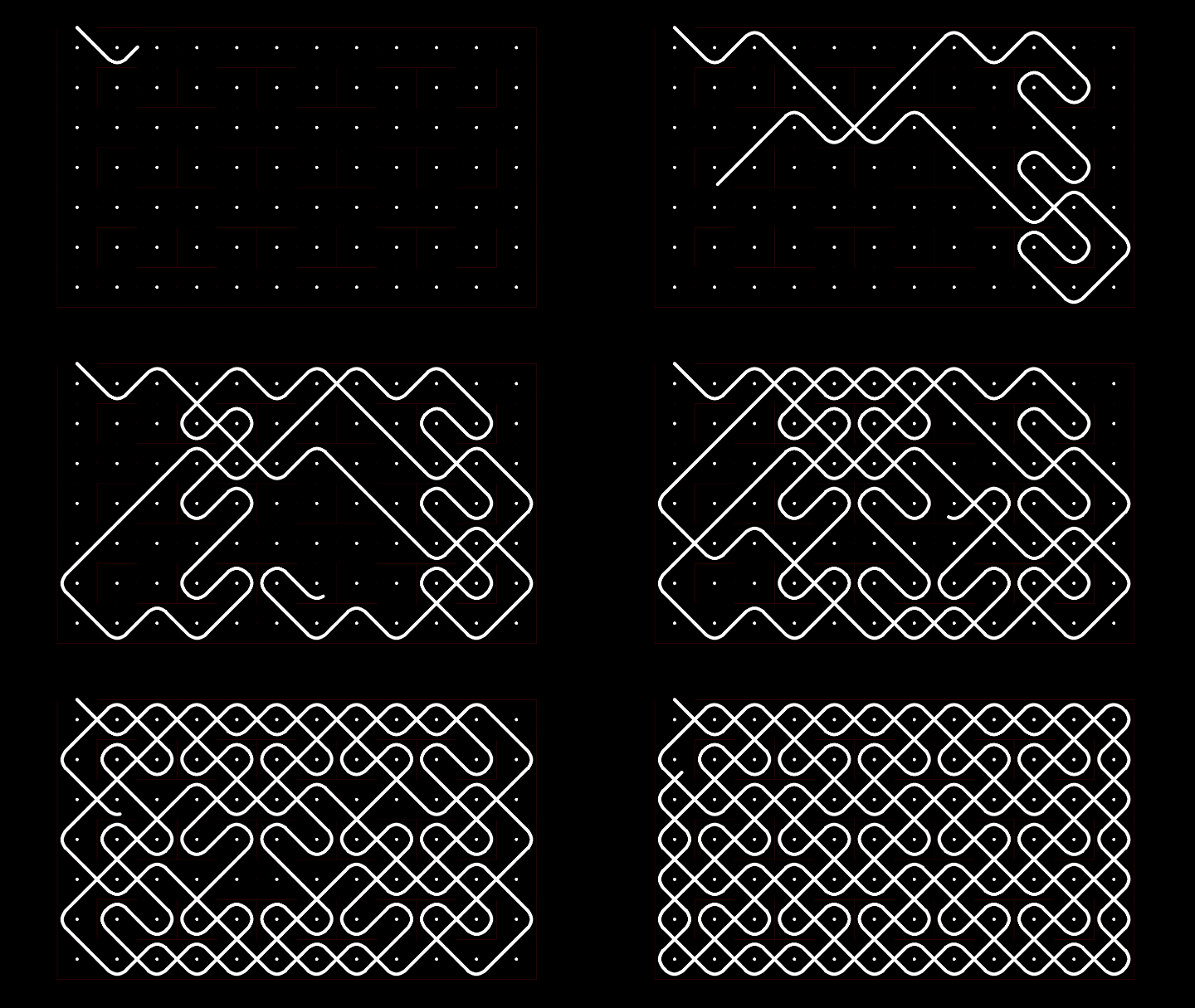
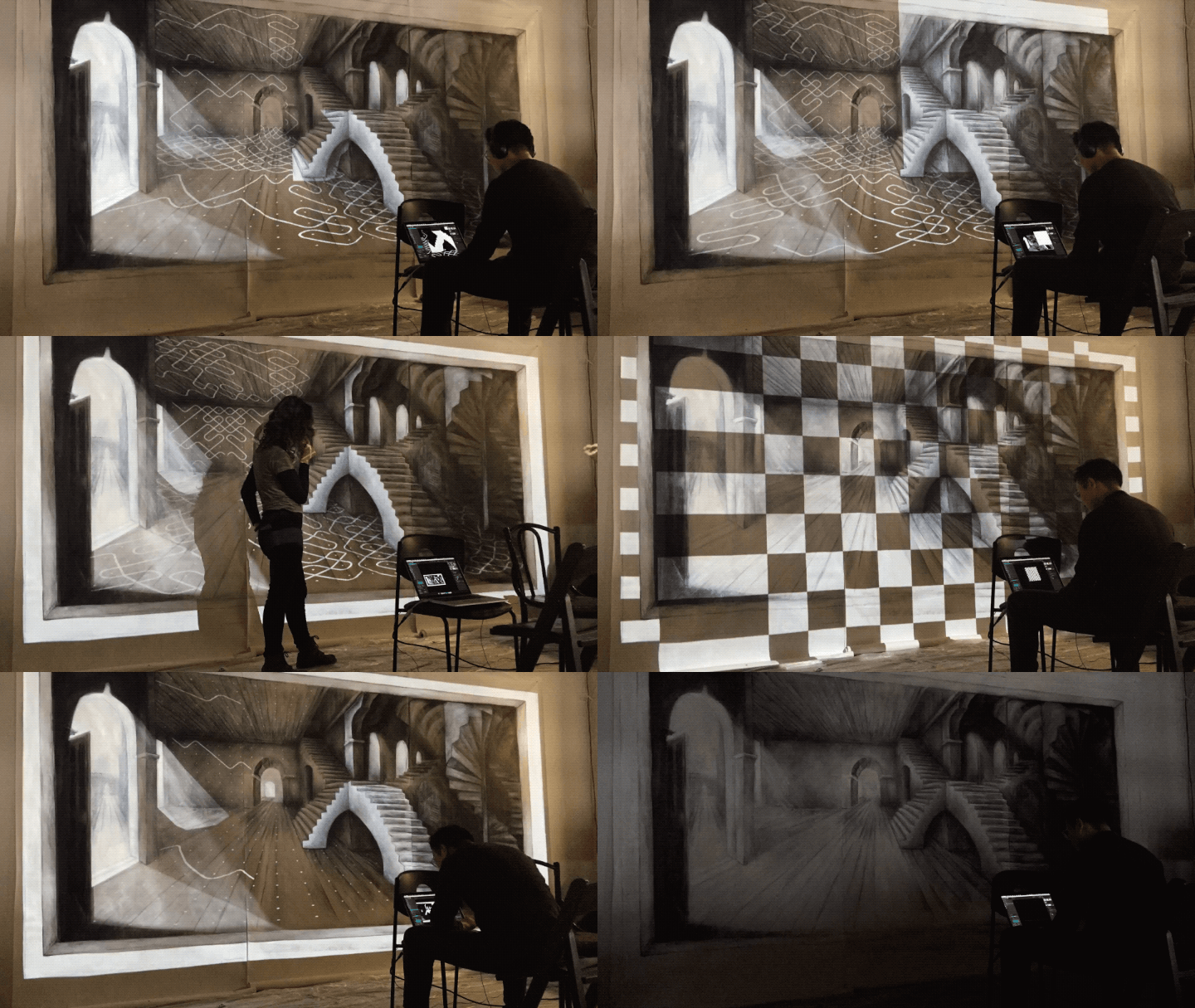
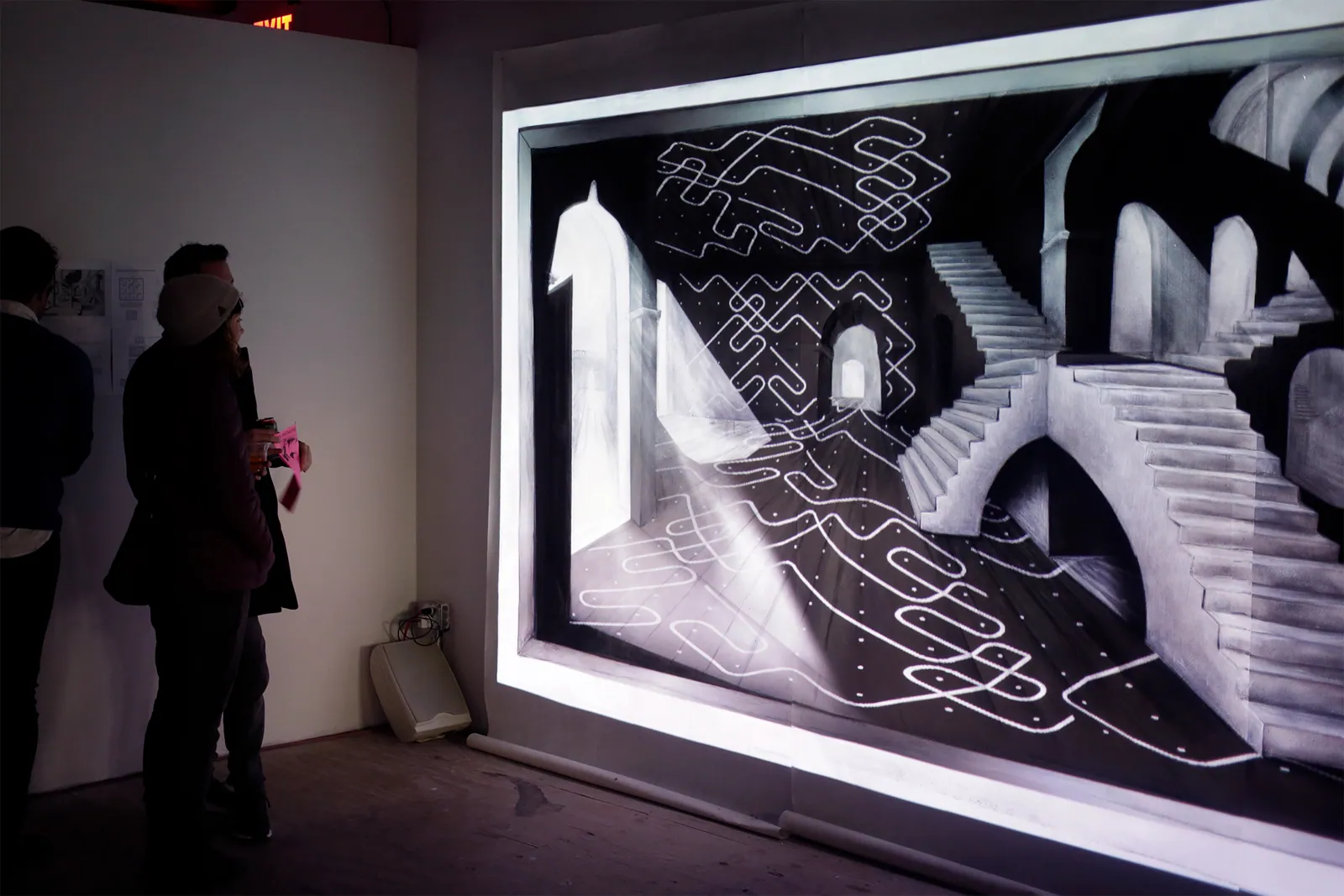
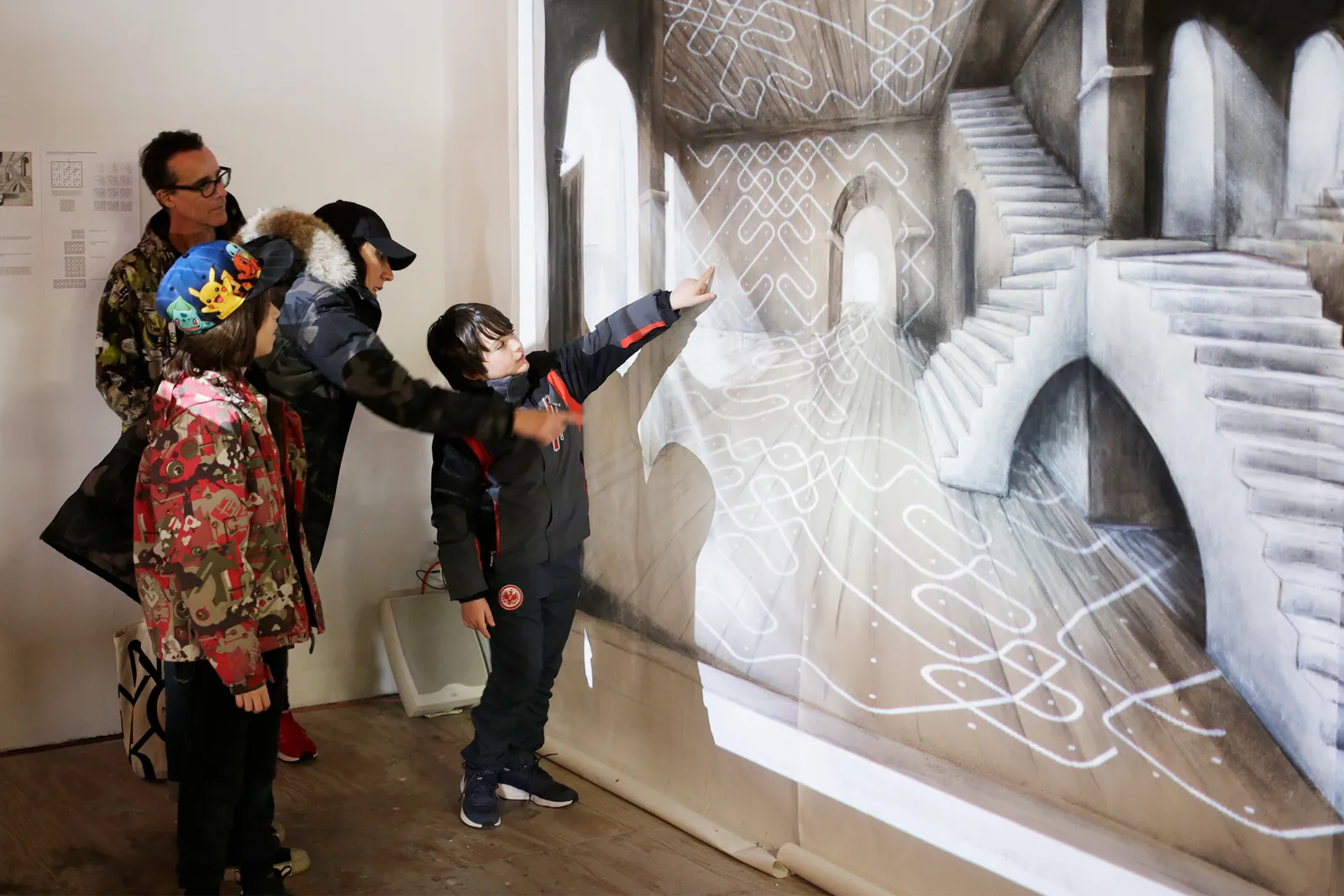
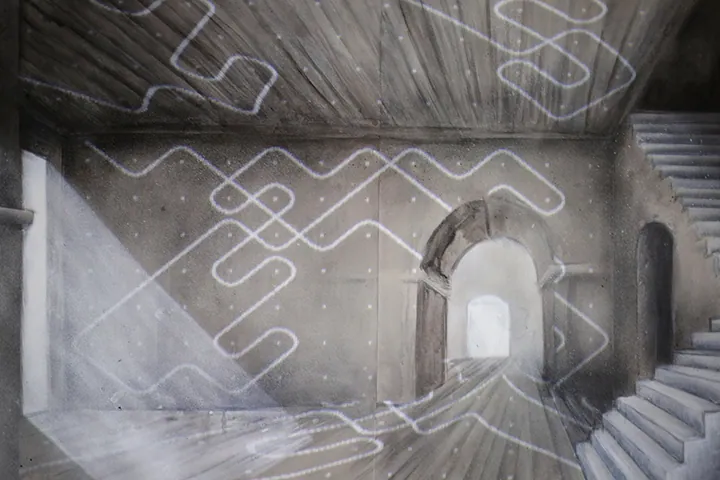
A set of Angolan traditional patterns known as Sona, from the Chokwe people, are recreated with Processing, a free graphical library and development environment. The recreation follows the heritage algorithm embedded in the original patterns, which used to be made as finger drawings in sand: a person would tell a story and draw at the same time.
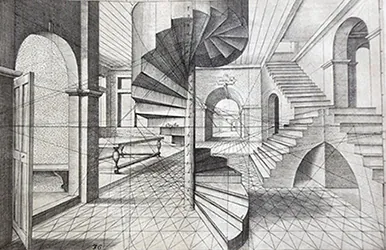
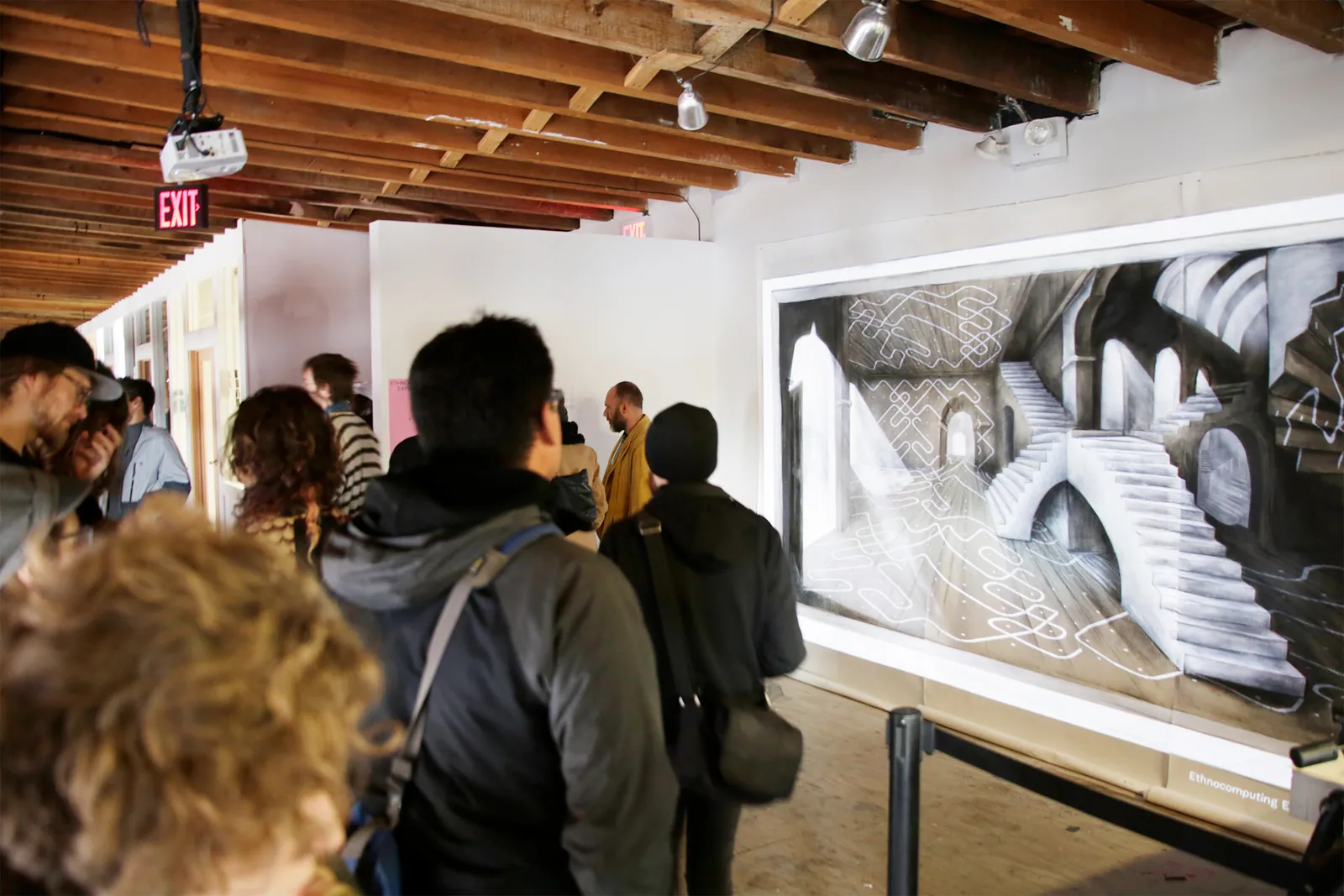
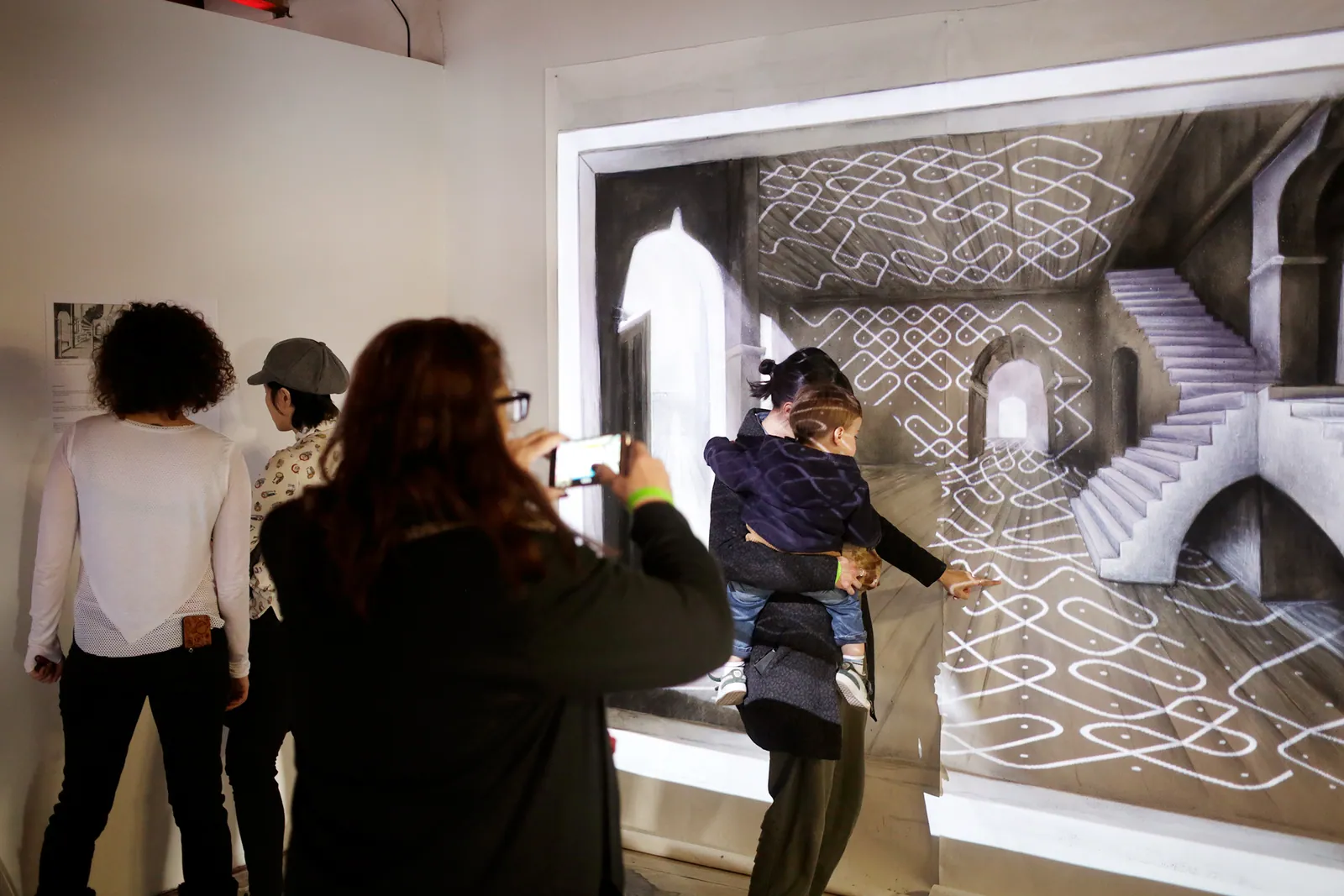
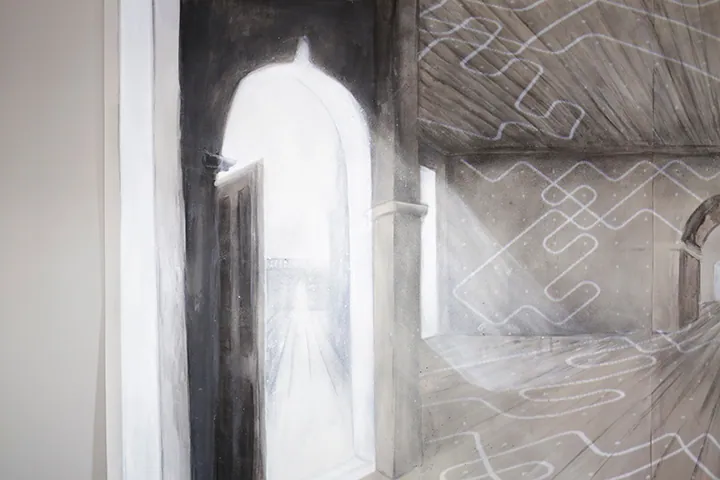
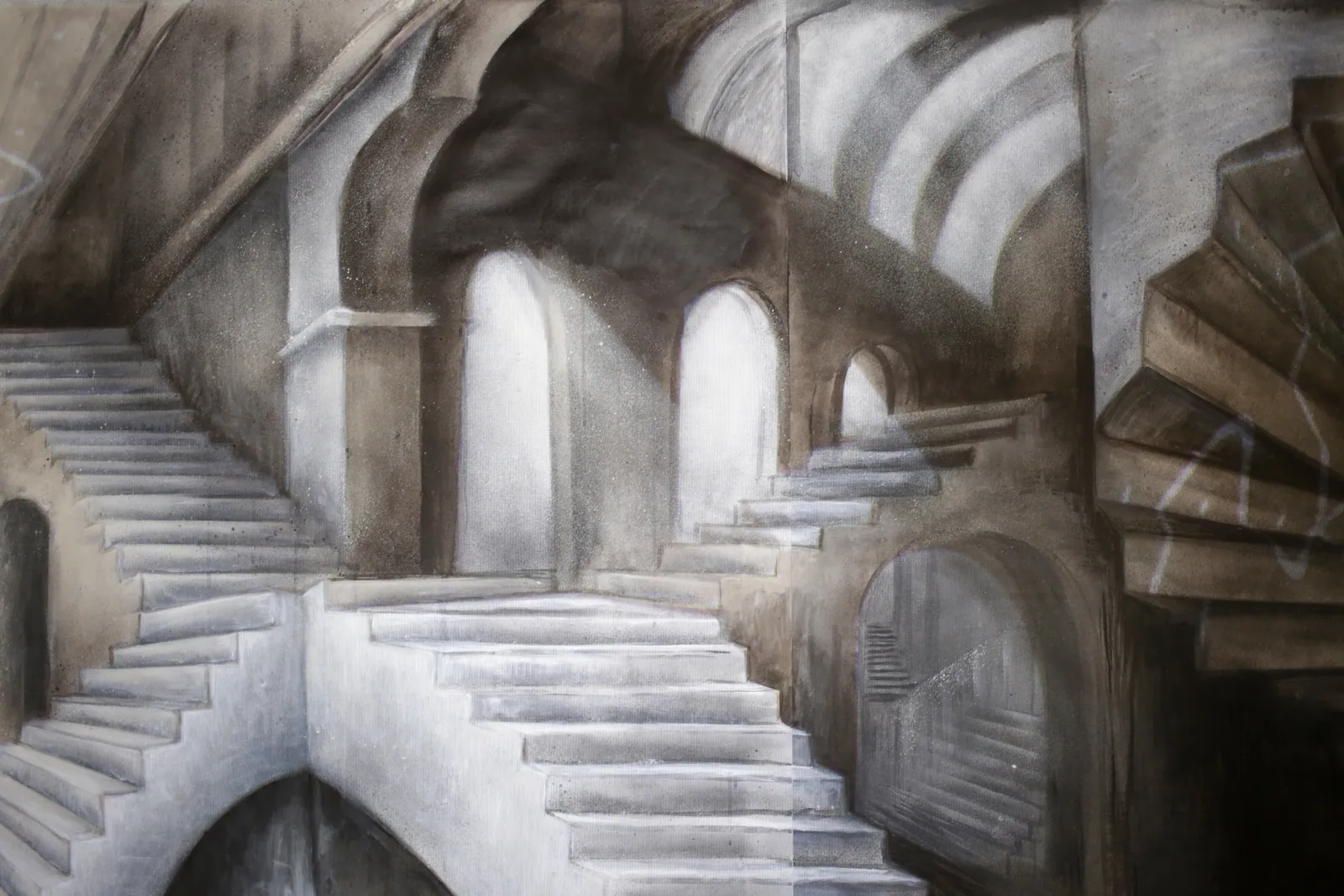
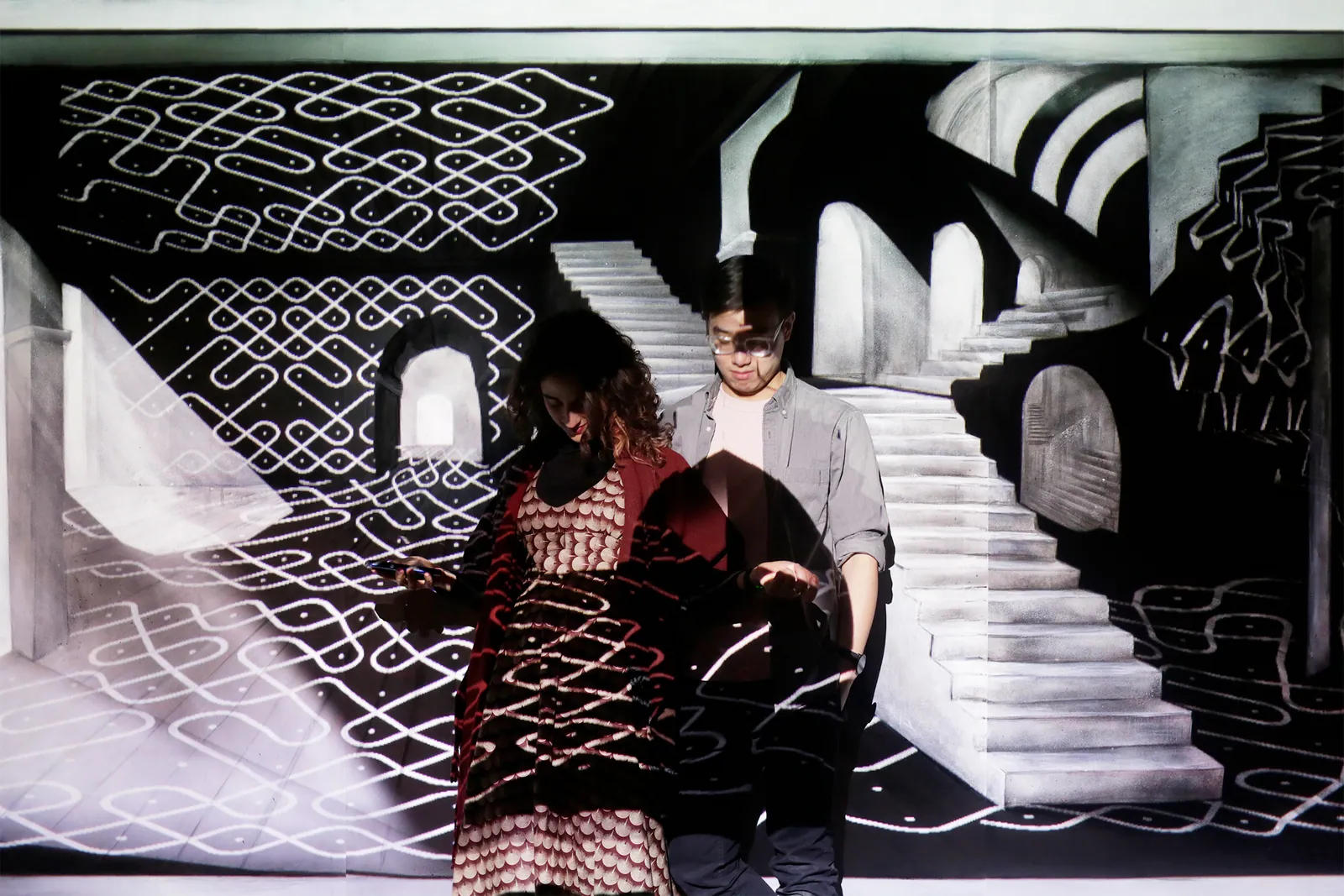
We chose one specific pattern to project over a painting inspired by an early seventeenth-century treatise on linear perspective by the Dutch artist Vredeman de Vries. It is a pattern that tells the story of a wild chicken running away from a hunter. The line is the path the chicken takes while it tries to fool the hunter and exhaust him, until it can return to its hidden home, which sits precisely where the run started.
The main inspiration for this project is the academic work of the Dutch and Mozambican author Paulus Gerdes, a prominent figure in the field of ethnomathematics. The other great influence is Ron Eglash’s work on ethnocomputing and heritage algorithms.
Ethnocomputing Experiments, on Vimeo.
- Ethnomathematics
- Ethno (culture, or group of people) + mathema (explaining reality) + tics (techno). In mathematics education, ethnomathematics is the study of the relationship between mathematics and culture. The term was introduced by the Brazilian educator and mathematician Ubiratan D’Ambrosio during the 1970s.
- Ethnocomputing
- The study of the interactions between computing and culture, carried out through theoretical analysis, empirical investigation and design implementation. It includes research on the impact of computing on society, and the reverse: how cultural, historical, personal and societal origins affect the innovation, development, diffusion, maintenance and appropriation of computational artefacts or ideas. From the ethnocomputing perspective, no computational technology is culturally neutral, and no cultural practice is a computational void. Instead of treating culture as a hindrance to software engineering, culture should be seen as a resource for innovation and design.
- Linear perspective
- The illusion of depth on a two-dimensional surface, based on a linear system of spatial alignment. Developed in fifteenth-century Italy, it is a key concept in Western architecture and painting. Even the nineteenth-century analogue camera was still built on the same principles of vision and representation that shaped linear perspective.
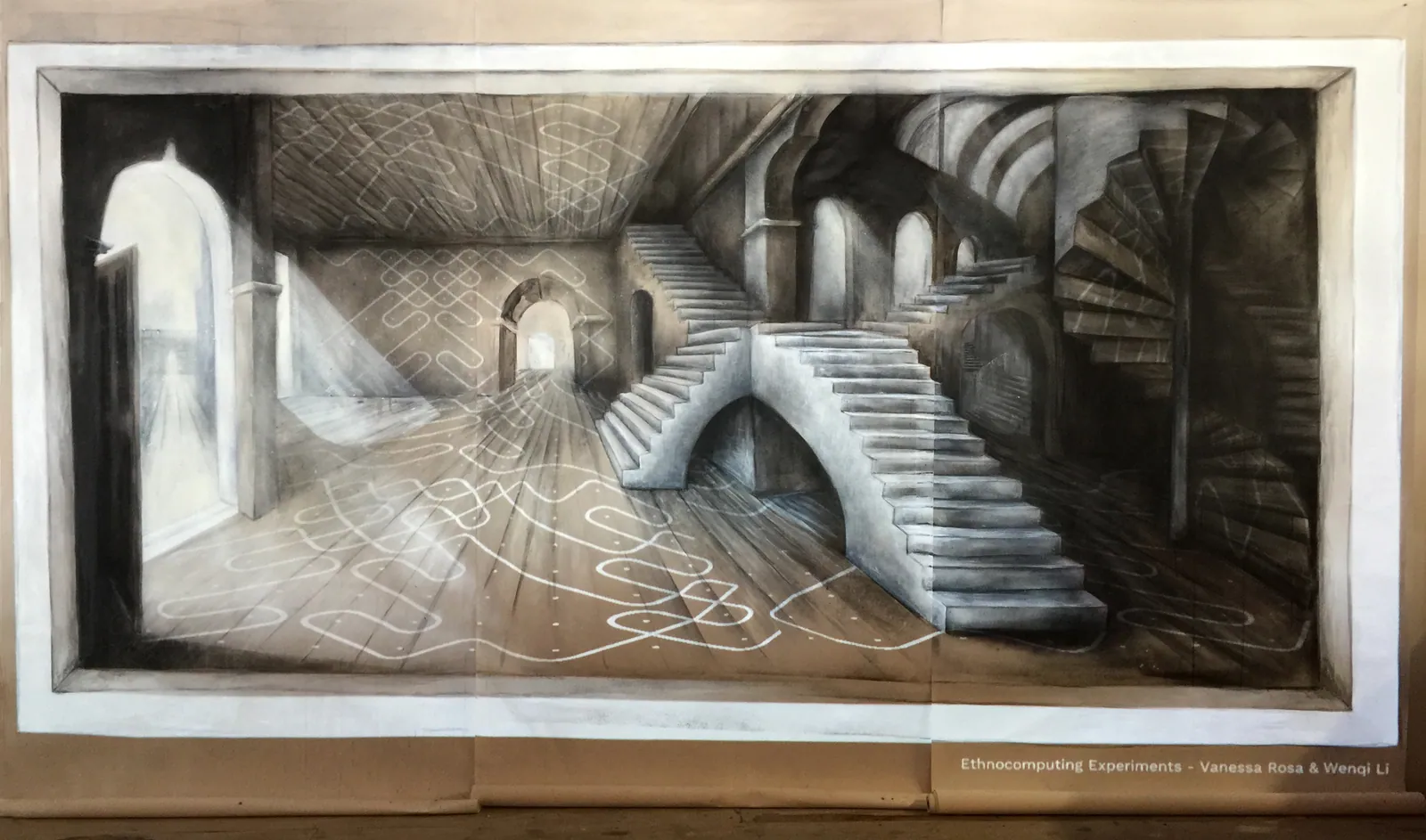
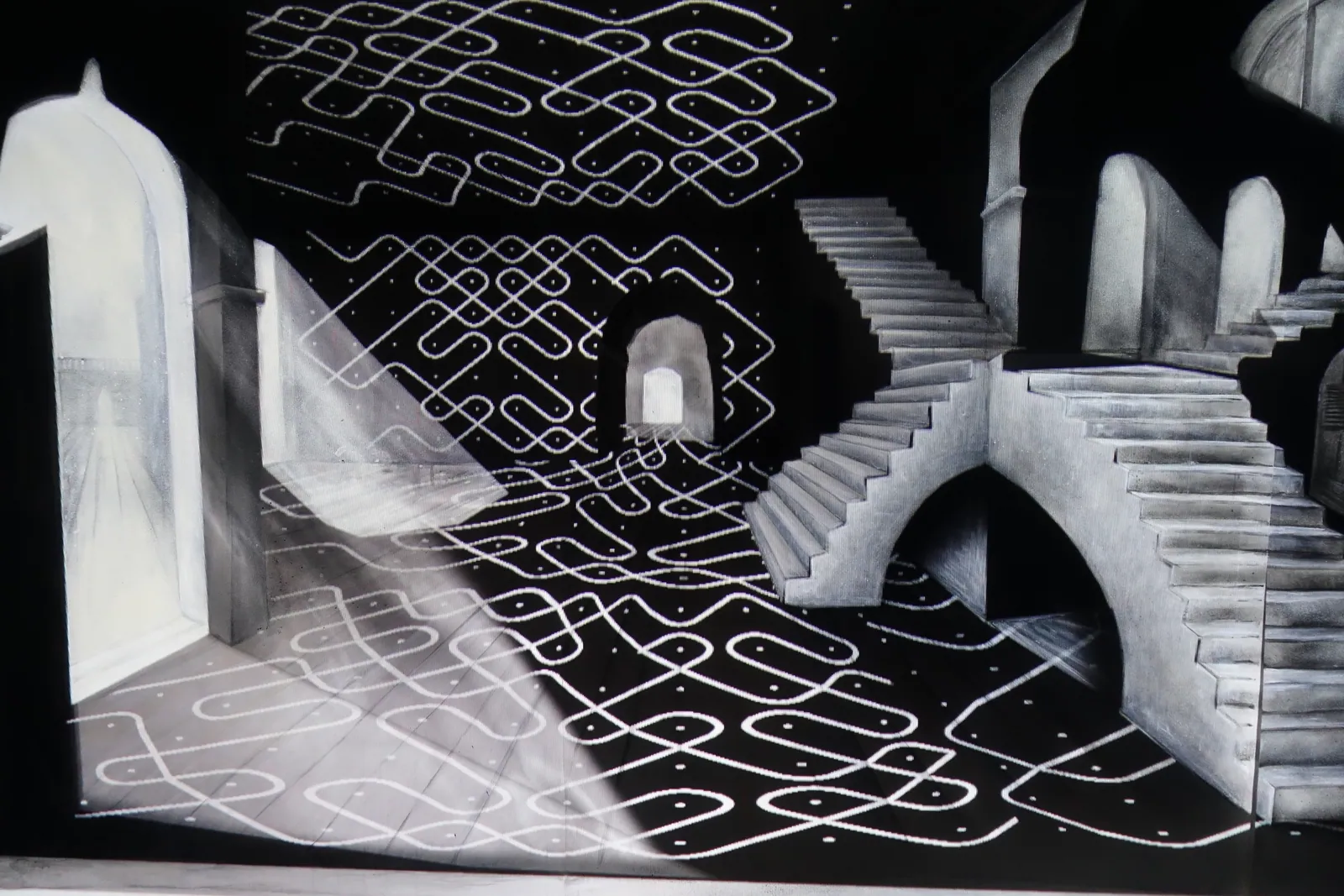
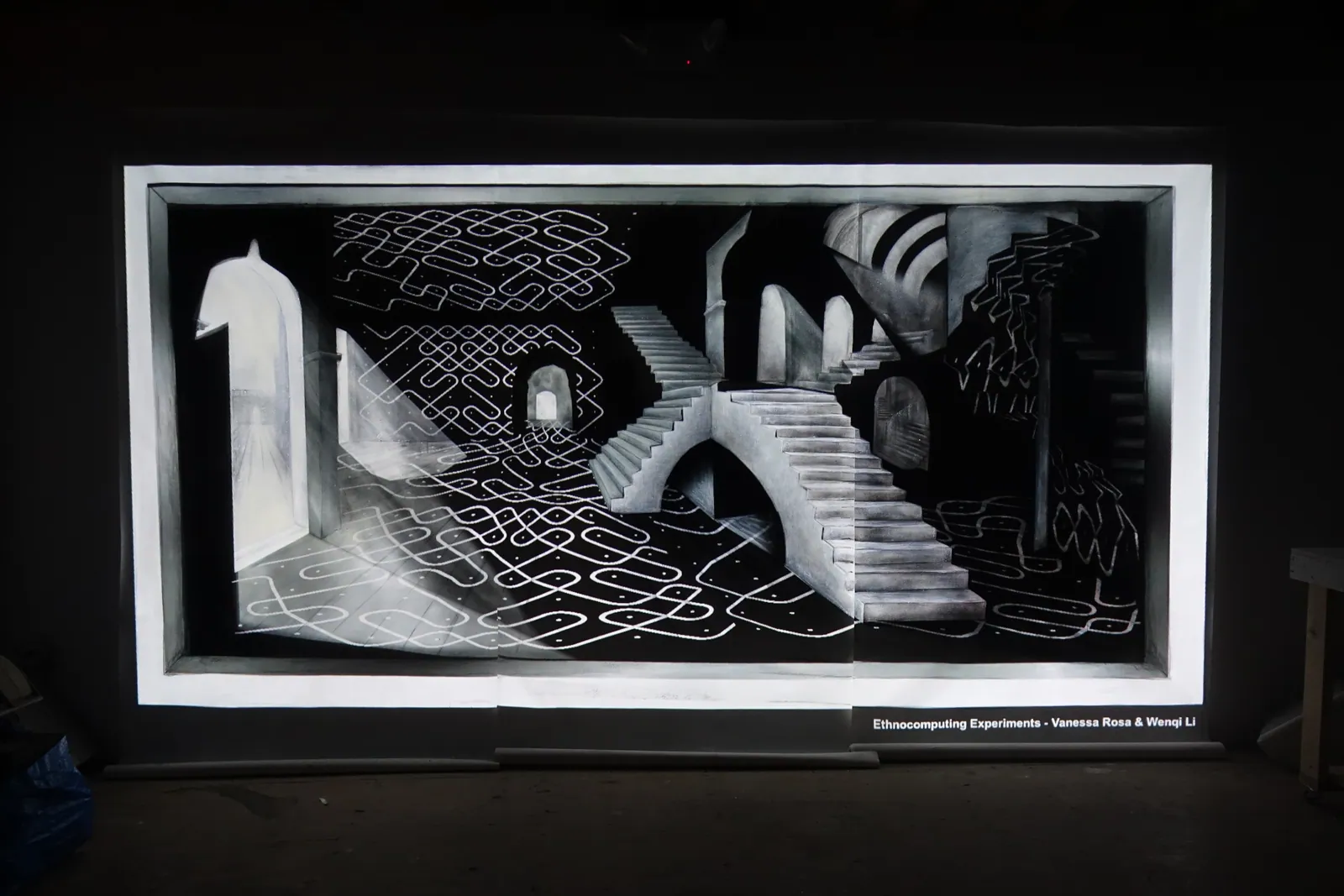
On one side, an engraving from Vredeman de Vries. On the other, the Sona pattern, and the algorithm that draws it.
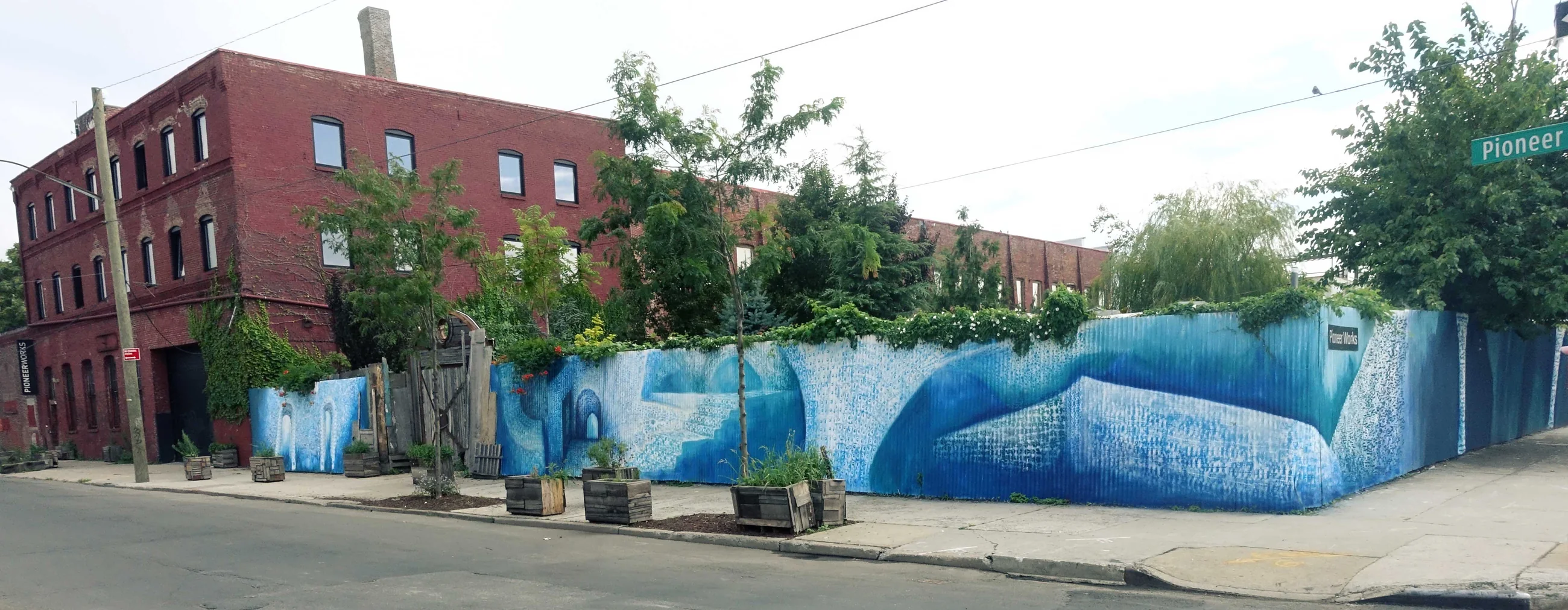
The fence
The same building, from the outside. Two hundred and fifty square metres of painting around the perimeter, made during the technology residency in 2017 and standing until 2021.